Canary flora > Exotic and ornamental
Zantedeschia aethiopica

Zantedeschia aethiopica (L.) Spreng.
Calla lily, Arum lily
Perennial or sub-persistent herbaceous plant, 60-120 cm high,
semi-panthanous, growing from a thick, oblong rhizome, up to 15 cm long
and 5 cm thick, from which grow whitish roots 3-15 cm long.
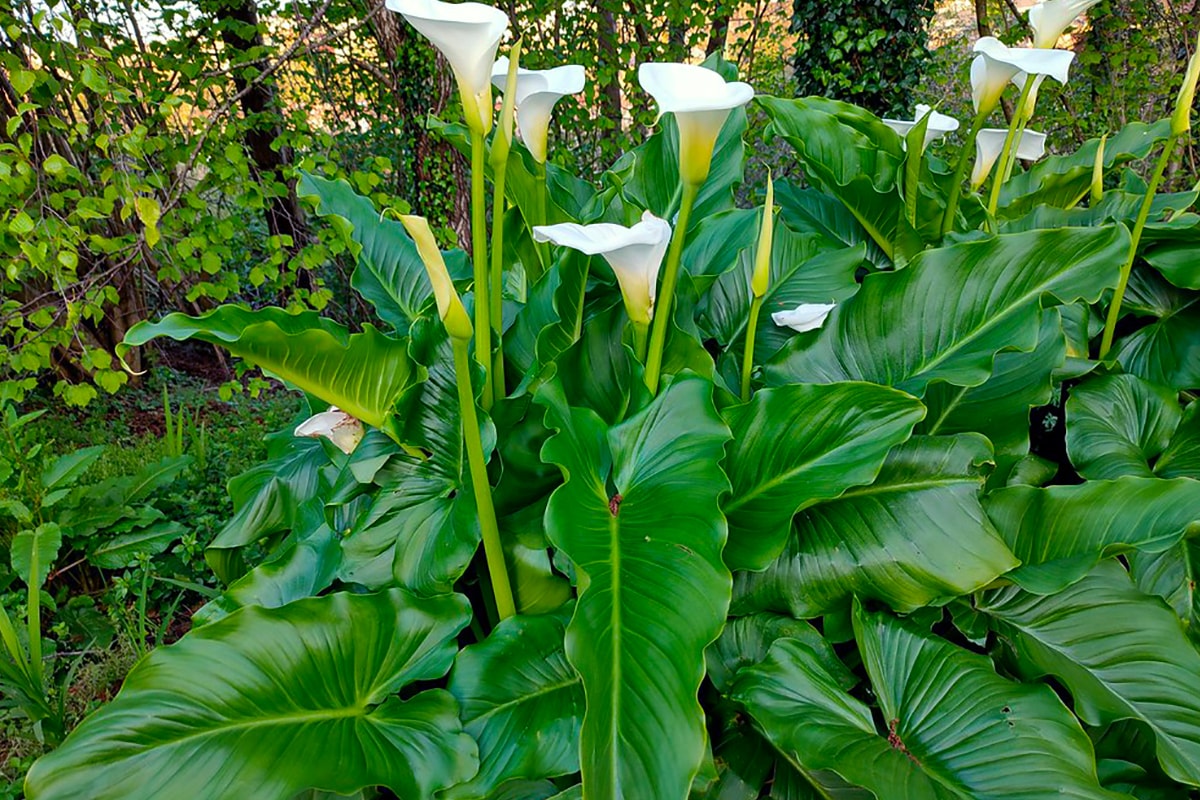
From the rhizome arise numerous semi-lustrous green basal leaves, long stalked, with a cylindrical, spongy petiole 40-90 cm long, with a wing up to 1 cm long and an elongated basal sheath, which reaches more than halfway up the petiole and opens progressively.
The shiny dark green lamina is large, about 15-40 cm long and 10-20 cm wide, simple, sagittate or deltoid, acuminate, with acute or rounded auricles.
From the rhizome arise numerous semi-lustrous green basal leaves, long stalked, with a cylindrical, spongy petiole 40-90 cm long, with a wing up to 1 cm long and an elongated basal sheath, which reaches more than halfway up the petiole and opens progressively.
The shiny dark green lamina is large, about 15-40 cm long and 10-20 cm wide, simple, sagittate or deltoid, acuminate, with acute or rounded auricles.
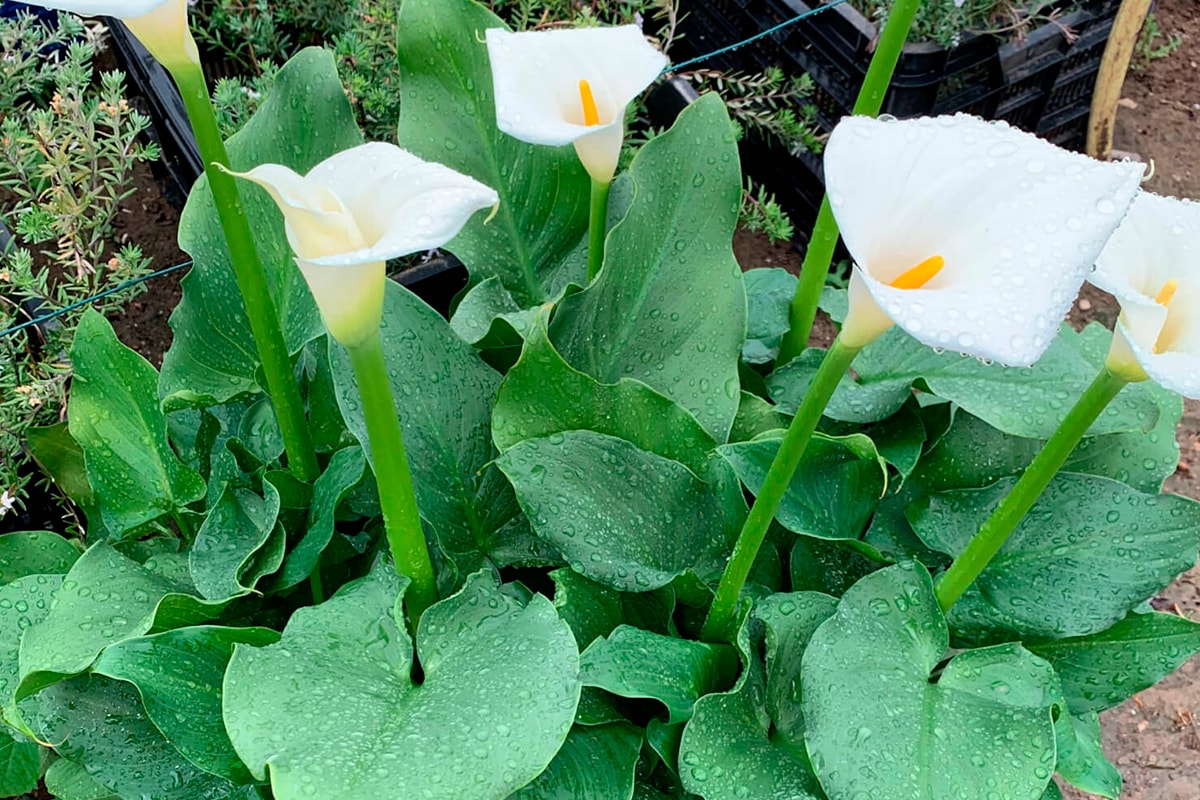
The inflorescences consist of a spadix 6-10 cm long, orange or yellow
with golden tones, enclosed in a spathe about 10-20 cm long, which in
its basal part closes in a greenish tube and extends upwards to form a
beautiful rounded to elliptical, bell-shaped, acuminate, pure white or
creamy white lamina, with curved edges.
The flowers are unisexual, the male ones occupying the upper part of the spadix, while the female ones are grouped in a small portion of its lower part.
Self-fertilisation is not possible because the male and female flowers of the same spadix mature at different times, so the plants only fruit by cross-fertilisation.
The flowers are unisexual, the male ones occupying the upper part of the spadix, while the female ones are grouped in a small portion of its lower part.
Self-fertilisation is not possible because the male and female flowers of the same spadix mature at different times, so the plants only fruit by cross-fertilisation.
The fruits are globose berries about 1 cm in diameter, densely
clustered, yellowish or orange in colour, and containing numerous seeds.
Flowering takes place between January and July, and the flowers remain on the stems for a long time before they begin to fade.
It usually reproduces by division of the rhizome. It can also be propagated by seed, but then the plant may take three to five years to flower for the first time.
This species is native to South Africa, from where it has spread to many subtropical areas of the world, such as Mexico, Australia, New Zealand, North America, Hawaii, British Isles, southern Europe, Macaronesia, etc.
Flowering takes place between January and July, and the flowers remain on the stems for a long time before they begin to fade.
It usually reproduces by division of the rhizome. It can also be propagated by seed, but then the plant may take three to five years to flower for the first time.
This species is native to South Africa, from where it has spread to many subtropical areas of the world, such as Mexico, Australia, New Zealand, North America, Hawaii, British Isles, southern Europe, Macaronesia, etc.


