Canary flora > Exotic and ornamental
Acanthus mollis
Acanthus mollis L.
Bear's breeches, Sea dock, Sea holly, Gator plant
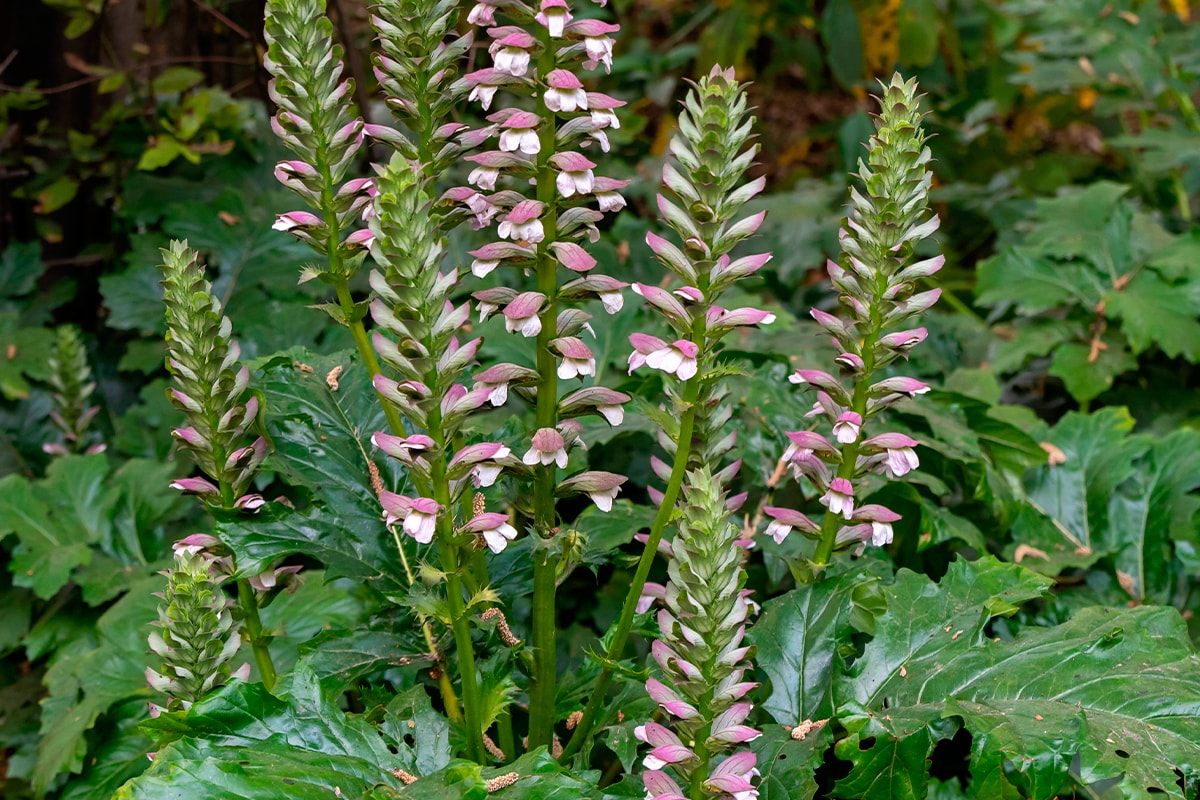
A perennial herbaceous plant, 1-1.5 m high, erect, stout and vigorous,
attached to the ground by long, very sticky, reddish, tuberous roots.
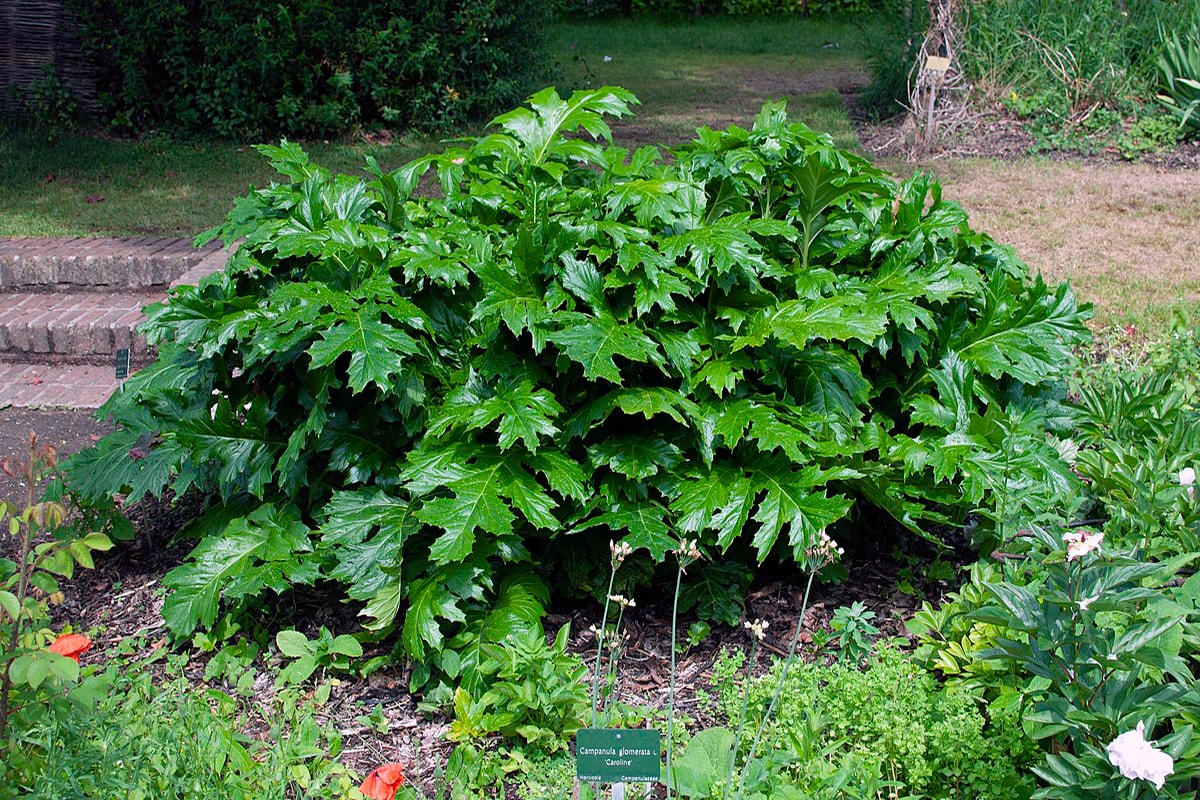
Its large, shiny, dark green leaves, up to more than 1 m long, are tightly grouped around the base of the stem, forming an elegant basal rosette.
They are simple, alternate, long stalked, smooth, and with their leaf lamina divided into 6-7 large, deep, irregular and sharply toothed lobes, the terminal lobe being larger than the others.
Its large, shiny, dark green leaves, up to more than 1 m long, are tightly grouped around the base of the stem, forming an elegant basal rosette.
They are simple, alternate, long stalked, smooth, and with their leaf lamina divided into 6-7 large, deep, irregular and sharply toothed lobes, the terminal lobe being larger than the others.
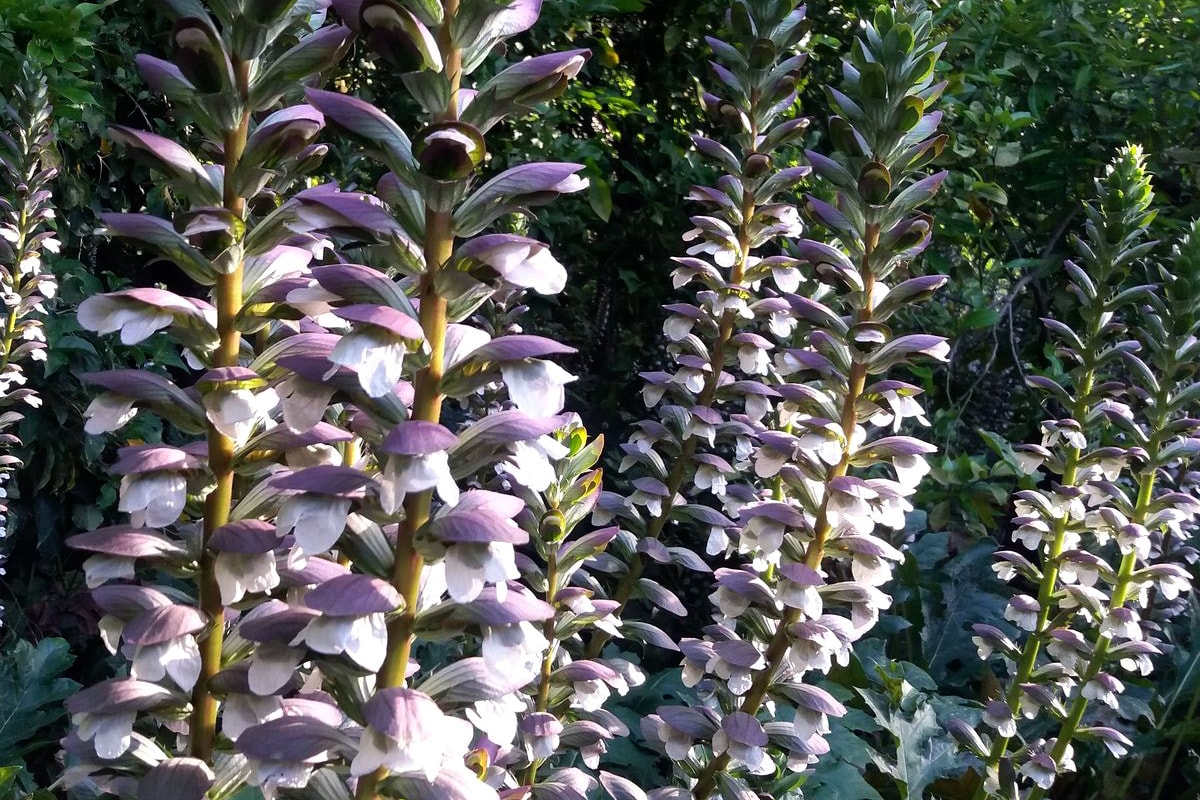
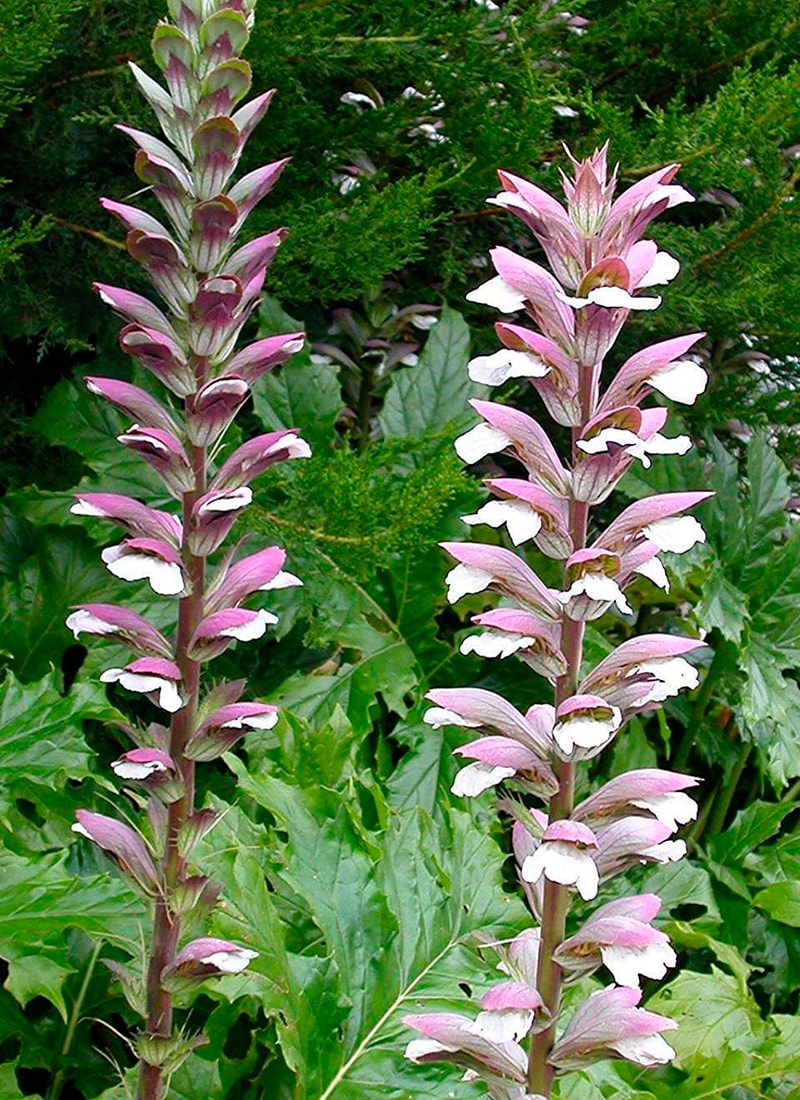
The pinkish-whitish flowers are arranged in elegant and showy
cylindrical spikes up to 60 cm high. The calyx is bilabiate, with a more
oblong upper lip, arched over the corolla, and greenish or violet in
colour.
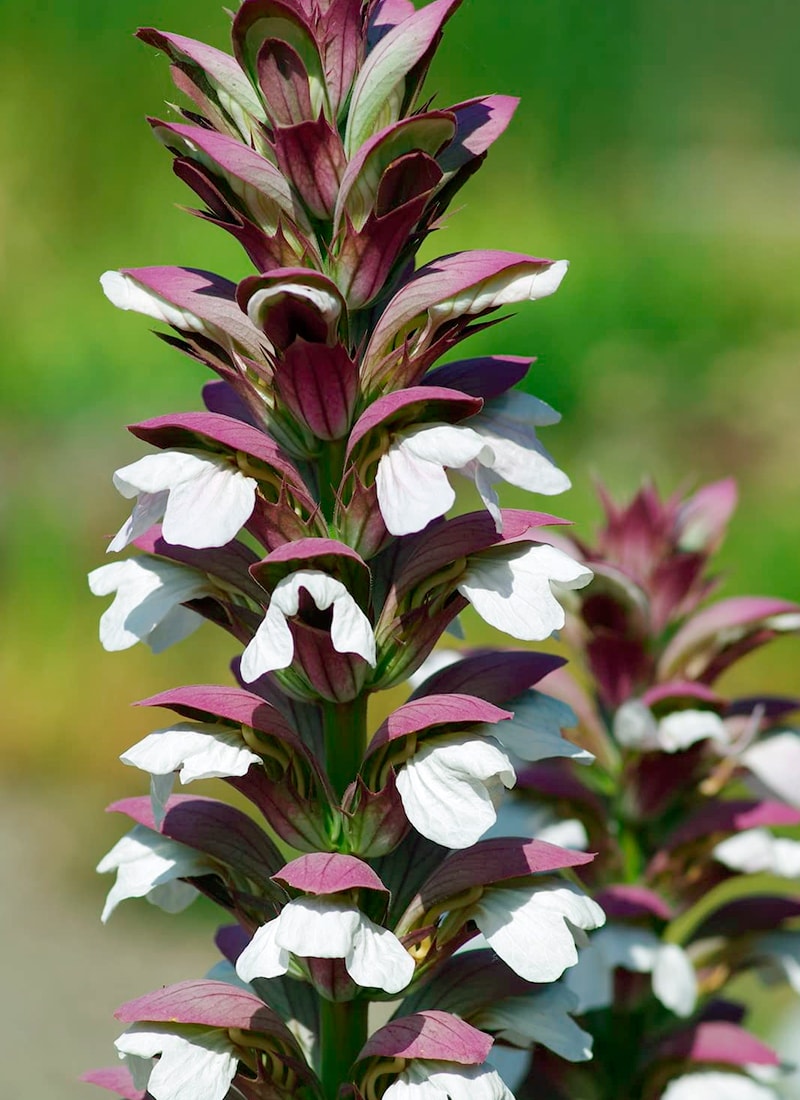
Its corolla is formed by a single tube-shaped piece about 3-5 cm long, which extends in its lower section forming a long lip, finally divided into three rounded lobes, generally tinged with purple; on this lip rest four thick stamens, somewhat twisted and with hairy anthers.
Each flower is surrounded by a few reddish-green, oval bracts with spiny teeth.
The fruits consist of stout oval capsules about 2-3 cm long, each containing two to four smooth seeds, about 10-12 mm long and black in colour.
The specimens dry up in summer, and are reborn with the arrival of the first autumn rains.
The whole plant gives off a rather unpleasant smell.
Its corolla is formed by a single tube-shaped piece about 3-5 cm long, which extends in its lower section forming a long lip, finally divided into three rounded lobes, generally tinged with purple; on this lip rest four thick stamens, somewhat twisted and with hairy anthers.
Each flower is surrounded by a few reddish-green, oval bracts with spiny teeth.
The fruits consist of stout oval capsules about 2-3 cm long, each containing two to four smooth seeds, about 10-12 mm long and black in colour.
The specimens dry up in summer, and are reborn with the arrival of the first autumn rains.
The whole plant gives off a rather unpleasant smell.
Flowering occurs from late winter to early summer.
It multiplies by seed and by cuttings from its underground stems, sown in early spring. When the fruits are ripe, the seeds jump out of the spike and readily set in the ground around the bush.
This species is native to the central and eastern Mediterranean region, where it has been used as an ornamental and medicinal plant since ancient times.
It has been spreading and naturalising in many parts of the world: United States, Ireland, Malta, Serbia, Montenegro, Turkey, Syria, etc.
It multiplies by seed and by cuttings from its underground stems, sown in early spring. When the fruits are ripe, the seeds jump out of the spike and readily set in the ground around the bush.
This species is native to the central and eastern Mediterranean region, where it has been used as an ornamental and medicinal plant since ancient times.
It has been spreading and naturalising in many parts of the world: United States, Ireland, Malta, Serbia, Montenegro, Turkey, Syria, etc.