Canary flora > Exotic and ornamental
Alcea rosea
Alcea rosea L.
Hollyhocks
Herbaceous annual, biennial or perennial, up to more than 2 m high,
which produces rigid, erect, cylindrical, pale green stems, with reddish
spots and scattered hairs.
It has large leaves, up to 25 cm in diameter, which are simple, alternate, long and thickly stalked, more or less palmate in outline, heart-shaped at the base, rough and dark green on the upper side, paler on the underside, and covered with short, rough hairs.
It has large leaves, up to 25 cm in diameter, which are simple, alternate, long and thickly stalked, more or less palmate in outline, heart-shaped at the base, rough and dark green on the upper side, paler on the underside, and covered with short, rough hairs.
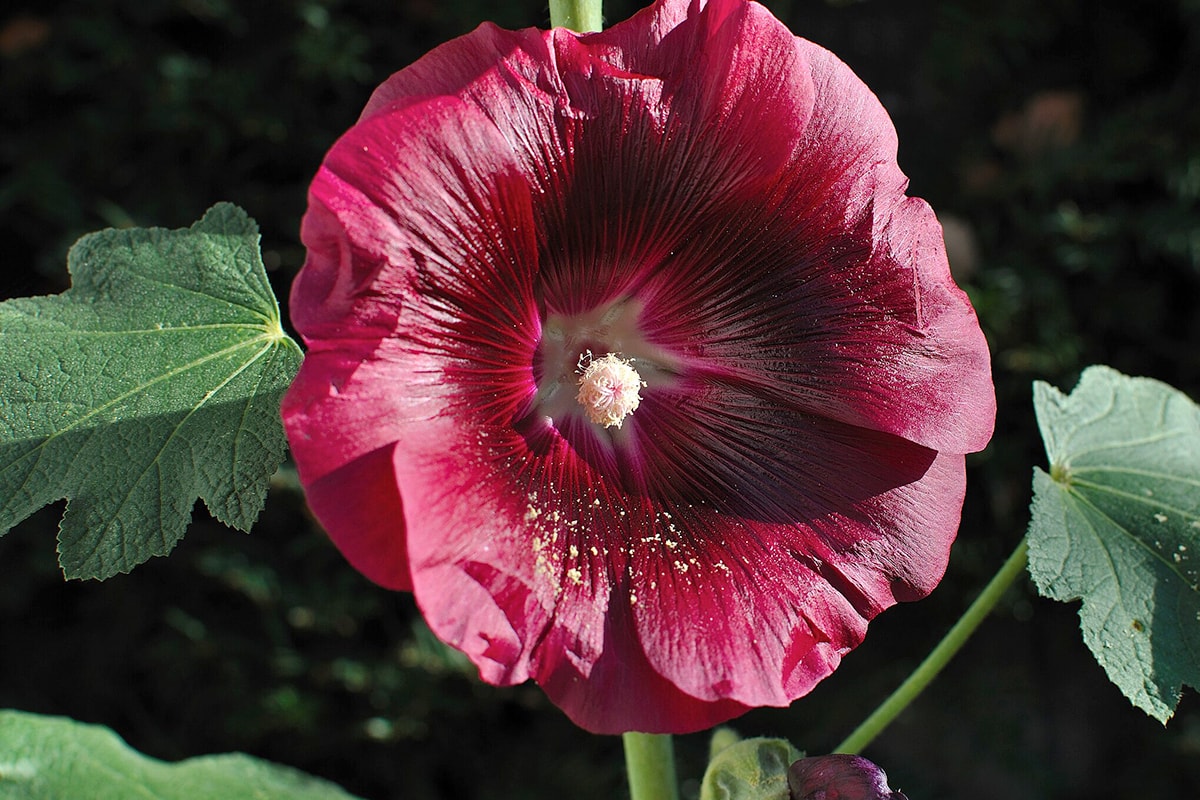
Its splendid flowers form long clusters on the upper half of the stems.
The bracts are foliaceous, laciniate, narrow and acute, with a
cup-shaped epicalyx generally divided into 6-7 lobes.
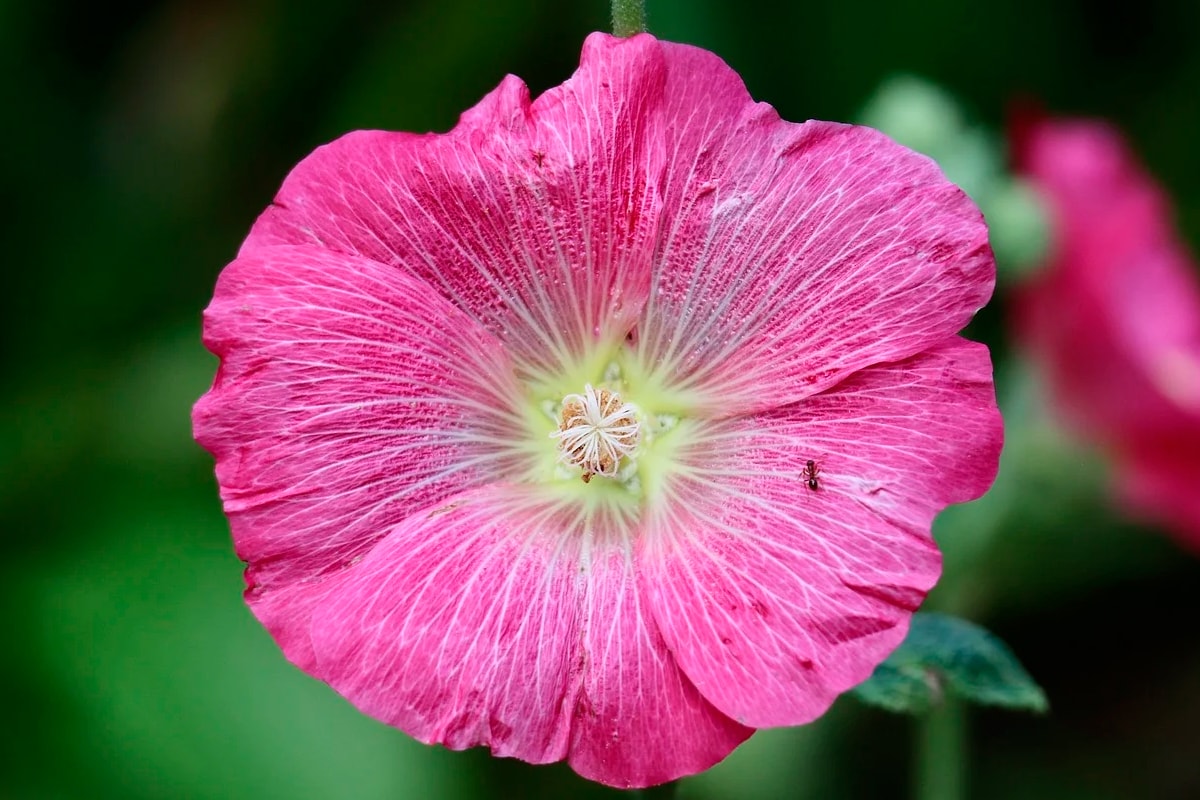
The calyx is short, green, and divided into five triangular lobes, and the corolla, about 6-10 cm in diameter, is made up of triangular obovate petals, with an attenuated base and emarginate apex, of very variable colouring, ranging from pure white to intense nazarene, passing through all possible shades of pink.
The fruit is a discoid schizocarp made up of 20-40 mericarps, reniform, dark brown and more or less hairy, forming a sort of bud about 2-3 cm in diameter.
The flowering period takes place during the spring and summer months.
The calyx is short, green, and divided into five triangular lobes, and the corolla, about 6-10 cm in diameter, is made up of triangular obovate petals, with an attenuated base and emarginate apex, of very variable colouring, ranging from pure white to intense nazarene, passing through all possible shades of pink.
The fruit is a discoid schizocarp made up of 20-40 mericarps, reniform, dark brown and more or less hairy, forming a sort of bud about 2-3 cm in diameter.
The flowering period takes place during the spring and summer months.

It reproduces by seeds, which germinate very easily, and also by shoots
that grow from the roots of the mother plant.
This plant comes from the Balkans and Asia Minor, but since ancient times it has spread throughout the Mediterranean regions, having naturalised in various parts of Europe, Asia and America, due to its easy reproduction and great adaptability.
In the Canary Islands it is relatively common in gardens in lowland and medium-sized areas, normally cultivated, although it is increasingly common to find feral specimens in areas close to human habitats.
This plant comes from the Balkans and Asia Minor, but since ancient times it has spread throughout the Mediterranean regions, having naturalised in various parts of Europe, Asia and America, due to its easy reproduction and great adaptability.
In the Canary Islands it is relatively common in gardens in lowland and medium-sized areas, normally cultivated, although it is increasingly common to find feral specimens in areas close to human habitats.


