Canary flora > Exotic and ornamental
Strelitzia reginae
Strelitzia reginae Banks
Bird of Paradise, Crane Flower
The beautiful flowers of this plant have been chosen as a tourist symbol
of the Canary Islands, fully deserving of such beautiful and suggestive
adjectives as ‘bird of paradise’ or ‘firebird’.
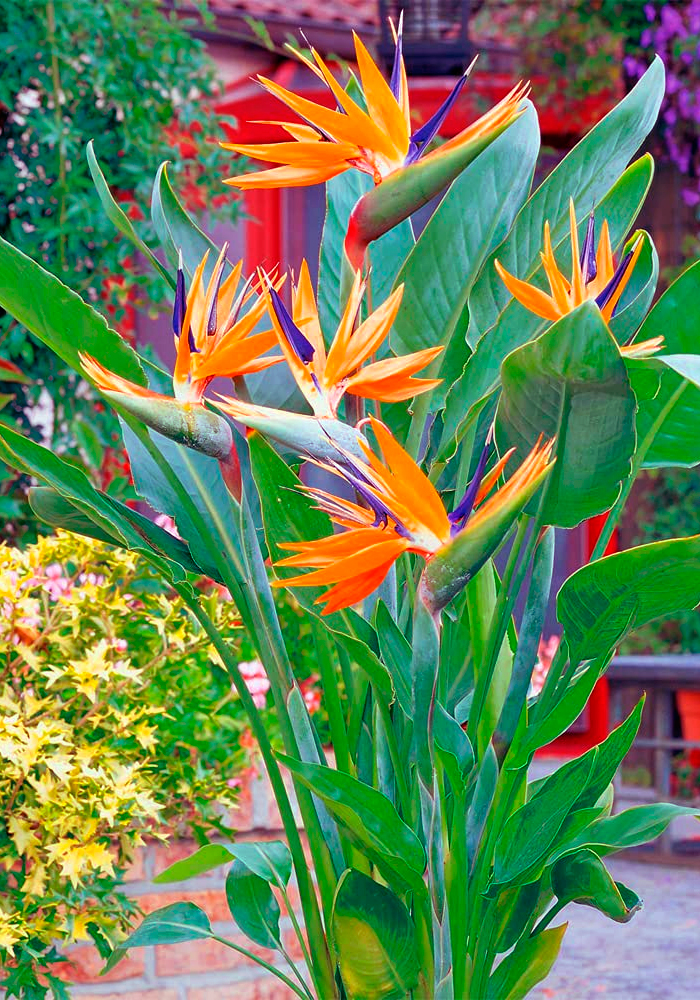
It is a perennial herbaceous plant, with a rhizome and no true stem, which produces a large number of leaves that grow together and erect, forming very compact clusters.
These leaves are bluish-green in colour, with a long, robust petiole, up to more than 1 m long, supporting a concave, more or less oval-shaped blade, with a smooth or somewhat twisted edge.
It is a perennial herbaceous plant, with a rhizome and no true stem, which produces a large number of leaves that grow together and erect, forming very compact clusters.
These leaves are bluish-green in colour, with a long, robust petiole, up to more than 1 m long, supporting a concave, more or less oval-shaped blade, with a smooth or somewhat twisted edge.

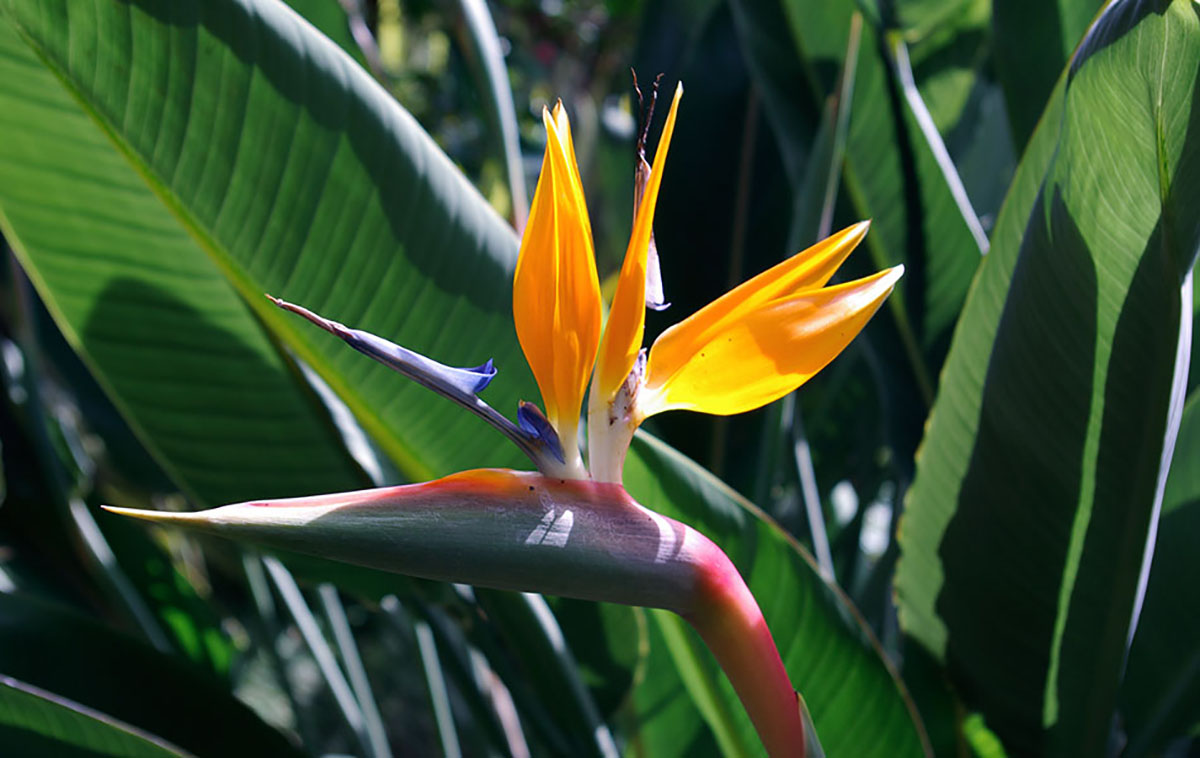
The inflorescences are situated at the end of a long stalk that
protrudes above the leaves and ends in a sharp, bark-shaped case, up to
25 cm long. Inside are lined with up to half a dozen flowers, which open
successively and gradually.
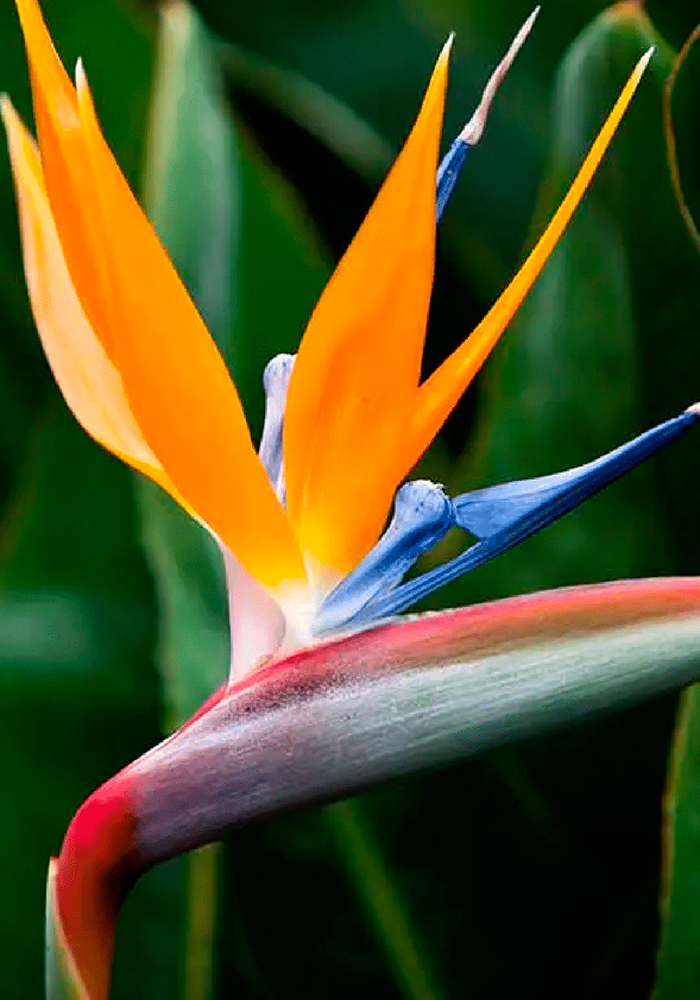
Each flower has three narrow yellow sepals and three cobalt-blue petals, one of which is stunted, while the other two are joined to form an organ (the tongue) with a central groove in which the stamens and pistil are housed.
The base of the flowers inside the case is enveloped in a viscous liquid.
Each flower has three narrow yellow sepals and three cobalt-blue petals, one of which is stunted, while the other two are joined to form an organ (the tongue) with a central groove in which the stamens and pistil are housed.
The base of the flowers inside the case is enveloped in a viscous liquid.
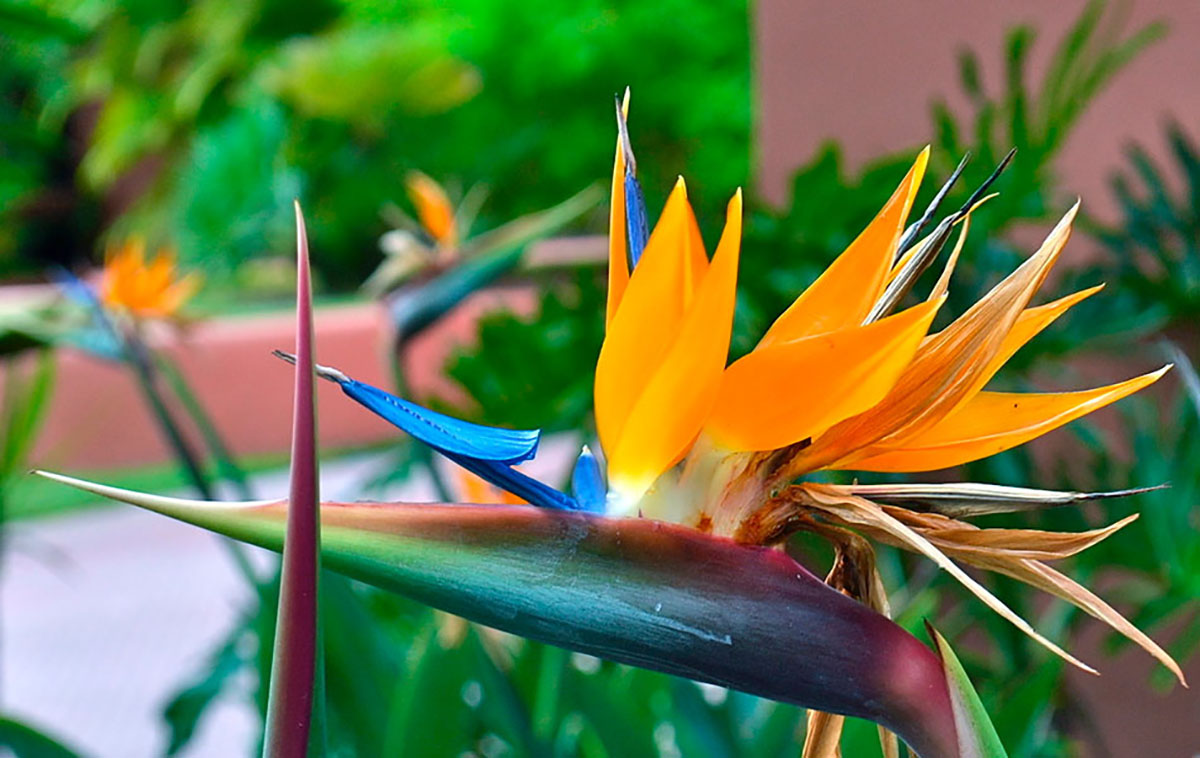
The fruits are small capsules containing globose black seeds with an
orange aril. In its regions of origin it is pollinated by small birds,
which seek the sweet nectar of its flowers, and when they land on the
arrow-shaped tepal, they move the anthers that drop the pollen on their
chests and legs, thus favouring cross-pollination between different
specimens.
This species is native to South Africa. It prefers soils rich in organic matter, high humidity and sunny exposure. It is slow-growing, needing about seven years to flower from seed.
This species is native to South Africa. It prefers soils rich in organic matter, high humidity and sunny exposure. It is slow-growing, needing about seven years to flower from seed.