Canary flora > Exotic and ornamental
Passiflora quadrangularis
Passiflora quadrangularis L.
Giant Granadilla, Parcha, Timun Belanda, Giant Tumbo
Very vigorous perennial vine with very long stems that climb and
entangle themselves with strong tendrils; the older ones are thick,
woody and sharply quadrangular, while the young ones are cylindrical,
smooth and bright green.
The large, dark green leaves, up to 25 cm long, are simple, alternate, long stalked, ovate to lanceolate, with thick venation especially prominent on the underside.
The large, dark green leaves, up to 25 cm long, are simple, alternate, long stalked, ovate to lanceolate, with thick venation especially prominent on the underside.
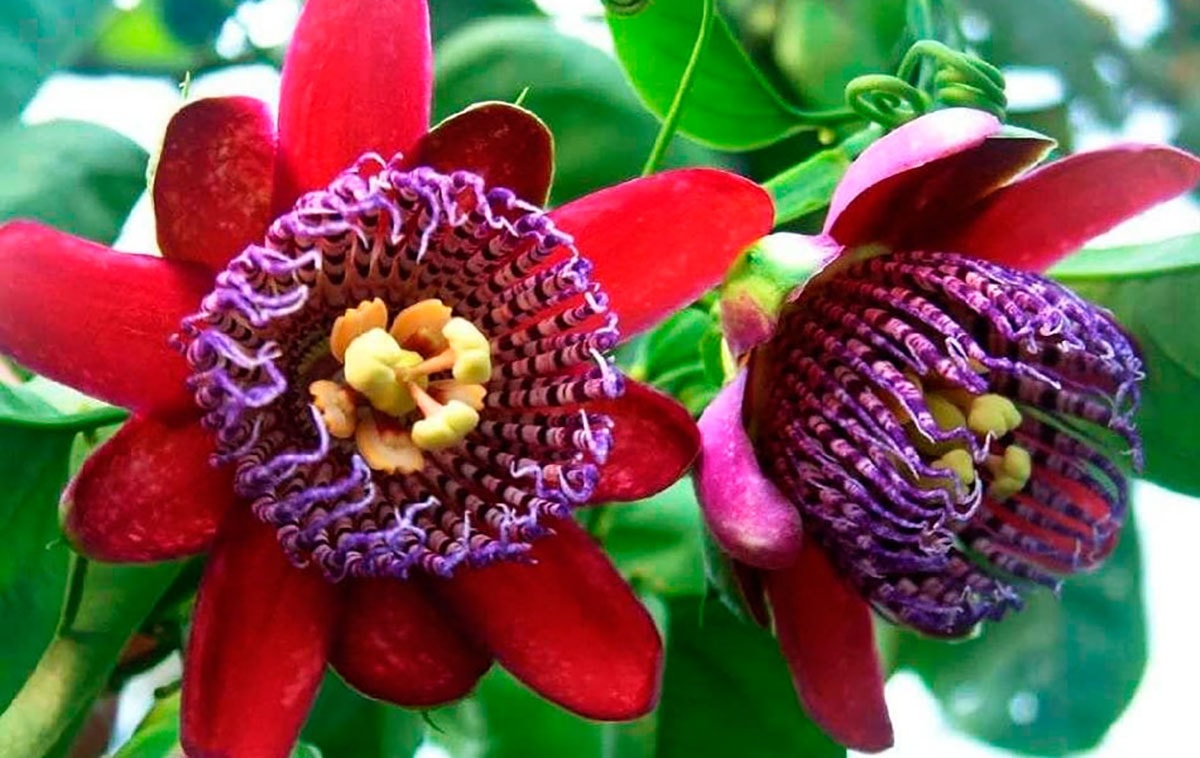
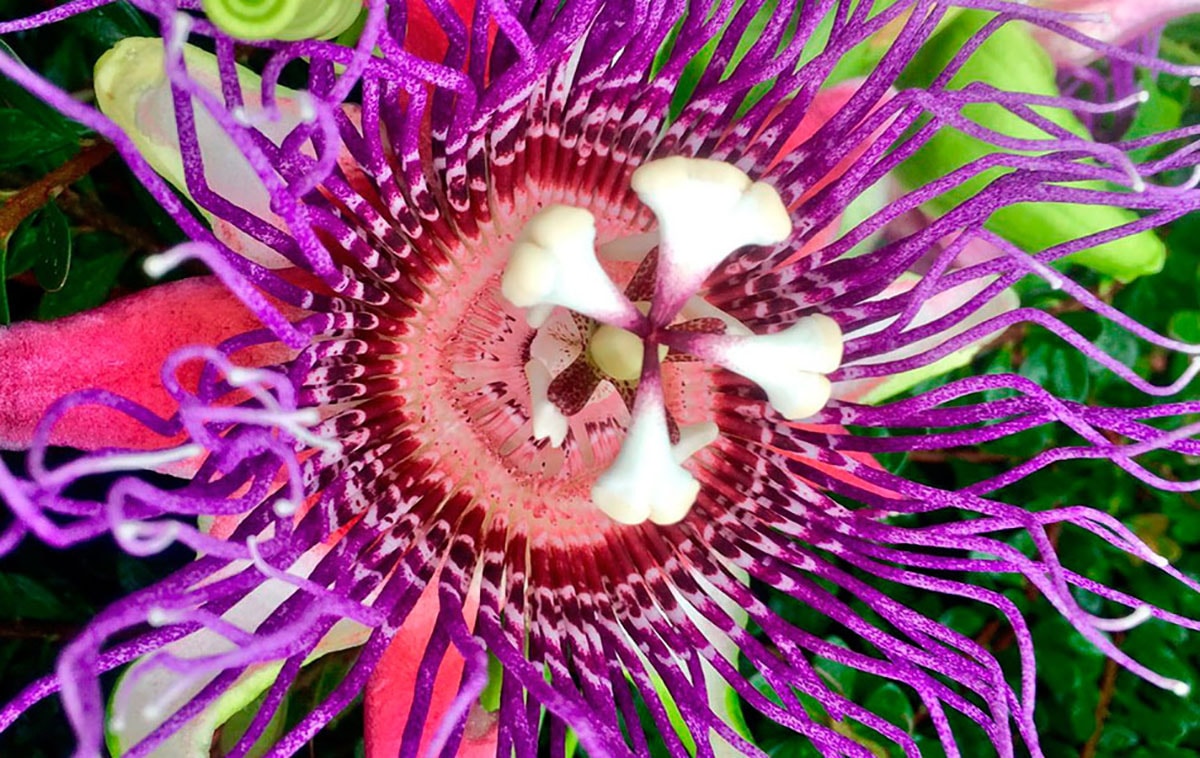
Its spectacular flowers, up to more than 5 cm in diameter, have a bulky,
fleshy, artichoke-shaped calyx of variable colour which, when opened,
reveals the flower's incredible inner beauty: a wide crown of filiform
petals decorated with white and purple stripes, in the centre of which
rises a complex and robust structure in which the stamens and the pistil
are fused.
This particular floral architecture gave rise to the generic name of this plant (Passiflora), as it was formerly taken as a symbol of the crucifixion of Christ, the petals representing the crown of thorns, the five anthers the wounds of the Roman soldiers, and the three stigmas the nails of the cross.
This particular floral architecture gave rise to the generic name of this plant (Passiflora), as it was formerly taken as a symbol of the crucifixion of Christ, the petals representing the crown of thorns, the five anthers the wounds of the Roman soldiers, and the three stigmas the nails of the cross.
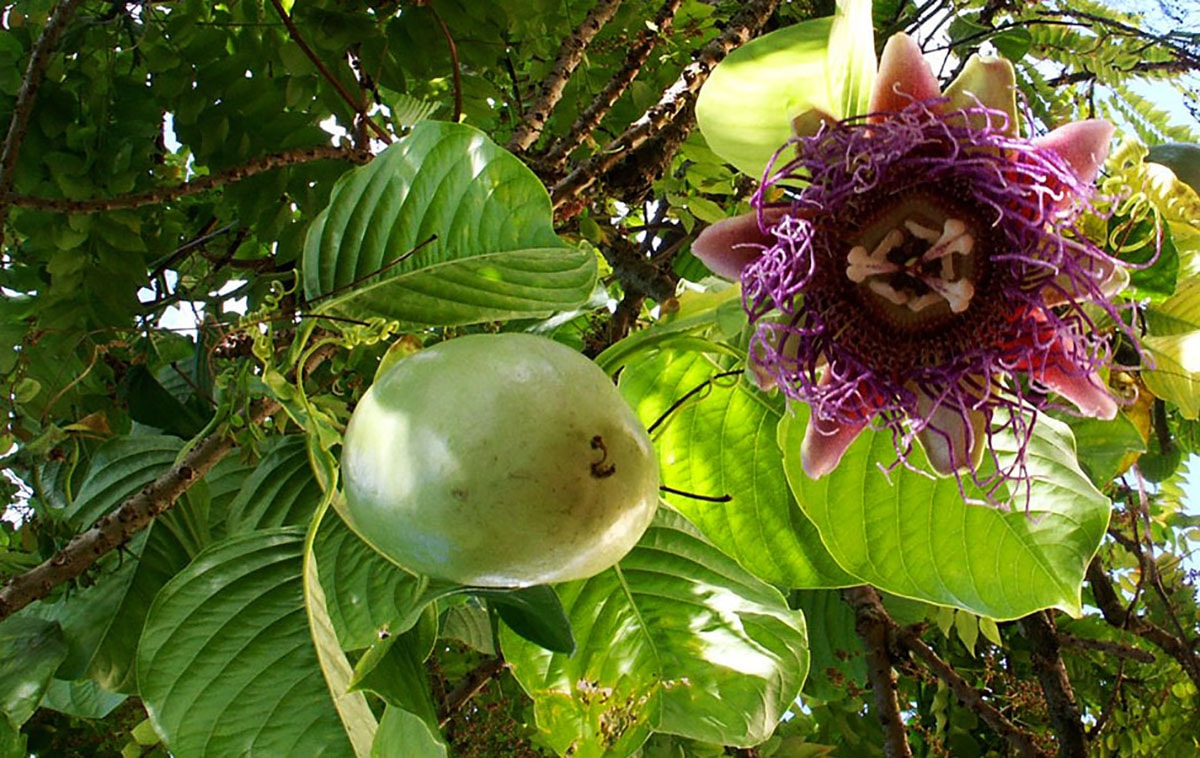
The fruits are large fleshy berries, more or less oval and up to 10 cm
long, which contain among their juicy flesh a good quantity of
heart-shaped black seeds.
The most spectacular of all parchitas originates from tropical America, having been introduced to the Canary Islands for ornamental purposes. It grows well in lowland and midland areas, especially in fertile, well-drained and fairly sunny soils.
It flowers in spring and summer. It reproduces by seed in spring and by semi-woody cuttings in summer.
The most spectacular of all parchitas originates from tropical America, having been introduced to the Canary Islands for ornamental purposes. It grows well in lowland and midland areas, especially in fertile, well-drained and fairly sunny soils.
It flowers in spring and summer. It reproduces by seed in spring and by semi-woody cuttings in summer.


