Canary flora > Exotic and ornamental
Chrysanthemum coronarium
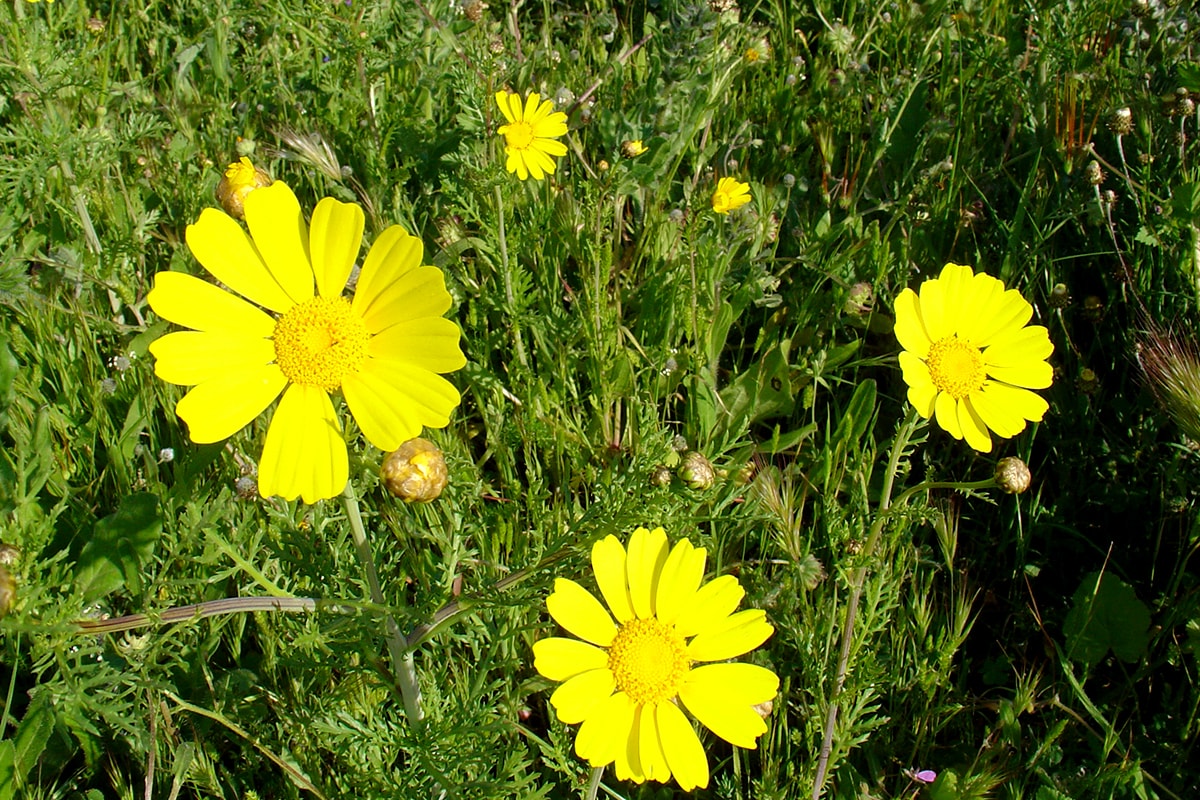
Chrysanthemum coronarium L.
Crown Daisy, Garland chrysanthemum, Chrysanthemum greens
Annual herbaceous, robust, up to 1 m high, hairless, with erect, highly
branched stems covered with abundant foliage. The bluish-green leaves,
about 3-6 cm long, are simple, alternate, sessile, oblong to obovate in
outline, slightly clasping the stem, and with their laminae twice deeply
divided into sharply toothed, lanceolate lobes.
Both the leaves and the young stems are covered with a light layer of ashy waxes.
Both the leaves and the young stems are covered with a light layer of ashy waxes.
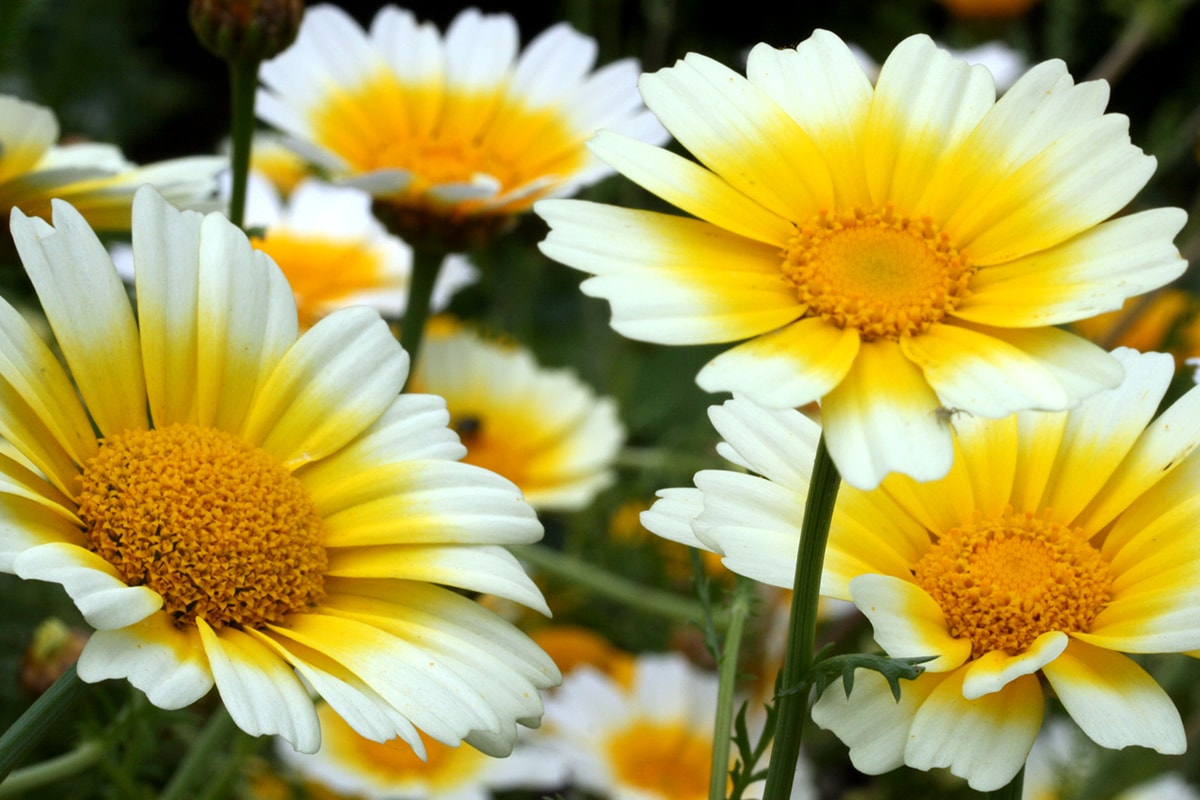
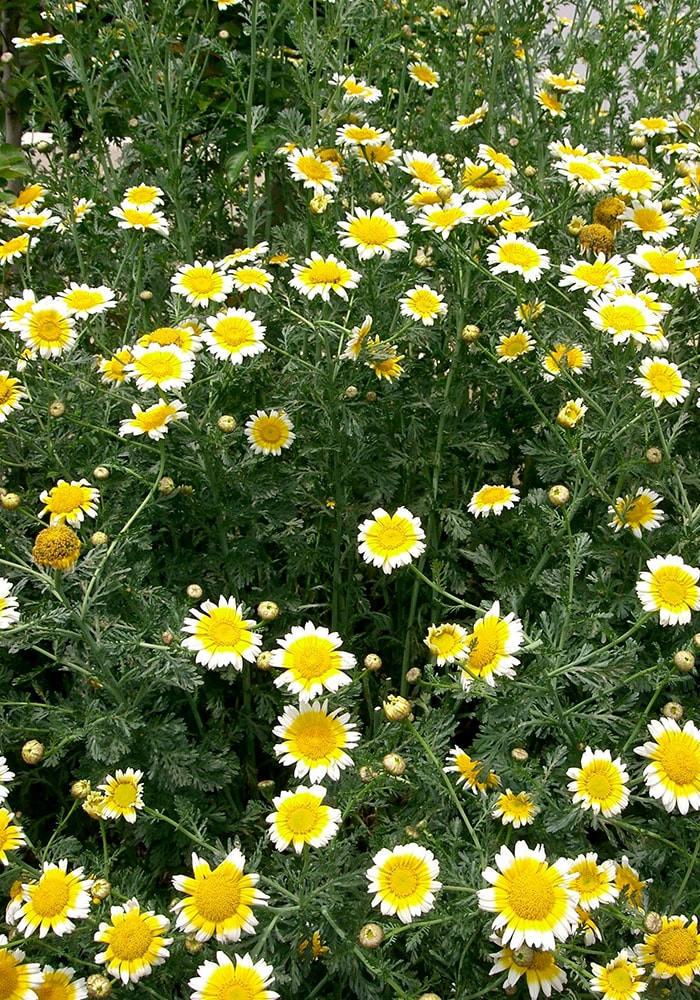
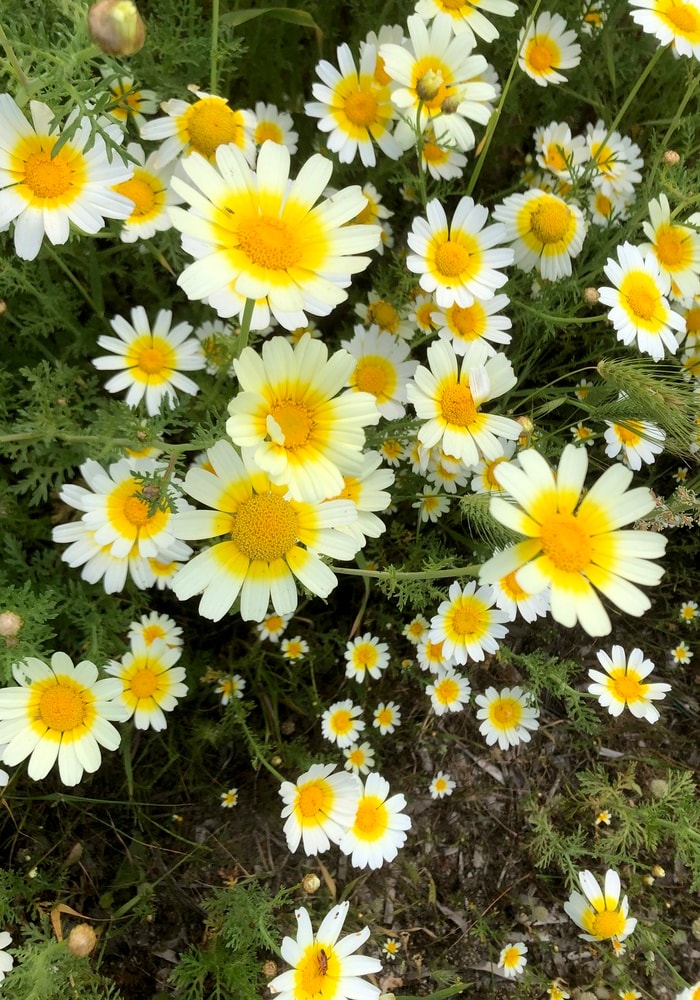
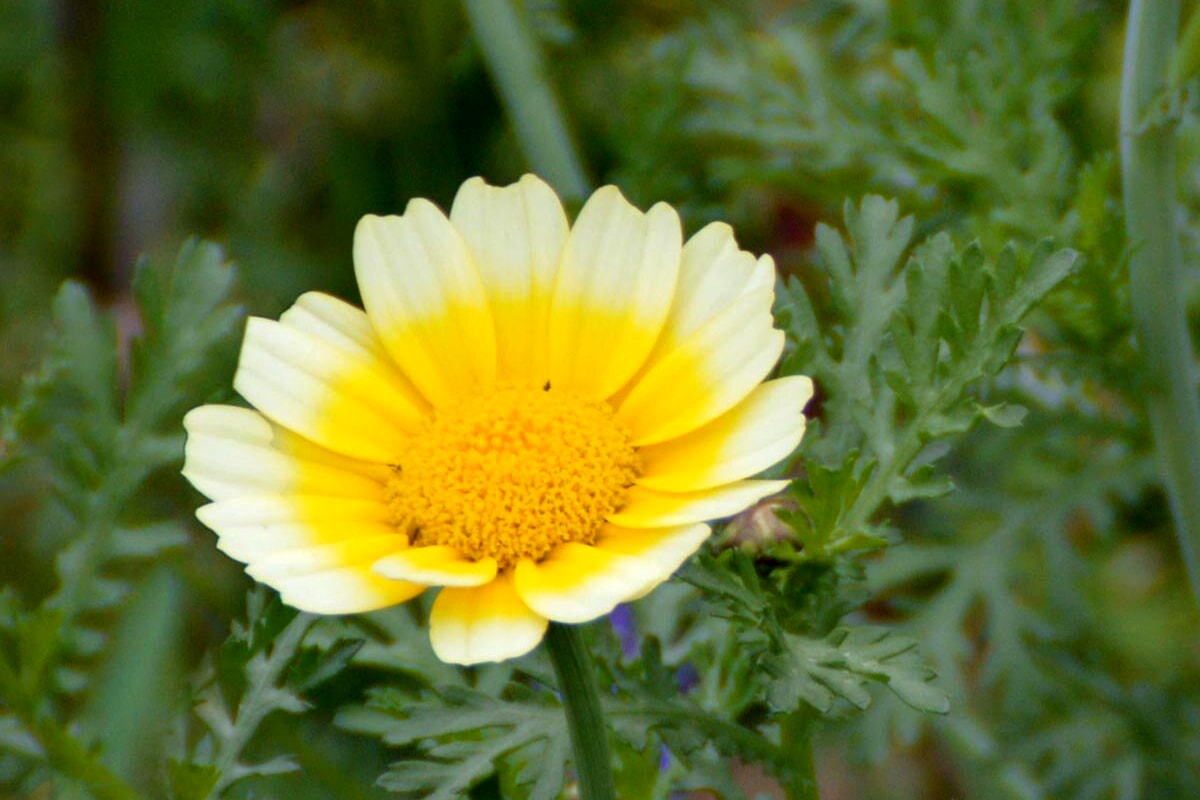
Its showy, bright yellow or yellow and white flowers are arranged in
flower heads up to 5 cm in diameter, at the end of long, slender
peduncles, and grouped in umbelliform inflorescences with several flower
heads each. When ripe, they bear fruit in tiny winged achenes, without
pappus, which are dispersed by the wind.
There is a variety, called discolor, which has white and yellow flowers on the outside of the flower head, normally located next to the completely yellow ones.
The whole plant gives off an intense camomile scent.
There is a variety, called discolor, which has white and yellow flowers on the outside of the flower head, normally located next to the completely yellow ones.
The whole plant gives off an intense camomile scent.
Flowering occurs from late winter to early summer. It reproduces by
seed.
Species of Mediterranean origin, possibly introduced into the Canary Islands for ornamental purposes. Subsequently feral, today it grows as a weed, especially abundant in rainy years, forming dense colonies in abandoned orchards, roadsides, rubbish dumps, etc.
Species of Mediterranean origin, possibly introduced into the Canary Islands for ornamental purposes. Subsequently feral, today it grows as a weed, especially abundant in rainy years, forming dense colonies in abandoned orchards, roadsides, rubbish dumps, etc.