Canary flora > Exotic and ornamental
Salvia leucantha
Salvia leucantha Cav.
Sage, Mexican Bush Sage, Mexican Sage
Perennial shrub up to more than 1 m high, abundantly branched, with
erect or raised, thin, woody, brittle stems, entirely covered with a
dense layer of whitish cottony tomentum.
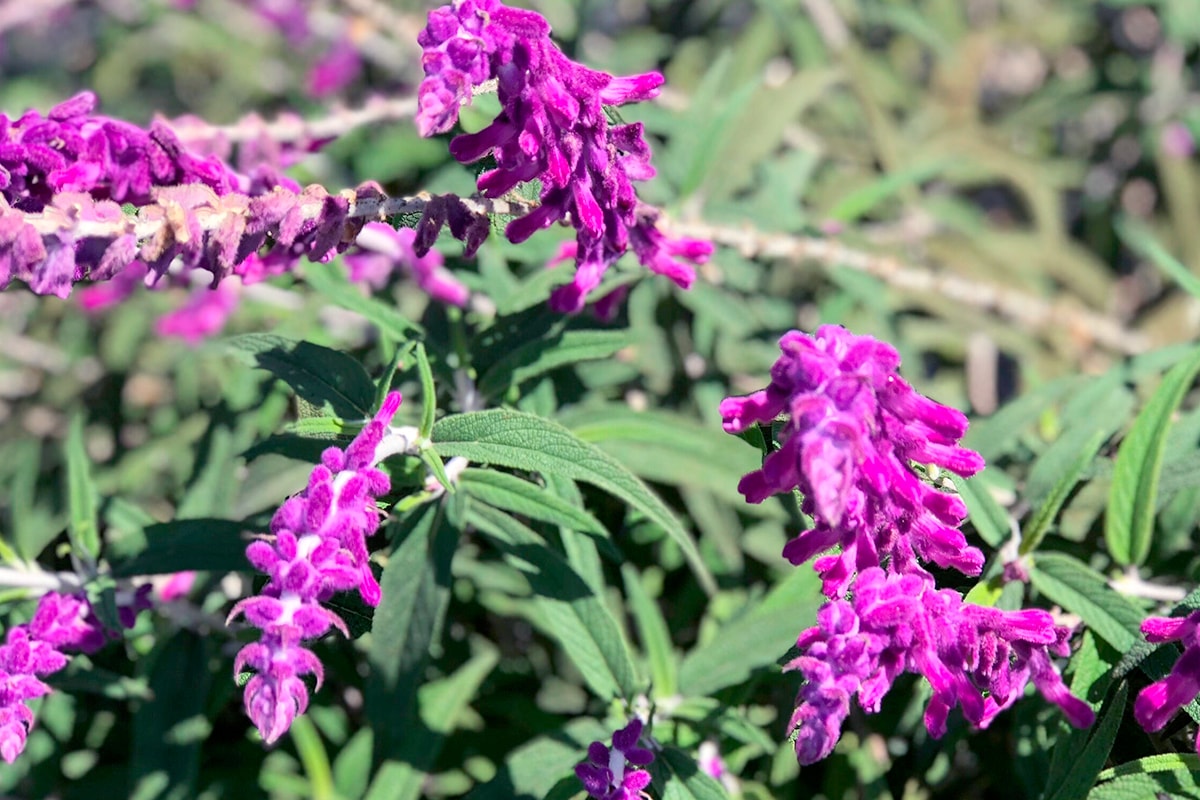
Its leaves, up to 15 cm long and 3 cm wide, are simple, opposite, narrowly lanceolate, pointed at the apex and scalloped at the edges; very rough, slightly pubescent and dark green on the upper side, greenish-white and somewhat woolly on the underside, with very marked nerves.
Its leaves, up to 15 cm long and 3 cm wide, are simple, opposite, narrowly lanceolate, pointed at the apex and scalloped at the edges; very rough, slightly pubescent and dark green on the upper side, greenish-white and somewhat woolly on the underside, with very marked nerves.
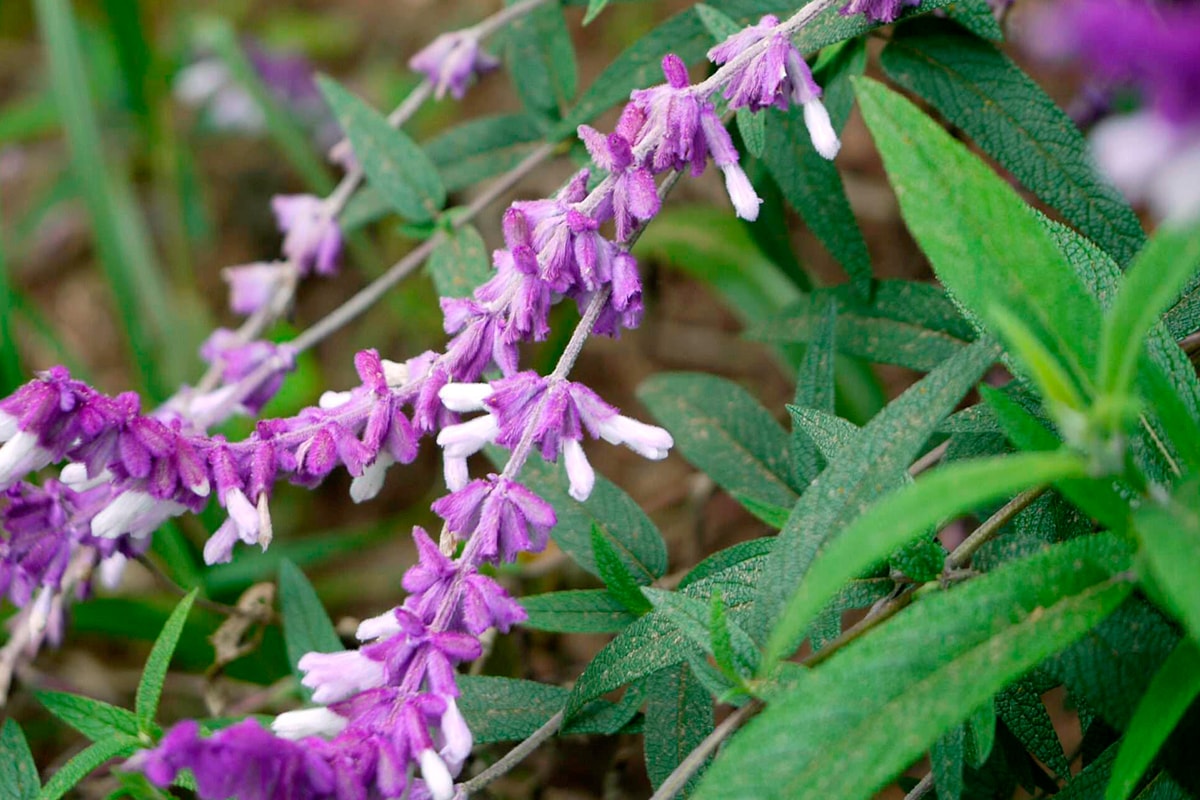
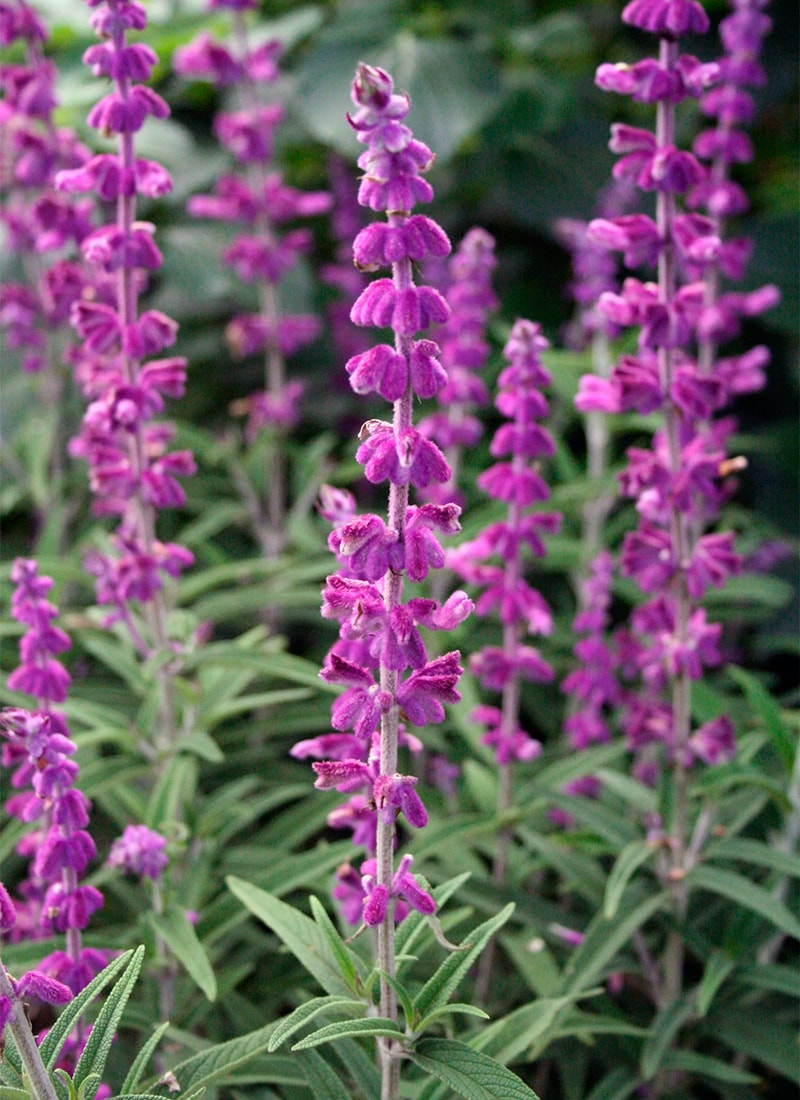
Its showy flowers are grouped in long spadiform clusters up to more than
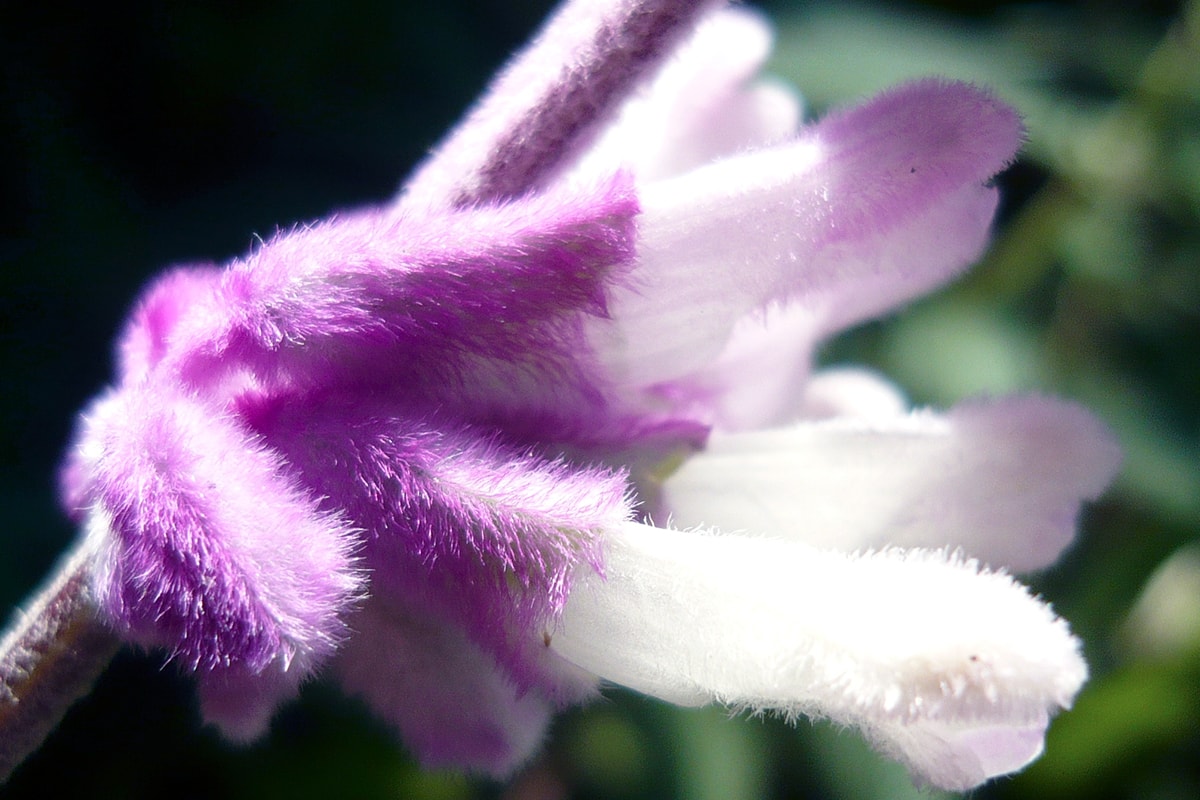
30 cm long. Each flower has a small funnel-shaped calyx, covered with a
dense, soft violet or nazarene-coloured down, and a bilabiate corolla
just over 1 cm long, slightly pubescent and whitish in colour, with
purplish tints.
The fruits are small nuts containing four tiny black seeds.
The fruits are small nuts containing four tiny black seeds.
The whole plant gives off a characteristic, penetrating scent, which
some people find unpleasant as it is stronger and denser than that of
common sage.
It has a very long flowering period, with a not very intense flowering period in late spring, and a fairly dense main flowering period in autumn, although in very favourable locations cultivated specimens can flower at any time of the year.
Reproduction is by seed and cuttings.
It has a very long flowering period, with a not very intense flowering period in late spring, and a fairly dense main flowering period in autumn, although in very favourable locations cultivated specimens can flower at any time of the year.
Reproduction is by seed and cuttings.