Canary flora > Exotic and ornamental
Amaryllis belladonna

Amaryllis belladonna L.
Jersey lily, Belladonna lily, Naked lady lily, March lily
It is a perennial bulbous plant native to South Africa, the most
striking feature of which is that its showy, fragrant bell-shaped
flowers appear before the leaves sprout.
The bulb is globular and very large, between 5-10 cm in diameter, and protrudes largely out of the ground.
It has basal, acinate, semi-erect, smooth, dark green leaves, 30-50 cm long by 2-3 cm wide, arranged in two more or less parallel rows on either side of the flowering stem.
The bulb is globular and very large, between 5-10 cm in diameter, and protrudes largely out of the ground.
It has basal, acinate, semi-erect, smooth, dark green leaves, 30-50 cm long by 2-3 cm wide, arranged in two more or less parallel rows on either side of the flowering stem.
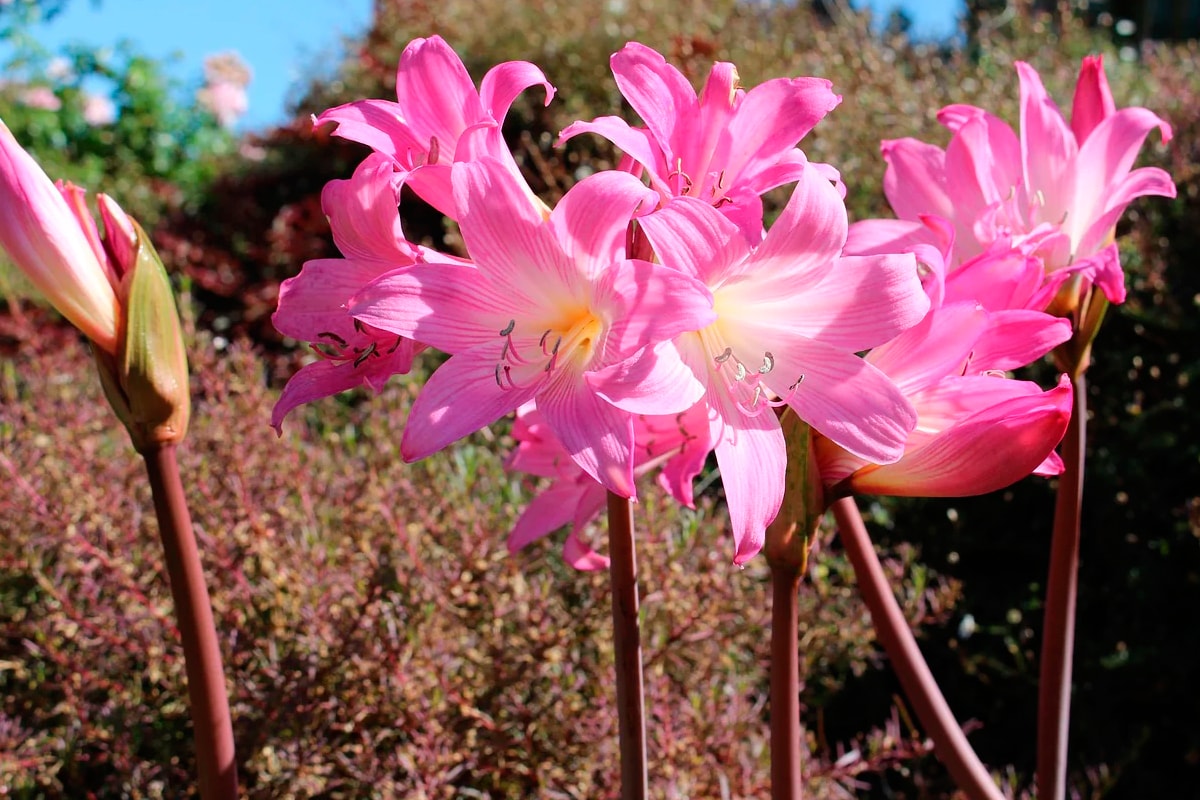
Generally, with the first autumn rains, the flower buds emerge from the
bulbs, which rapidly develop into long, cylindrical, cylindrical, stout,
solid, purple, smooth or somewhat hairy flower stalks up to 30-40 cm
high, crowned by a group of two to four flowers.
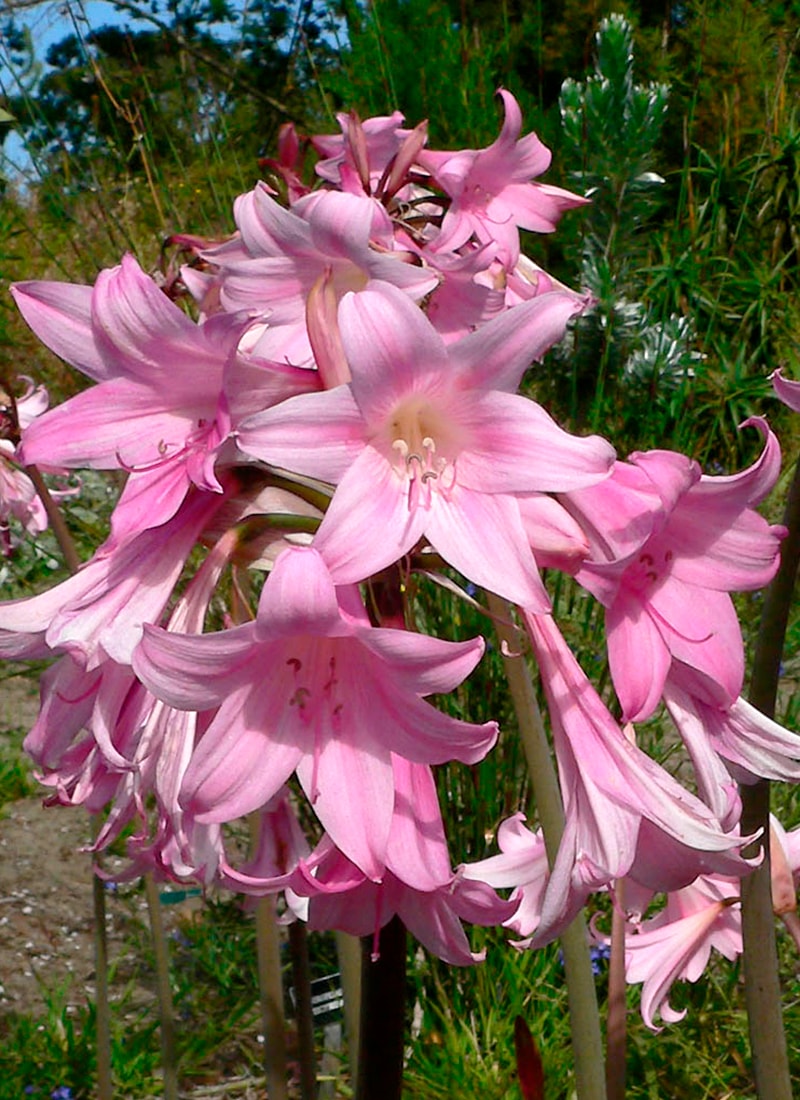
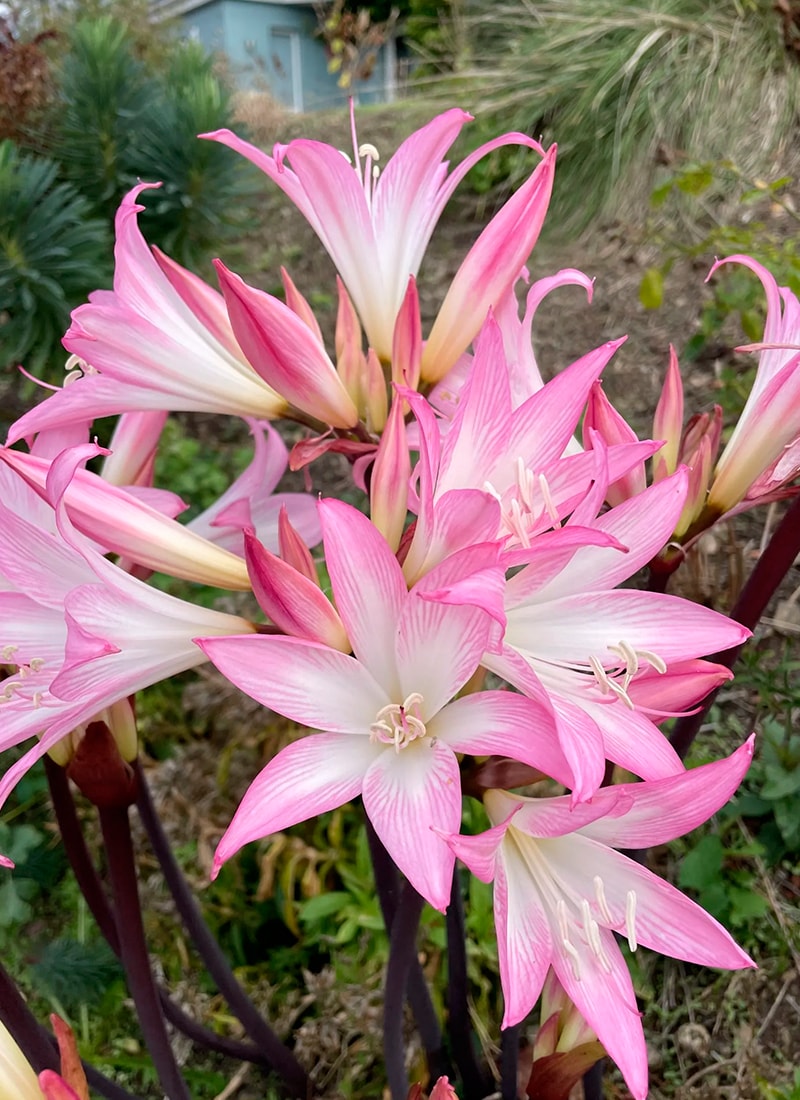
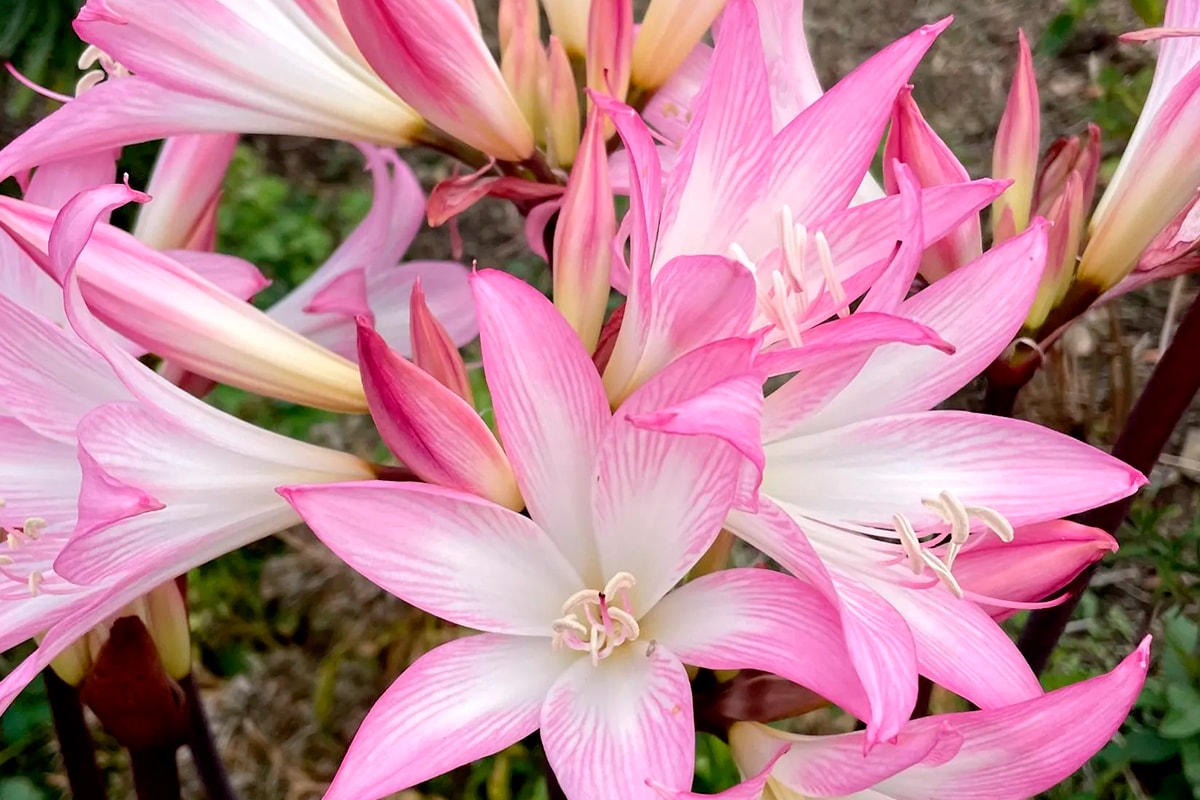
These flowers are large, bell-shaped, about 7-10 cm in diameter, simple or semi-double, usually with six petals that open radially and recurve at the end, whitish-pinkish in colour, sometimes with more reddish tones.
The styles are long and protruding, with twisted anthers, whitish at first and reddish later.
These flowers are large, bell-shaped, about 7-10 cm in diameter, simple or semi-double, usually with six petals that open radially and recurve at the end, whitish-pinkish in colour, sometimes with more reddish tones.
The styles are long and protruding, with twisted anthers, whitish at first and reddish later.
When ripe, they produce a large number of fleshy, irregularly angular,
pinkish-coloured seeds, enclosed in a thin, whitish capsule.
It flowers from mid-winter to well into summer, depending on the location.
It reproduces by dividing the bulbs that grow at the base of the mother plant during the resting period. It can also be done by seeds, which can be easily collected when the spherical capsule containing them is opened, and can be sown in pots or directly in the ground, although in this case it is necessary to wait 2 to 3 years for the plant to flower.
The leaves remain until summer, when they disappear, and then the bulb remains buried and invisible while waiting for the next rains.
This species is native to South Africa, and from there it has spread to many parts of the world, being considered an invasive plant in the south of the United States, Madeira, the Azores, South Australia and New Zealand.
It flowers from mid-winter to well into summer, depending on the location.
It reproduces by dividing the bulbs that grow at the base of the mother plant during the resting period. It can also be done by seeds, which can be easily collected when the spherical capsule containing them is opened, and can be sown in pots or directly in the ground, although in this case it is necessary to wait 2 to 3 years for the plant to flower.
The leaves remain until summer, when they disappear, and then the bulb remains buried and invisible while waiting for the next rains.
This species is native to South Africa, and from there it has spread to many parts of the world, being considered an invasive plant in the south of the United States, Madeira, the Azores, South Australia and New Zealand.