Canary flora > Exotic and ornamental
Duranta erecta
Duranta erecta L.
Golden dewdrop, Pigeon berry, Sky flower
Shrub or small evergreen tree, erect or creeping, 2-5 m high, with
pendulous, quadrangular branches, generally somewhat thorny, and covered
with a thin greyish-brown bark.
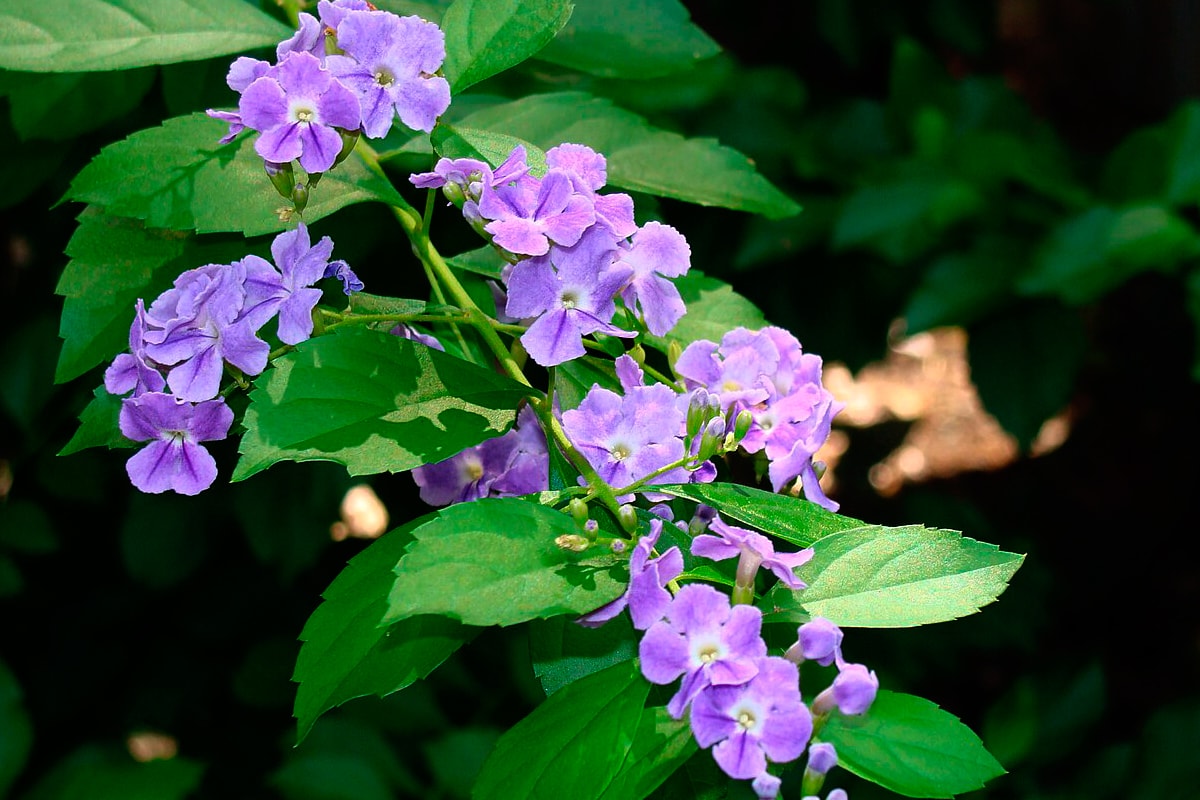
Its leaves, of an intense green colour, sometimes yellow and with white spots near the edges, are simple, opposite, shortly petiolate, with an ovate, elliptic or lanceolate lamina, about 3-7 cm long and 1-3 cm wide, with an entire margin or with a few irregular teeth in the upper half, and a smooth surface or with a very slight pubescence.
Its leaves, of an intense green colour, sometimes yellow and with white spots near the edges, are simple, opposite, shortly petiolate, with an ovate, elliptic or lanceolate lamina, about 3-7 cm long and 1-3 cm wide, with an entire margin or with a few irregular teeth in the upper half, and a smooth surface or with a very slight pubescence.
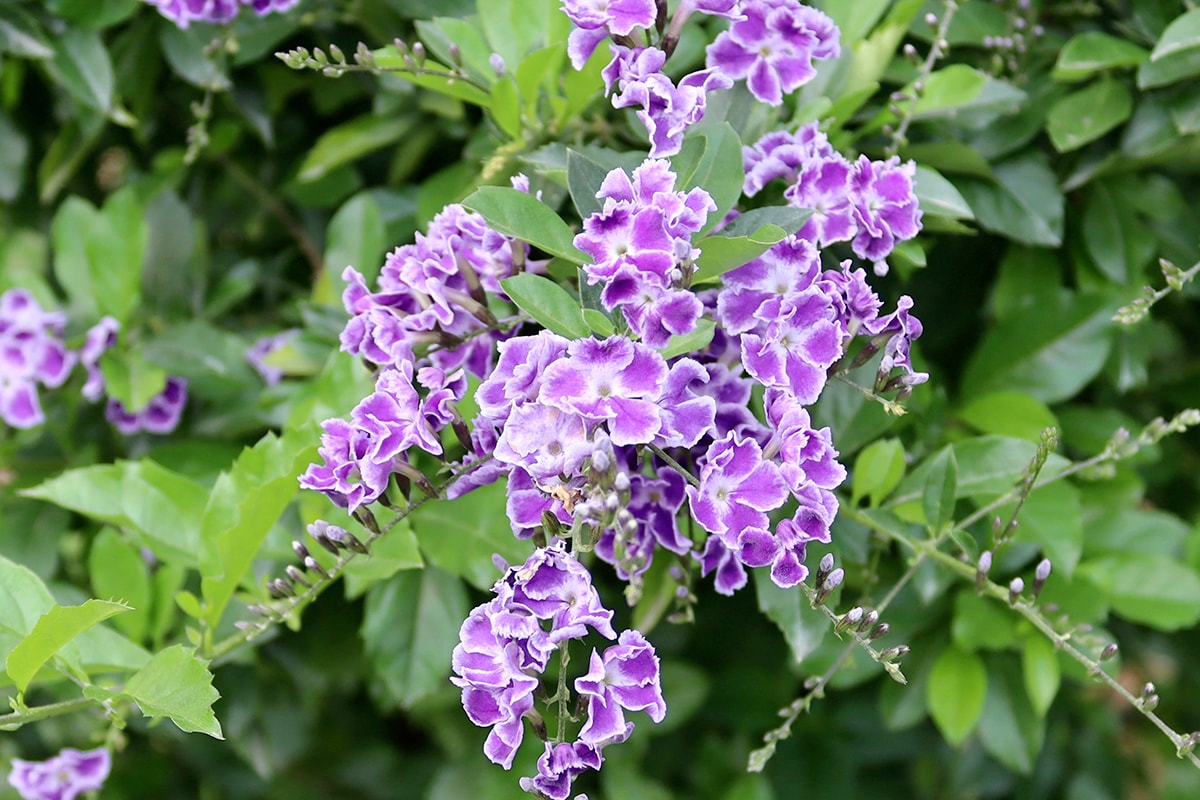
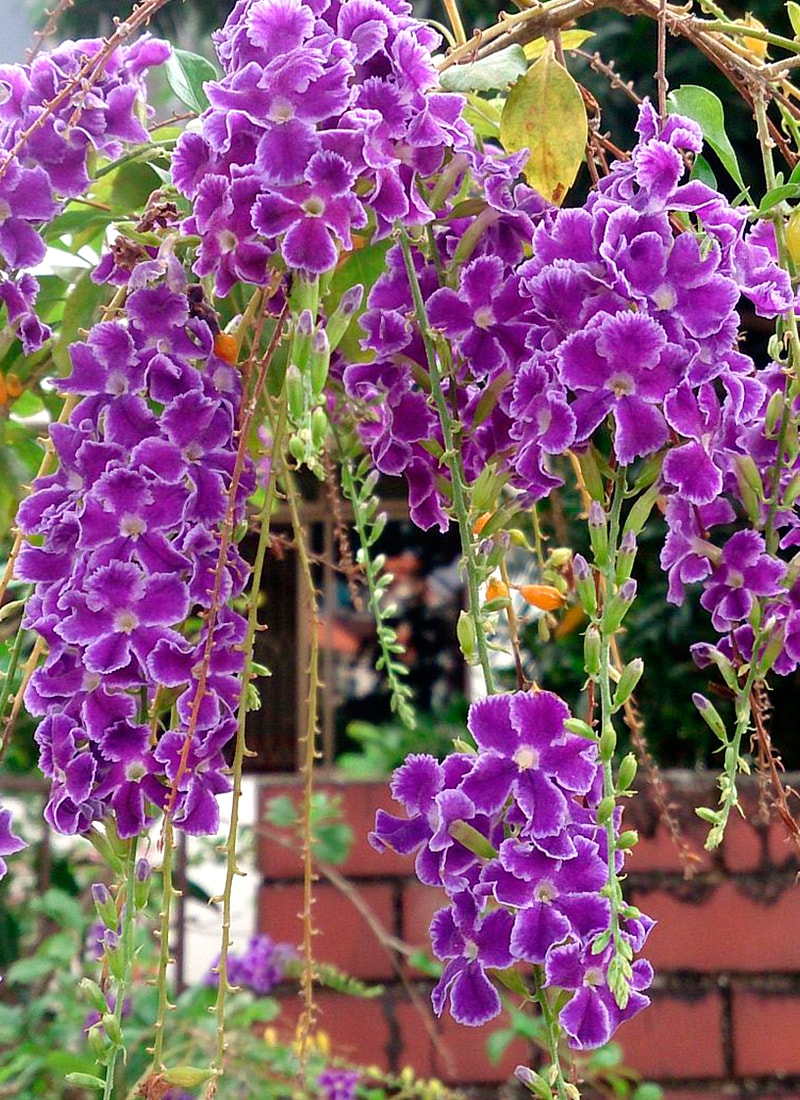
Its small flowers, usually deep blue and between 2-4 mm long, are
grouped in showy panicle clusters, terminal or axillary, between 5-22 cm
long.
Each flower has a light green tubular calyx, sparsely pubescent and ending in five acute teeth, and a lilac, light blue, whitish or yellowish corolla, formed by a long tube that narrows at the apex, and topped by five unequal lobes.
Each flower has a light green tubular calyx, sparsely pubescent and ending in five acute teeth, and a lilac, light blue, whitish or yellowish corolla, formed by a long tube that narrows at the apex, and topped by five unequal lobes.
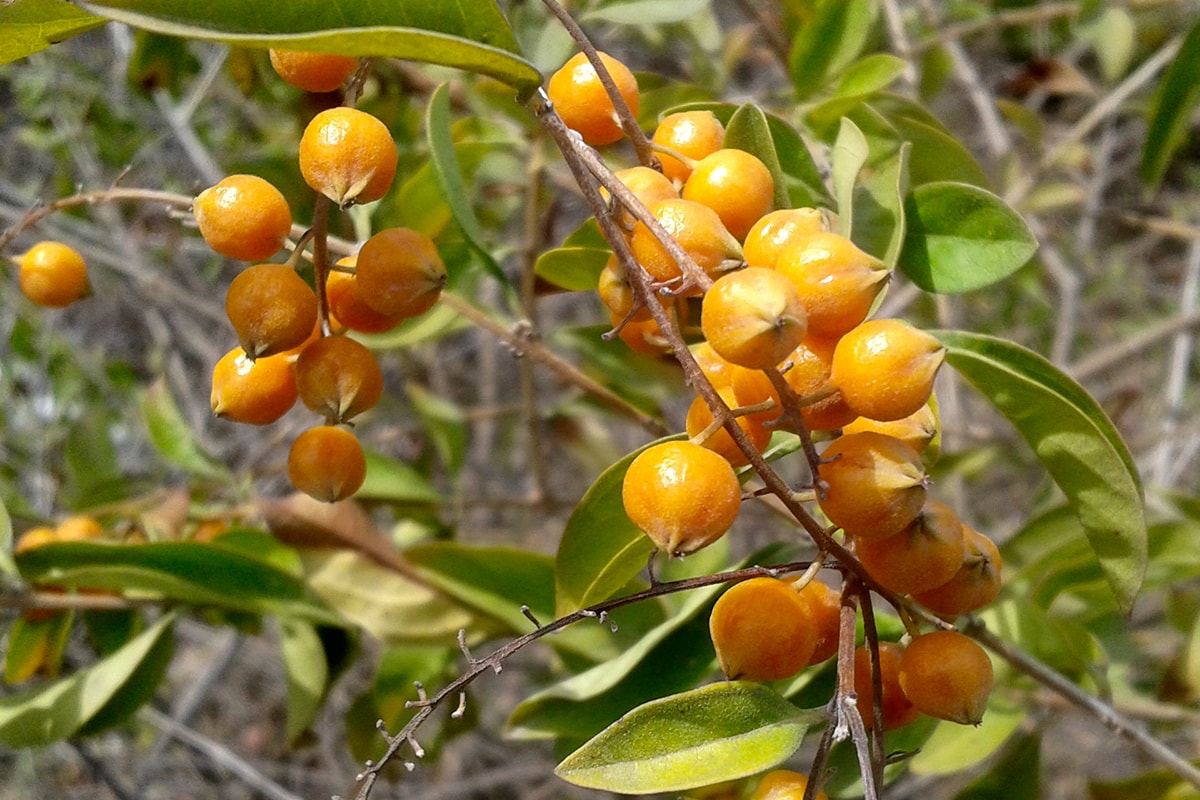
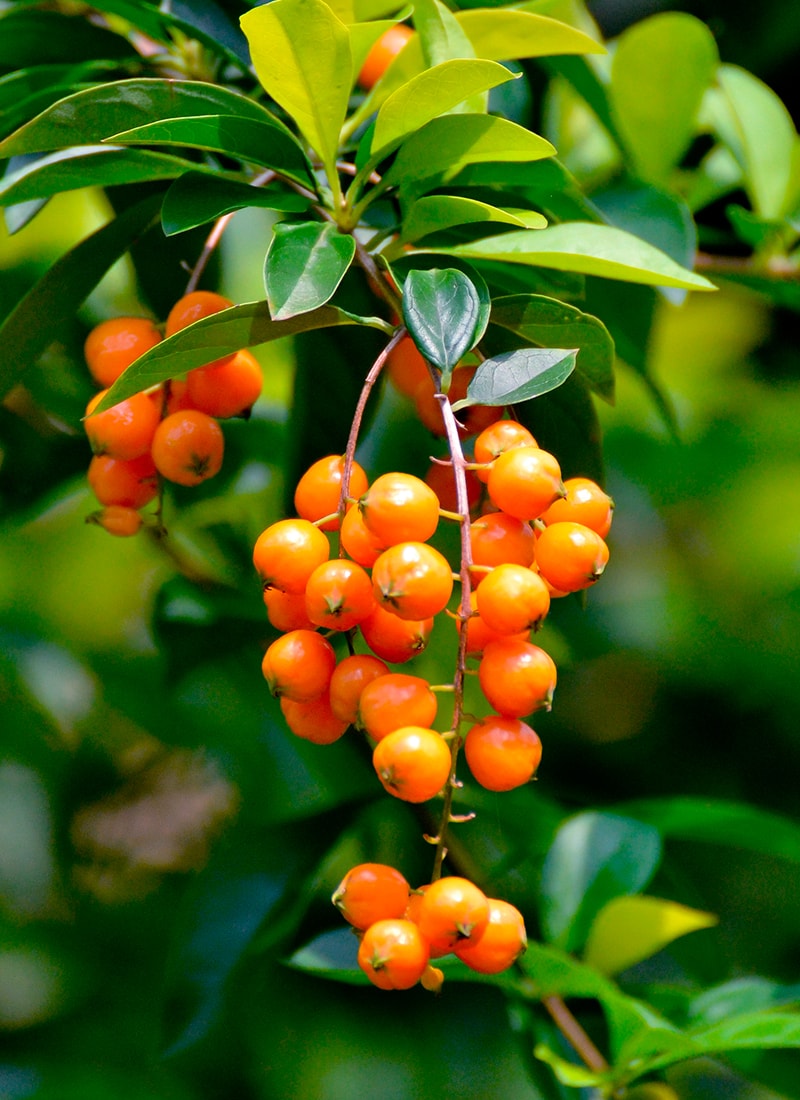
The fruits are fleshy drupes about 1 cm in diameter, bright yellow at
first and orange later, containing eight tiny seeds inside.
Flowering normally takes place from spring until almost the end of autumn, although in very favourable locations, specimens can be seen flowering almost all year round.
The flowers give off a delicate vanilla scent, attracting numerous insects and, in its native areas, hummingbirds.
It reproduces by seed and cuttings.
Flowering normally takes place from spring until almost the end of autumn, although in very favourable locations, specimens can be seen flowering almost all year round.
The flowers give off a delicate vanilla scent, attracting numerous insects and, in its native areas, hummingbirds.
It reproduces by seed and cuttings.