Canary flora > Exotic and ornamental
Anthurium andraeanum
Anthurium andraeanum Linden ex André
Flamingo flower, Tailflower, Oilcloth flower
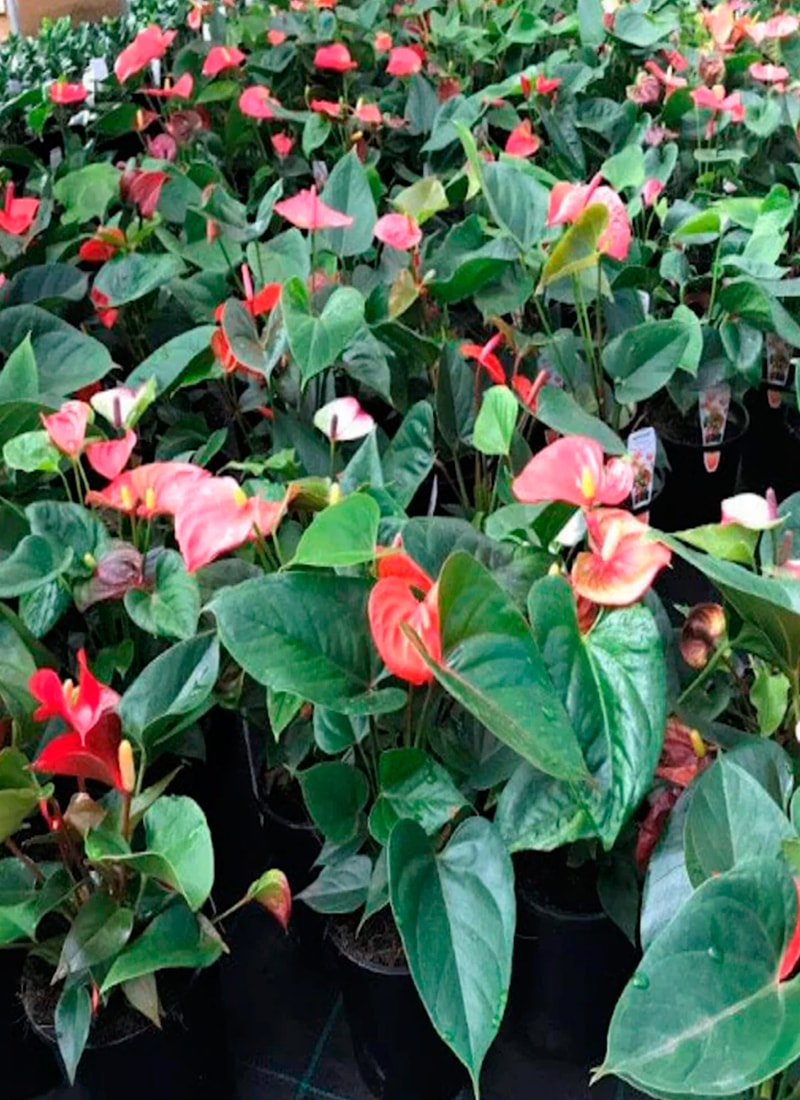
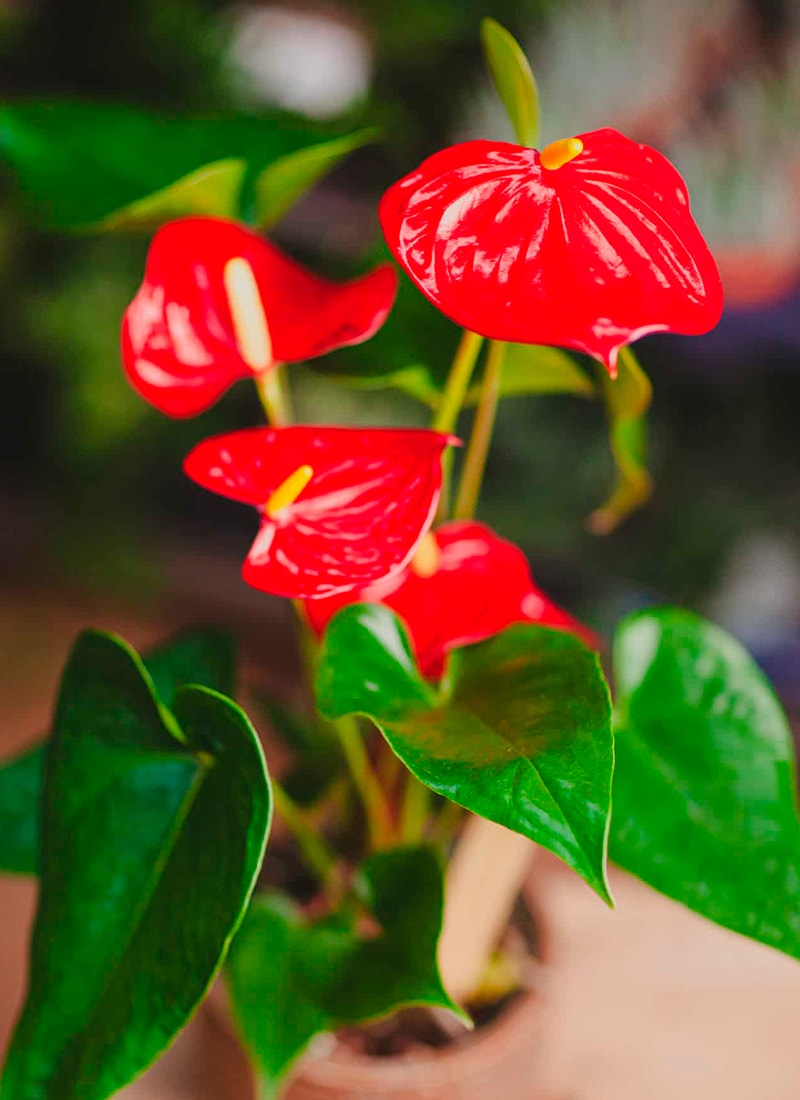
The anthurium is a very striking plant, with heart-shaped flowers, very
bright, plastic-like in appearance and texture, and very brightly
coloured, usually red, pink or orange, together with a protruding erect
spadix, forming together with its large, lustrous leaves a very exotic
and elegant ensemble, suitable for decorating any space, whether
outdoors or in well-lit interiors.
It is a perennial herbaceous plant, with fasciculate roots, quite
fibrous, cylindrical in appearance, fleshy in consistency and shallow in
development. They have a herbaceous stem that becomes semi-woody as the
specimens develop.
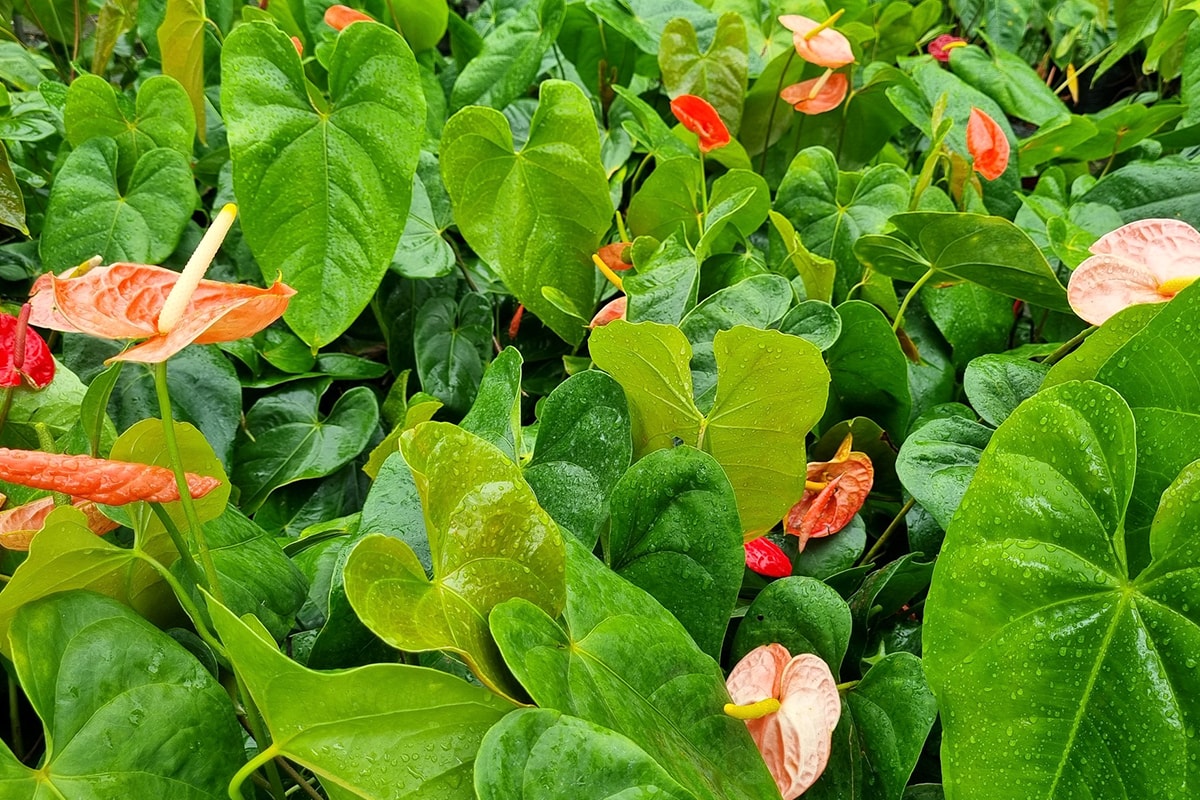
The leaves are quite large, thick, consistent, dark green in colour, with a plasticised appearance and texture. They are simple, alternate, very long stalked, ovate, heart-shaped or hooked, sometimes divided into lobes or even hand-shaped, cordate at the base, pointed at the apex and generally reflexed.
The leaves are quite large, thick, consistent, dark green in colour, with a plasticised appearance and texture. They are simple, alternate, very long stalked, ovate, heart-shaped or hooked, sometimes divided into lobes or even hand-shaped, cordate at the base, pointed at the apex and generally reflexed.
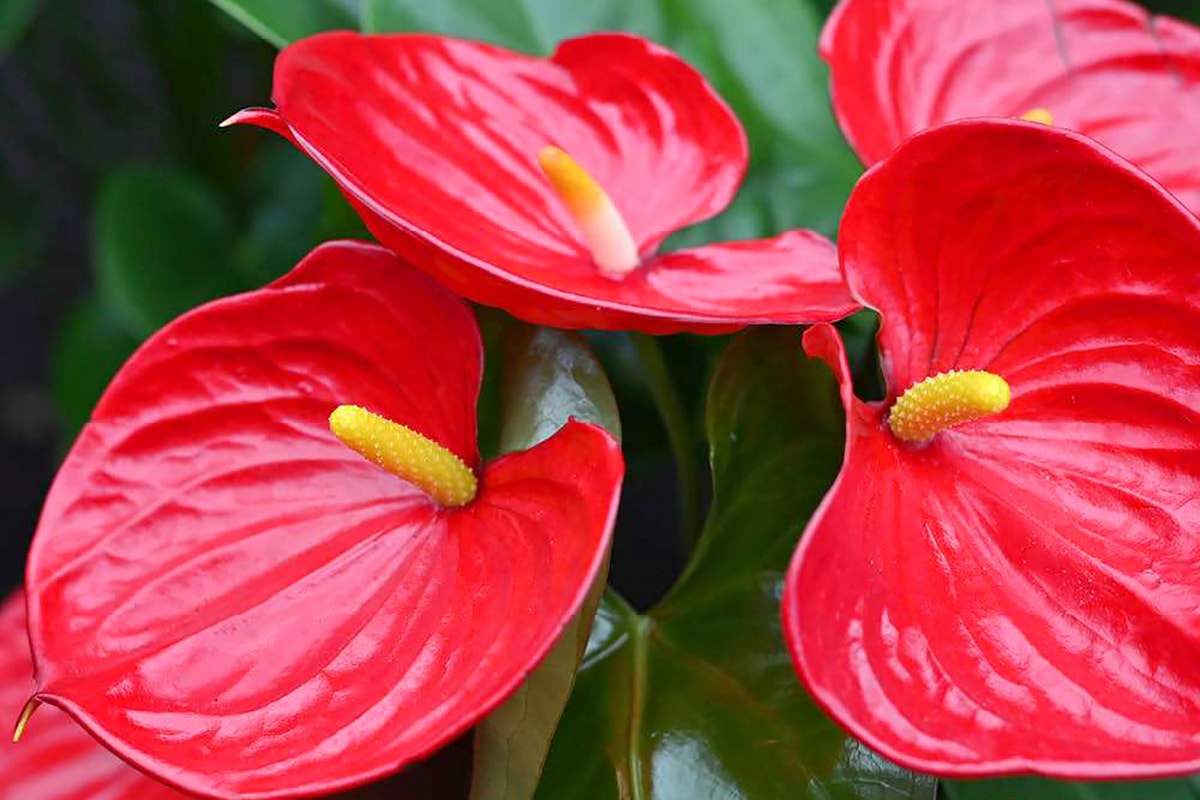
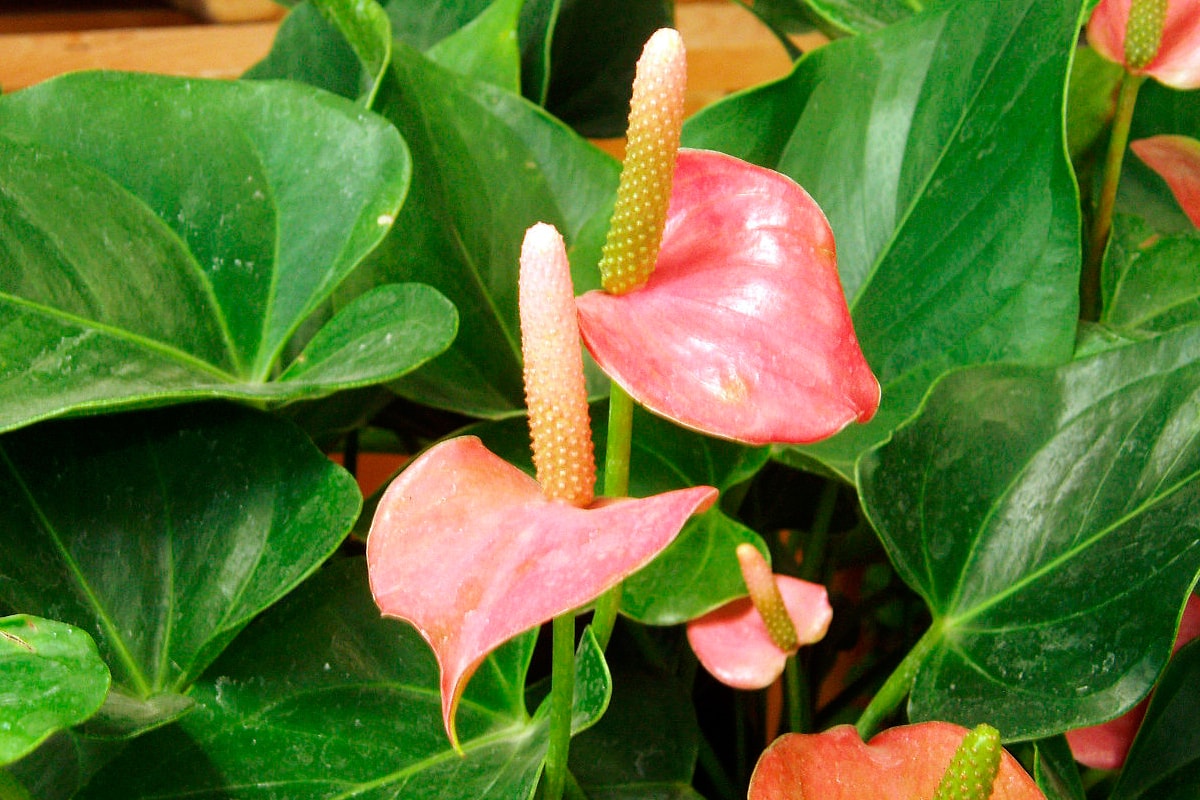
Its very showy inflorescences are formed by an erect spadix about 7-10
cm long, white or yellow in colour, composed of a large number of very
small hermaphrodite flowers, and surrounded by a waxy spathe 8-15 cm
long, more or less heart-shaped and red or pinkish in colour.
Each small flower is composed of a perianth with four segments and numerous stamens forming a compressed mesh.
The fruits are globular yellow or red berries containing one to two small yellow seeds.
Flowering occurs during the summer, and in suitable locations almost all year round.
The flowers are very long-lasting and can be kept in perfect condition for several weeks, and under ideal conditions each plant can produce between four and six flowers per year.
Each small flower is composed of a perianth with four segments and numerous stamens forming a compressed mesh.
The fruits are globular yellow or red berries containing one to two small yellow seeds.
Flowering occurs during the summer, and in suitable locations almost all year round.
The flowers are very long-lasting and can be kept in perfect condition for several weeks, and under ideal conditions each plant can produce between four and six flowers per year.