Canary flora > Exotic and ornamental
Aloe arborescens
Aloe arborescens Mill..
Candelabra aloe, Krantz aloe
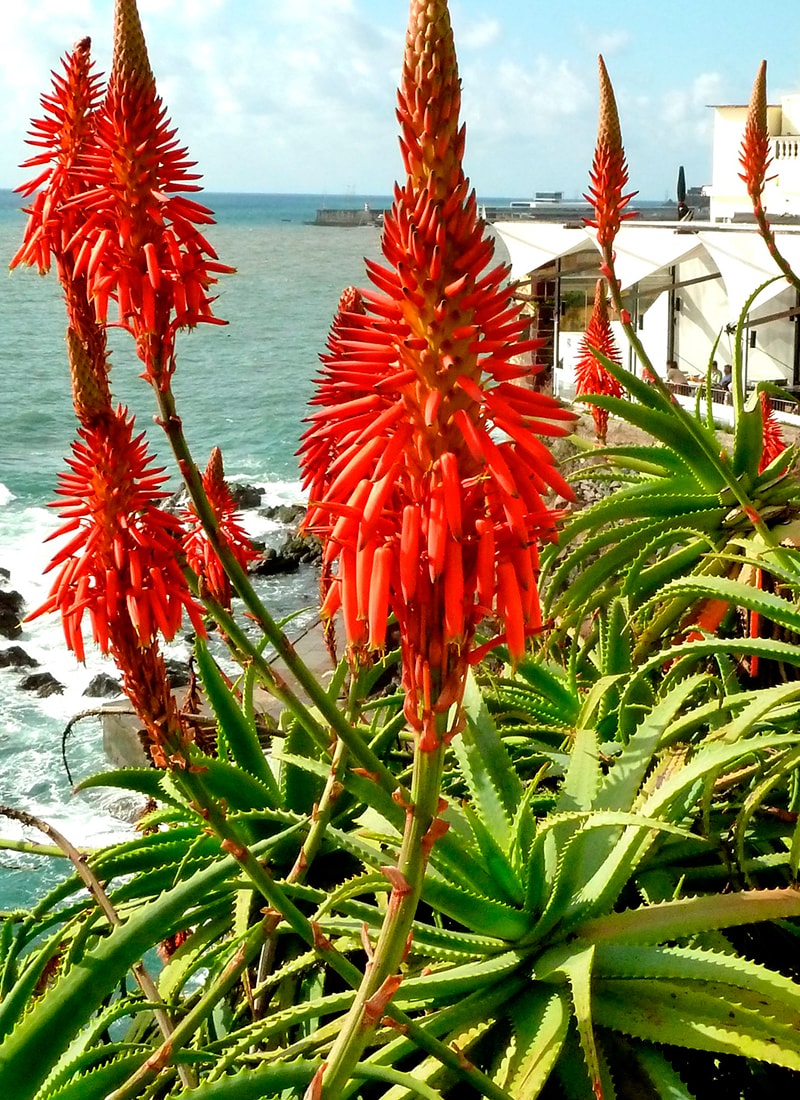
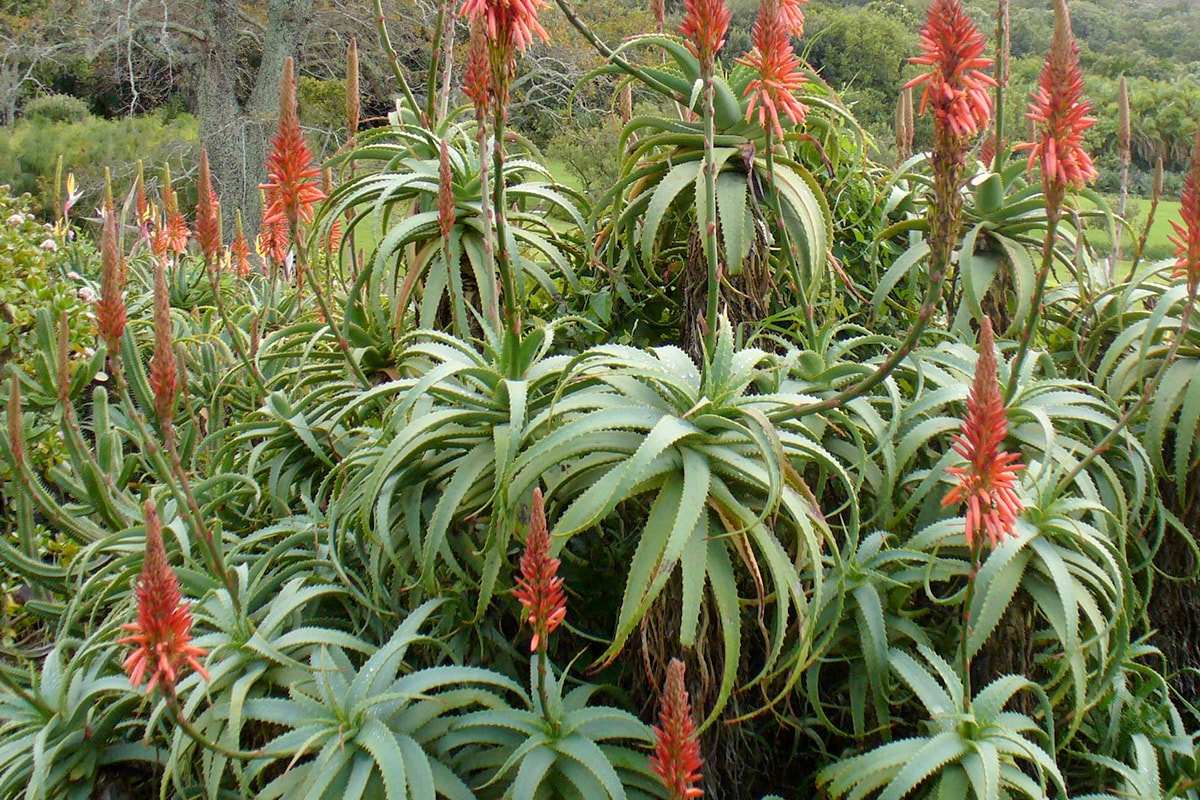
Its exotic forms and elegant inflorescences, which in full bloom are
striking for their reddish-orange colour, together with its easy
vegetative reproduction, have made this species one of the most widely
cultivated succulent plants in the world.
It is a shrub with a woody base, which produces an abundant and tangled ramification that can form, in old and well-developed specimens, an imposing and impenetrable plant fortress of up to 3-4 m in height and 3-4 m in diameter.
It is a shrub with a woody base, which produces an abundant and tangled ramification that can form, in old and well-developed specimens, an imposing and impenetrable plant fortress of up to 3-4 m in height and 3-4 m in diameter.
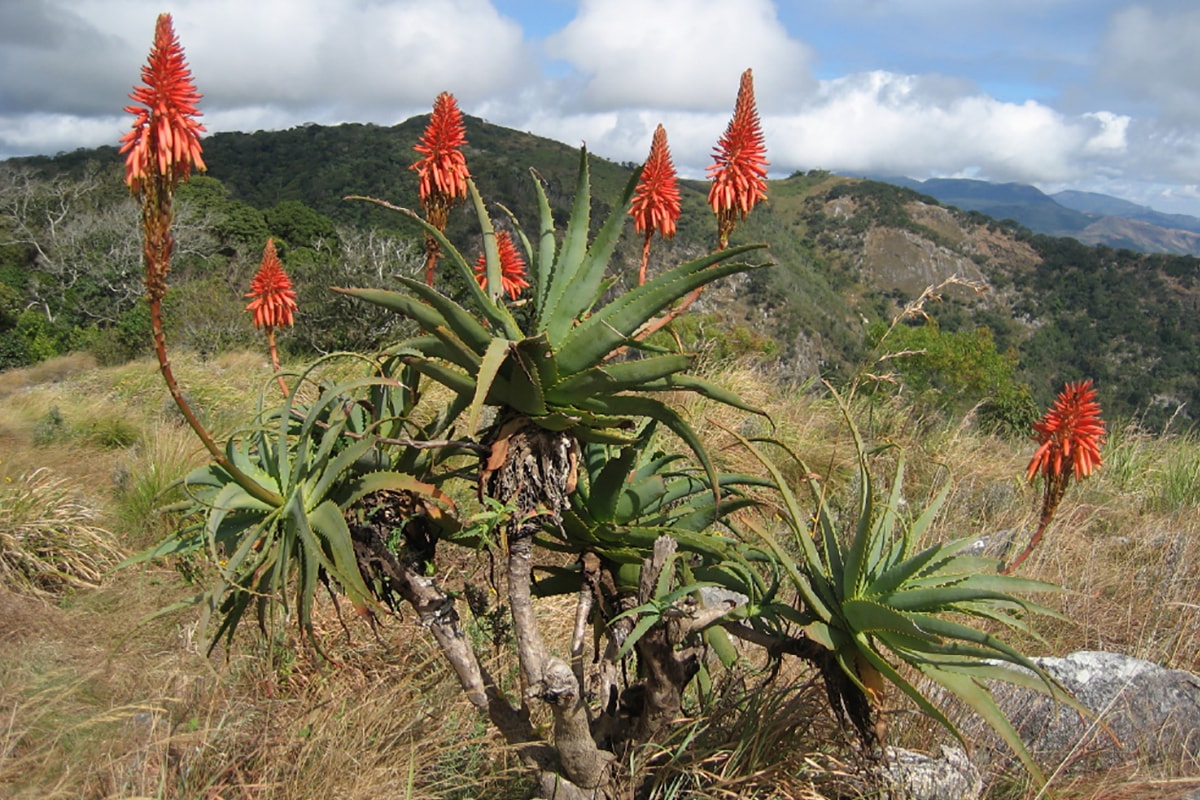
Its thick, fleshy, greyish-green to deep green leaves are arranged in
dense, disorderly terminal rosettes up to more than 80 cm in diameter.
They are simple, long, narrow and acute at the apex, curved downwards and with light yellow fleshy spines, which are stiffer and larger the closer they are to the base of the leaf.
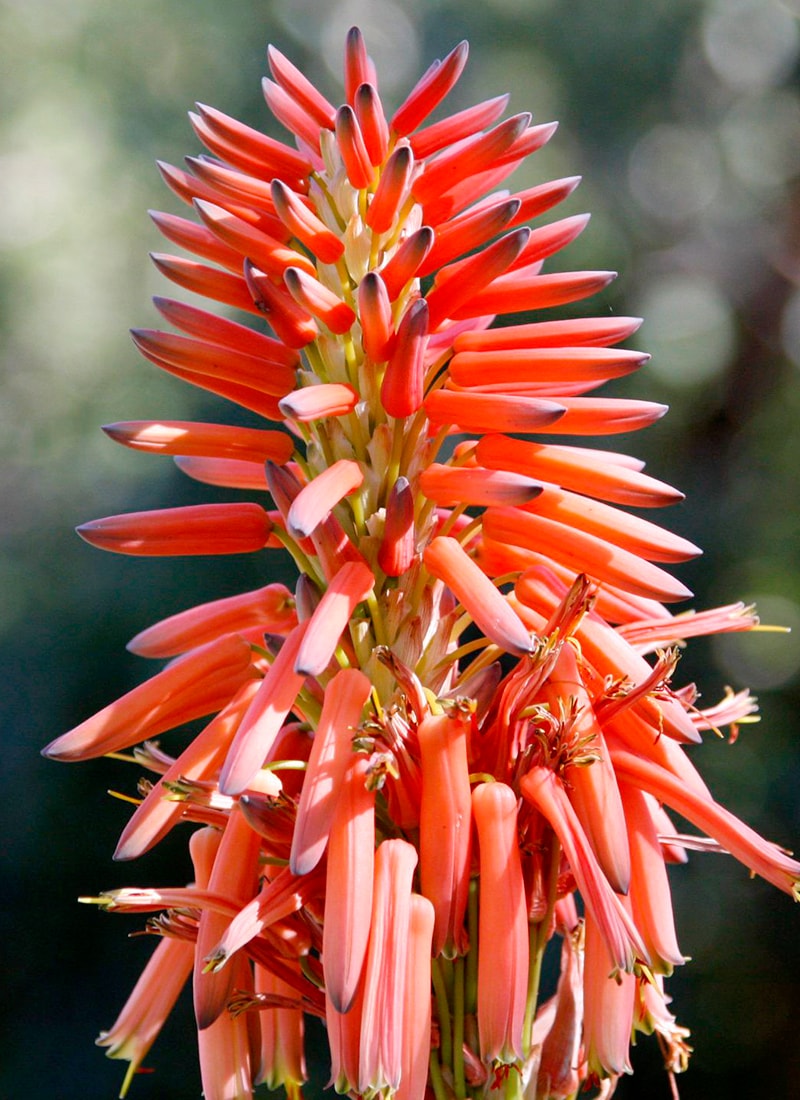
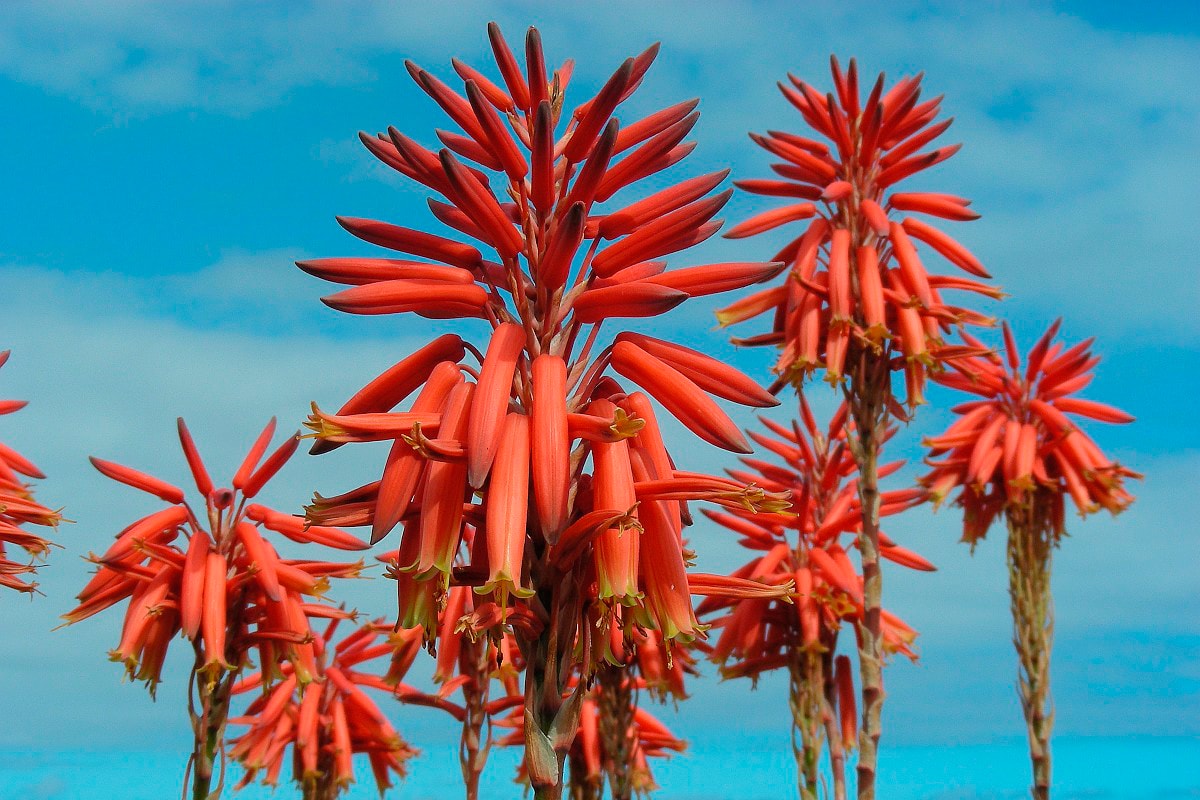
The flowers are arranged in dense erect terminal clusters about 20-30 cm long, supported by stout flower stalks up to 70-80 cm long.
Each flower, about 3-4 cm long and supported by a long slender stalk, has a petaloid perianth, consisting of six tepals welded together to form a tube, six stamens protruding from the flower envelope, and a stipitate ovary; they remain erect before opening, drooping downwards as they fade.
They are simple, long, narrow and acute at the apex, curved downwards and with light yellow fleshy spines, which are stiffer and larger the closer they are to the base of the leaf.
The flowers are arranged in dense erect terminal clusters about 20-30 cm long, supported by stout flower stalks up to 70-80 cm long.
Each flower, about 3-4 cm long and supported by a long slender stalk, has a petaloid perianth, consisting of six tepals welded together to form a tube, six stamens protruding from the flower envelope, and a stipitate ovary; they remain erect before opening, drooping downwards as they fade.
They produce fruit in the form of a long, thin-walled capsule containing
a few small seeds, although cultivated specimens rarely bear fruit.
The leaves contain a large quantity of gelatinous, dense and bitter sap, which, once condensed, becomes a famous drug widely used in international pharmaceutical production and has been known since antiquity under the name of aloe or acíbar.
Flowering occurs in winter, and is very short, with the flower clusters withering after a few days.
It reproduces by seeds and basal shoots, and also by cuttings, which take root very easily if left to heal for several days before planting.
The leaves contain a large quantity of gelatinous, dense and bitter sap, which, once condensed, becomes a famous drug widely used in international pharmaceutical production and has been known since antiquity under the name of aloe or acíbar.
Flowering occurs in winter, and is very short, with the flower clusters withering after a few days.
It reproduces by seeds and basal shoots, and also by cuttings, which take root very easily if left to heal for several days before planting.