Canary flora > Exotic and ornamental
Monstera deliciosa
Monstera deliciosa Liebm.
Split-leaf philodendron, Swiss cheese plant, Window plant
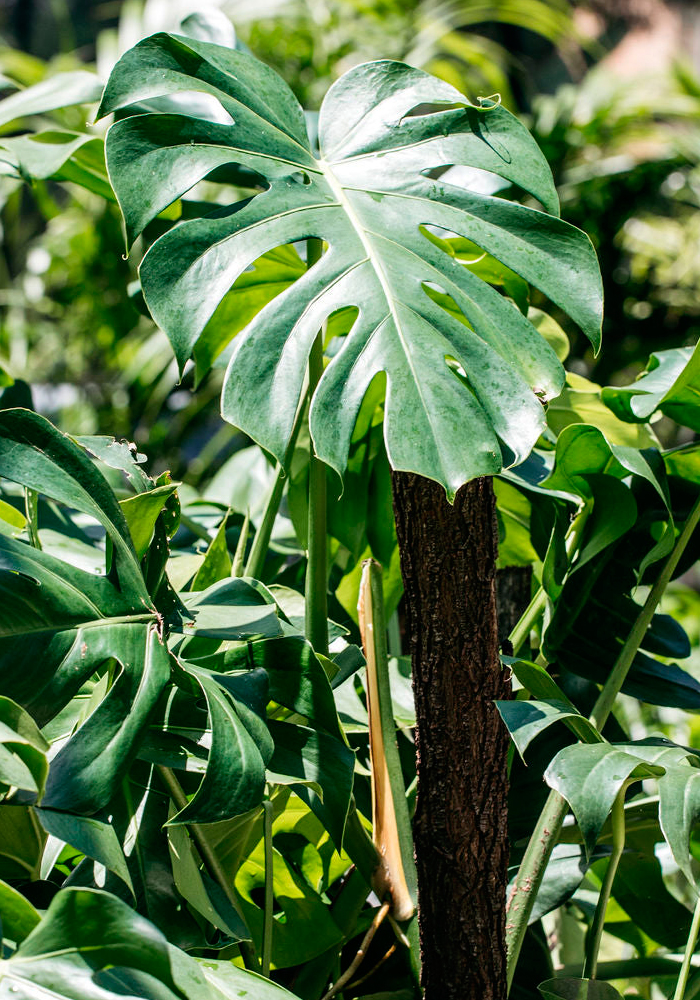
The rib is a very popular plant for decorating bright interior spaces.
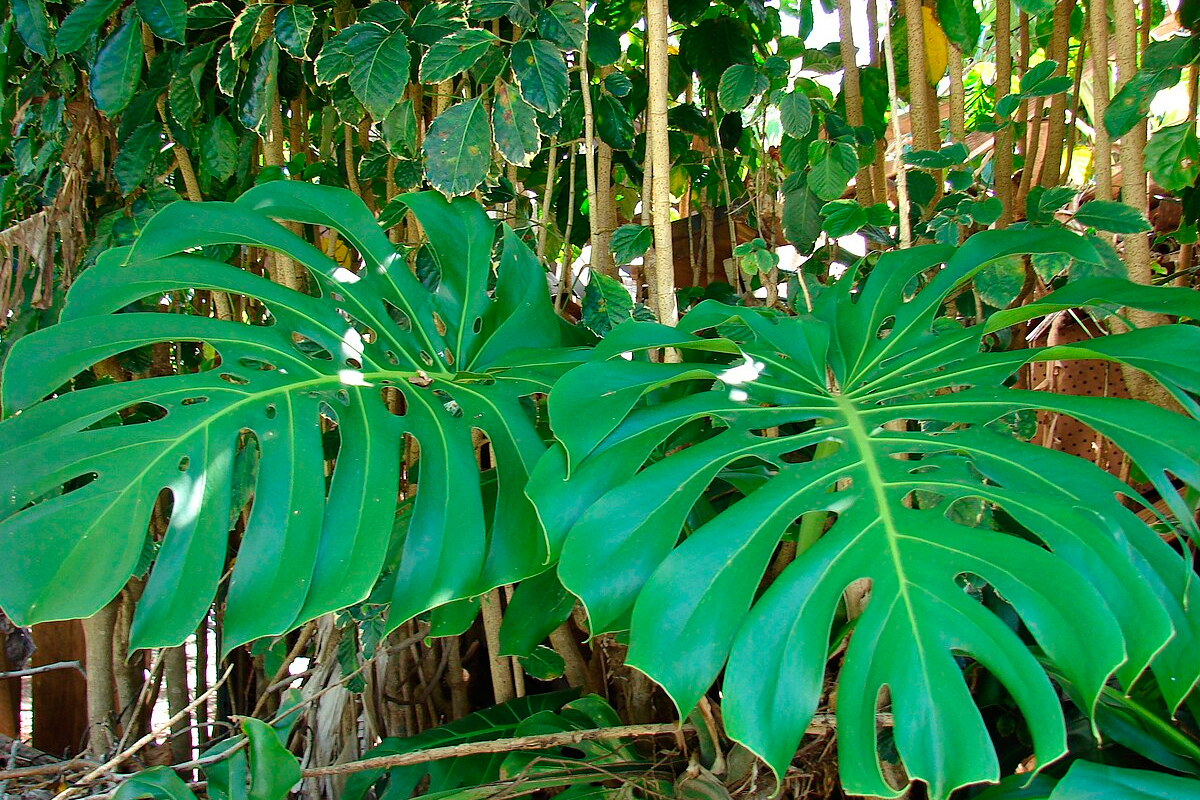
It is characterised by its large, shiny, dark green leaves, divided into
large cleft lobes up to 25 cm long, reminiscent of the arrangement of
the ribs, which is why it is popularly known as Adam's rib.
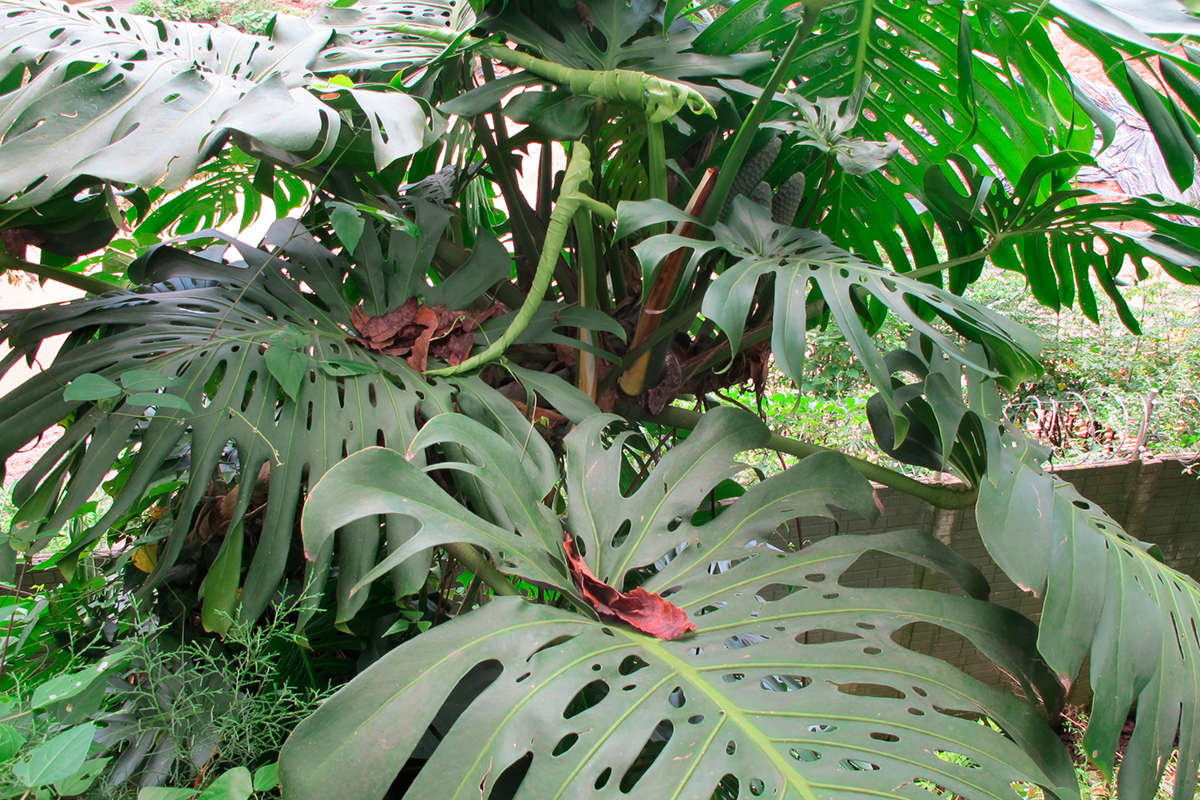
It is a woody, evergreen climbing plant with aerial roots that grow
along the thick stem, which can reach more than 10 m in length. The
leaves are large, 20-90 cm long and 20-80 cm wide, leathery, shiny,
coriaceous, with ovate, pinnatifid, cordate blade, pierced by large
elliptic to oblong holes, and jointed, winged petioles, almost as long
as the blade.
The young leaves are small, entire, without lobes or holes.
The young leaves are small, entire, without lobes or holes.

Its flowers are very small, arranged on a cylindrical spadix up to 25 cm
long, surrounded by a cream-coloured curled spathe. The sterile flowers
are located in the lower part of the spadix, and the fertile ones in the
upper part.
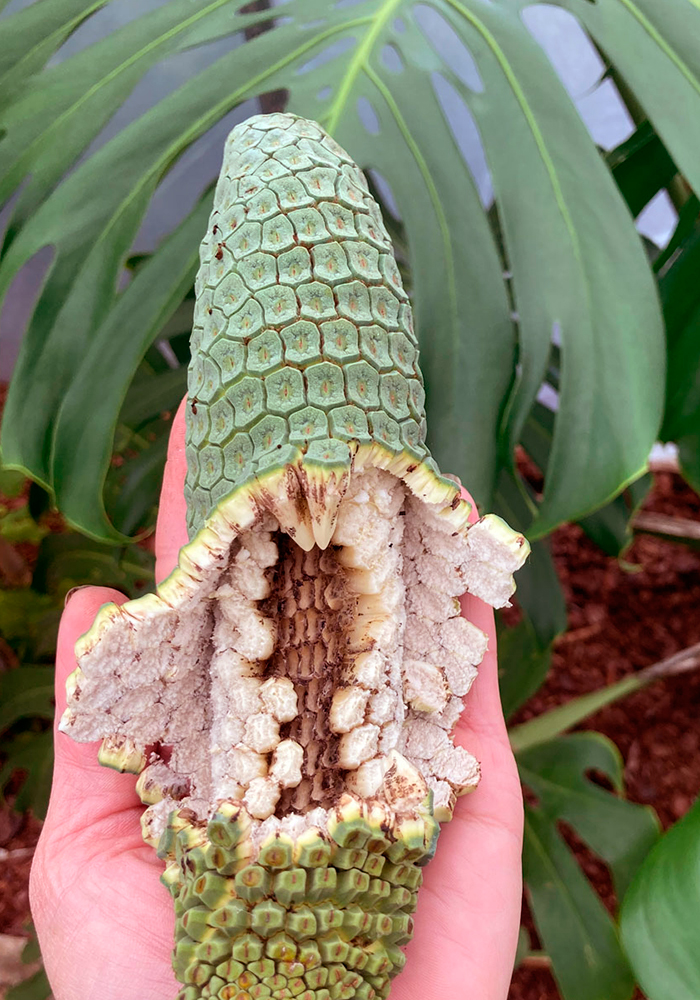
The fruits are small hexagonal berries, green on the outside and whitish on the inside, which are grouped on the spadix, which thickens to more than 5 cm in diameter, forming a multiple fruit, somewhat similar to a large ear of corn.
Flowering usually occurs in the spring and summer months.
The fruits are small hexagonal berries, green on the outside and whitish on the inside, which are grouped on the spadix, which thickens to more than 5 cm in diameter, forming a multiple fruit, somewhat similar to a large ear of corn.
Flowering usually occurs in the spring and summer months.