Canary flora > Exotic and ornamental
Heliconia bihai

Heliconia bihai (L.) L.
Lobster Claw, Balisier, Macawflower
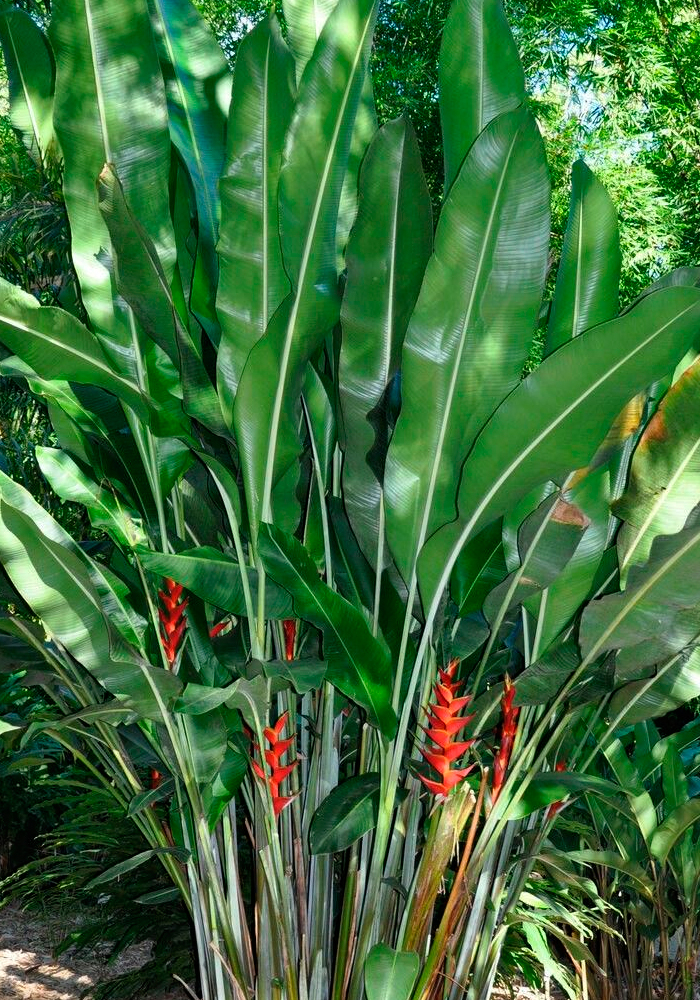
Evergreen herbaceous perennial with numerous fleshy rhizomes, forming
dense clumps about 2-6 m high, with fan-shaped leaves and spike-like
inflorescences, with reddish, beak-shaped flowers alternating on both
sides of the spike.
The green or bluish-green leaves develop from the base of the plant, and are very large, 1-2.5 m long and 25-40 cm wide, simple, alternate, entire, ovate to lanceolate, pointed and with a prominent midrib on the underside.
They have an enveloping base, which when joined together form a false stem 0.5-1.5 m thick.
The green or bluish-green leaves develop from the base of the plant, and are very large, 1-2.5 m long and 25-40 cm wide, simple, alternate, entire, ovate to lanceolate, pointed and with a prominent midrib on the underside.
They have an enveloping base, which when joined together form a false stem 0.5-1.5 m thick.
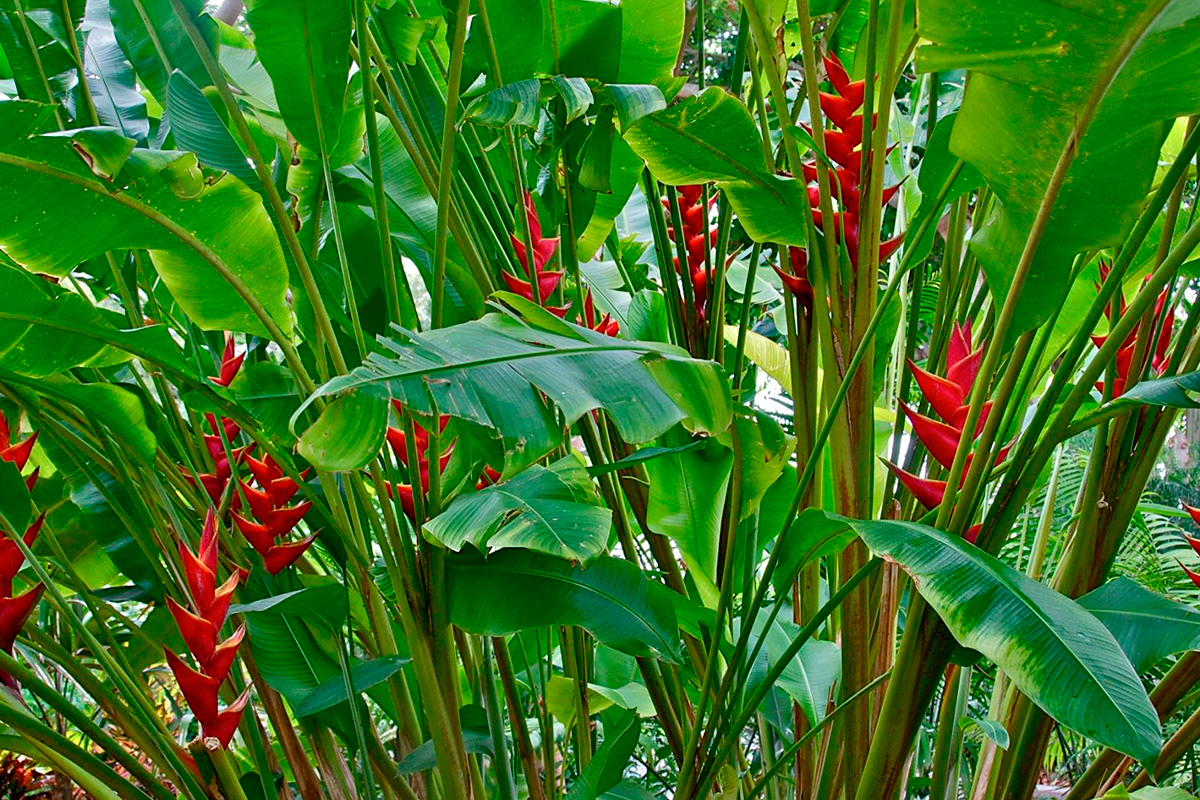
Its flowers are arranged in showy erect terminal spikes about 30-60 cm
long, supported by a stout peduncle, and formed by 5-12 pointed and
upturned bracts, alternate, distichous, leathery, bright red with a
greenish-yellow margin, about 10-18 cm long, decreasing from bottom to
top.
Inside they contain numerous tiny tubular flowers, white at the base and light green at the apex, which open successively.
The bracts form a cavity that collects rainwater and attracts numerous insects, bats and small birds, such as hummingbirds, which are its main pollinators.
Inside they contain numerous tiny tubular flowers, white at the base and light green at the apex, which open successively.
The bracts form a cavity that collects rainwater and attracts numerous insects, bats and small birds, such as hummingbirds, which are its main pollinators.

The fruits are drupes about 1.5 cm long, more or less ovoid, bright
blue, containing 1-3 greyish seeds.
The time of flowering depends on the different varieties and cultivars.
It reproduces by seeds, previously soaked in water for two days, but it is much better to do it by dividing its rhizomes.
It is a vigorous-growing species, and in some regions where it was introduced for ornamental purposes, it has naturalised and become an invasive plant, as is the case in Hawaii and other Pacific islands.
The time of flowering depends on the different varieties and cultivars.
It reproduces by seeds, previously soaked in water for two days, but it is much better to do it by dividing its rhizomes.
It is a vigorous-growing species, and in some regions where it was introduced for ornamental purposes, it has naturalised and become an invasive plant, as is the case in Hawaii and other Pacific islands.