Canary flora > Exotic and ornamental
Lantana camara

Lantana camara L.
Lantana, Red Sage, Shrub Verbena, Yellow Sage
The lantana is a plant well known for its showy flowering, of very
varied colours, ranging from white to red, passing through oranges,
yellows, and even almost blue, according to the many varieties and
cultivars of this species.
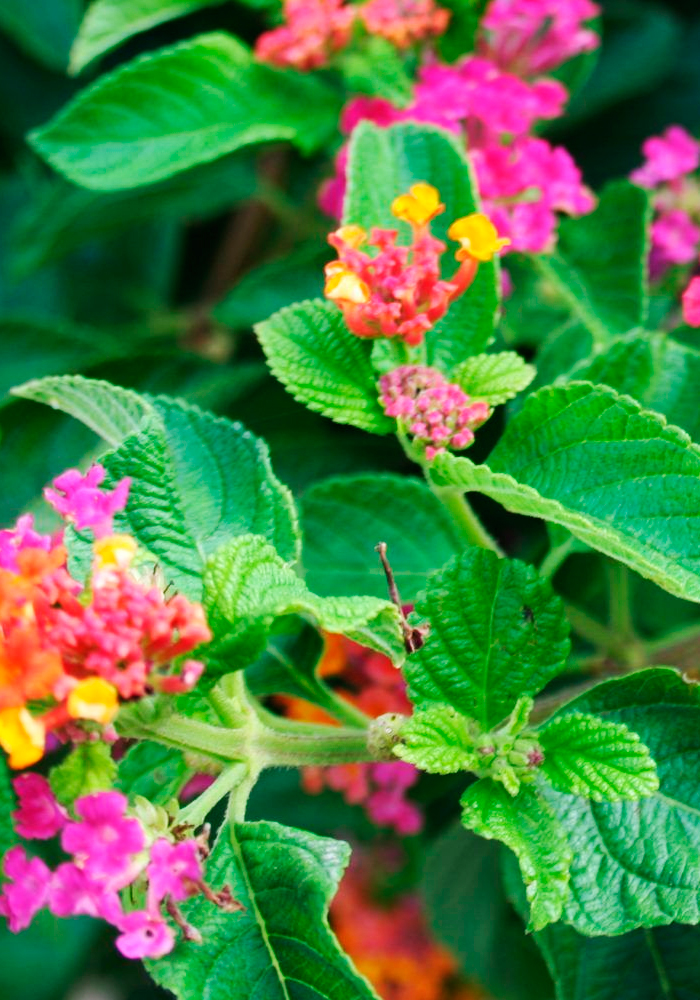
Moreover, the flowers of each inflorescence open progressively from the outside inwards and change colour during this process, so that the same specimen may have flowers of very different colours, and in the same inflorescence the outer flowers may be of a very different colour from those in the centre.
Moreover, the flowers of each inflorescence open progressively from the outside inwards and change colour during this process, so that the same specimen may have flowers of very different colours, and in the same inflorescence the outer flowers may be of a very different colour from those in the centre.
It is a highly branched deciduous shrub, which in good growing
conditions can reach 2-4 m in height, with thin, brittle stems,
quadrangular in section and covered with a rough greyish bark.
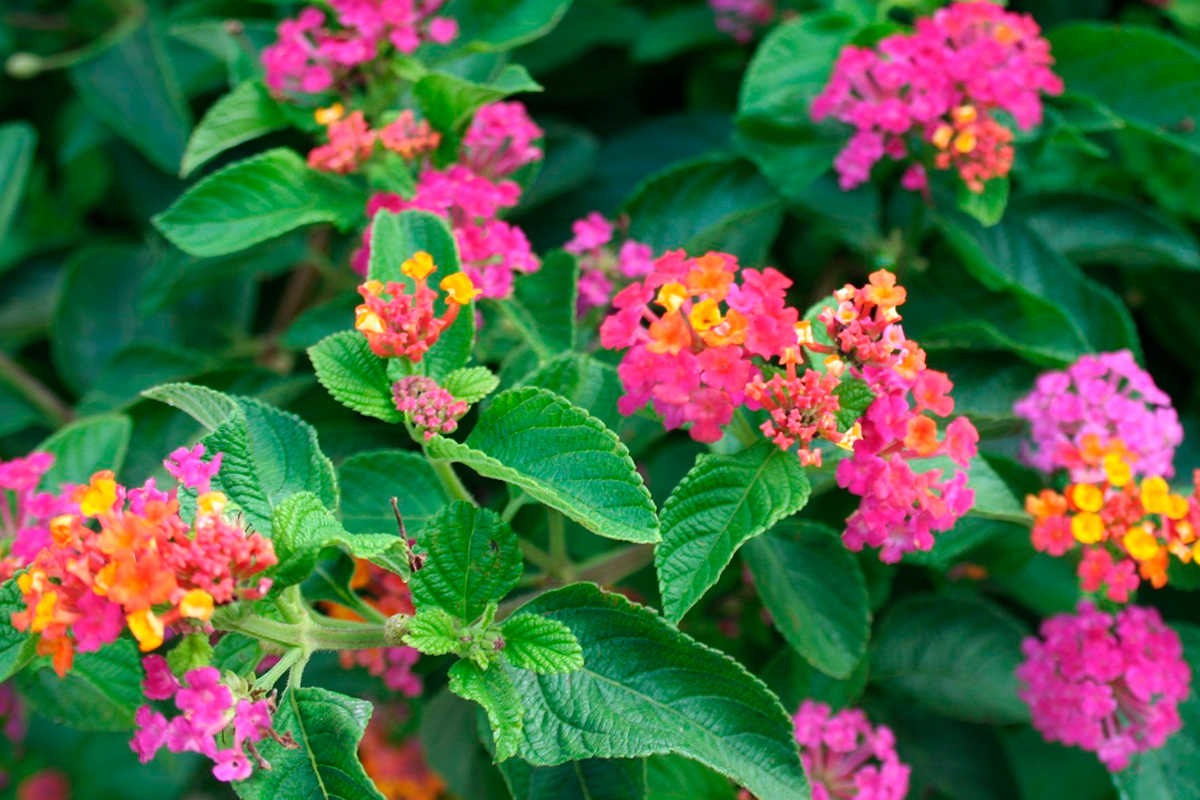
Its deep green leaves, up to 10 cm long and 5 cm wide, are simple, opposite, petiolate, ovate to lanceolate, roughly rough, shiny on the upper side and somewhat hairy on the underside. Although their colour, shape and size are quite different depending on the many varieties of this species.
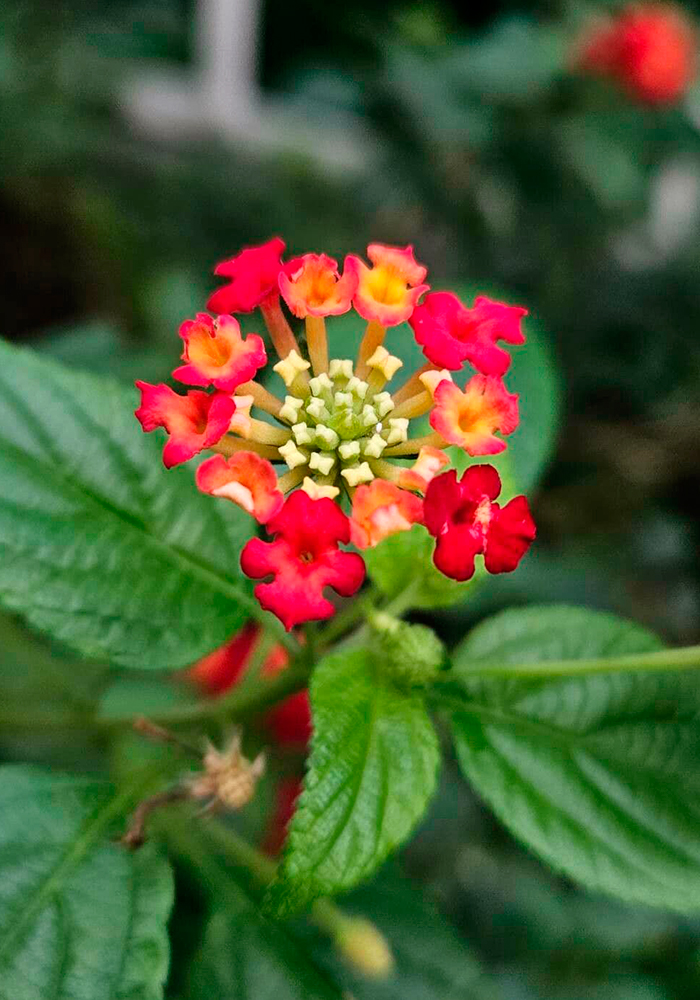
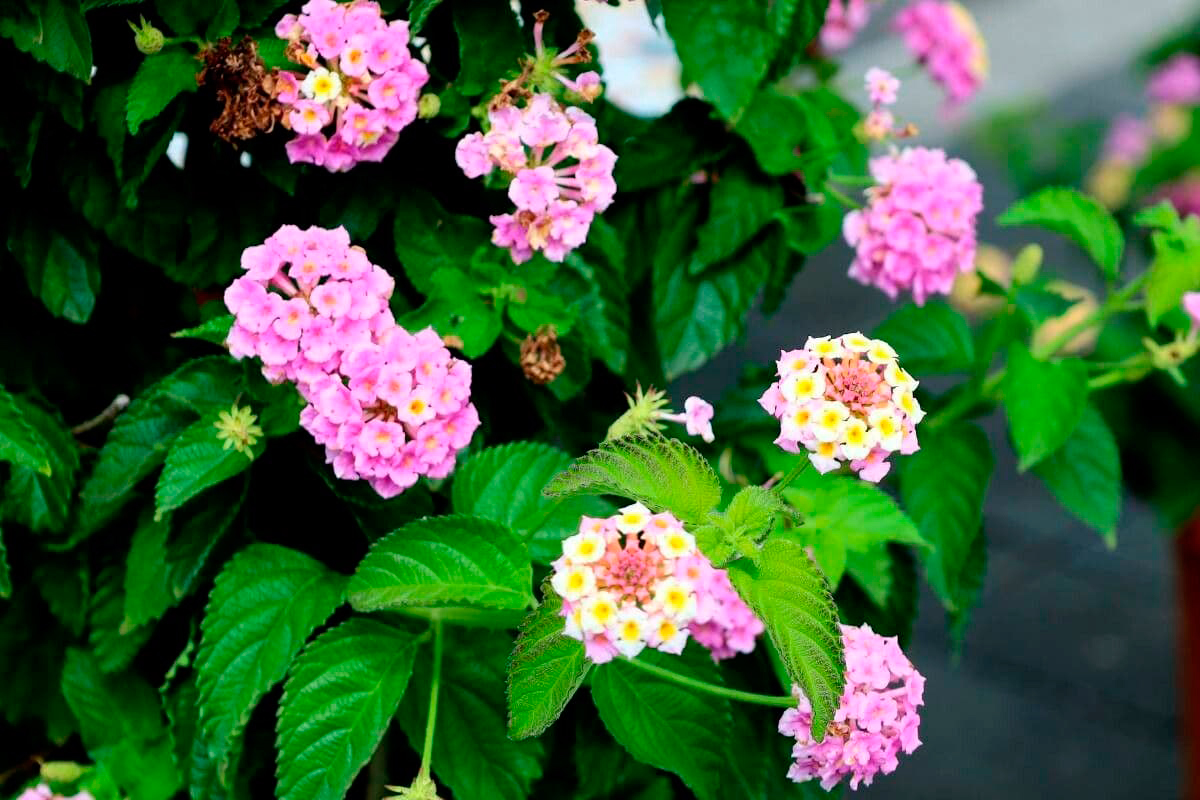
Its tiny tubular flowers, topped with four short lobes, are grouped in very compact corymbs of about 3-4 cm in diameter, which grow in pairs on long axillary peduncles located on the terminal portion of the branches. Each corymb is composed of between 20-40 flowers, of the most varied colours, ranging from white to pink or lavender, from yellow to orange or red, and on many occasions the colour changes during development.
Its deep green leaves, up to 10 cm long and 5 cm wide, are simple, opposite, petiolate, ovate to lanceolate, roughly rough, shiny on the upper side and somewhat hairy on the underside. Although their colour, shape and size are quite different depending on the many varieties of this species.
Its tiny tubular flowers, topped with four short lobes, are grouped in very compact corymbs of about 3-4 cm in diameter, which grow in pairs on long axillary peduncles located on the terminal portion of the branches. Each corymb is composed of between 20-40 flowers, of the most varied colours, ranging from white to pink or lavender, from yellow to orange or red, and on many occasions the colour changes during development.
Its fruits are small black polydrops when ripe, similar to those of
brambles, made up of numerous drupes about 5 mm in diameter, first green
and then blue, until they turn dark purple when fully ripe. Inside they
contain two small, hard seeds.
The whole plant gives off an intense smell, very unpleasant for some people.
Flowering takes place from late spring to early autumn, although in favourable places you can find flowering specimens almost all year round.
It reproduces by seed in spring and by semi-mature cuttings in autumn.
The whole plant gives off an intense smell, very unpleasant for some people.
Flowering takes place from late spring to early autumn, although in favourable places you can find flowering specimens almost all year round.
It reproduces by seed in spring and by semi-mature cuttings in autumn.