Canary Flora > Wild species
Acanthus mollis
Acanthus mollis L.
Family
ACANTHACEAE
Acanto, acanta, giganta, carnera
Description: A perennial herb 1–1.5 m
tall, erect, sturdy and vigorous, anchored to the ground by long, tuberous
roots that are very sticky and reddish in colour.
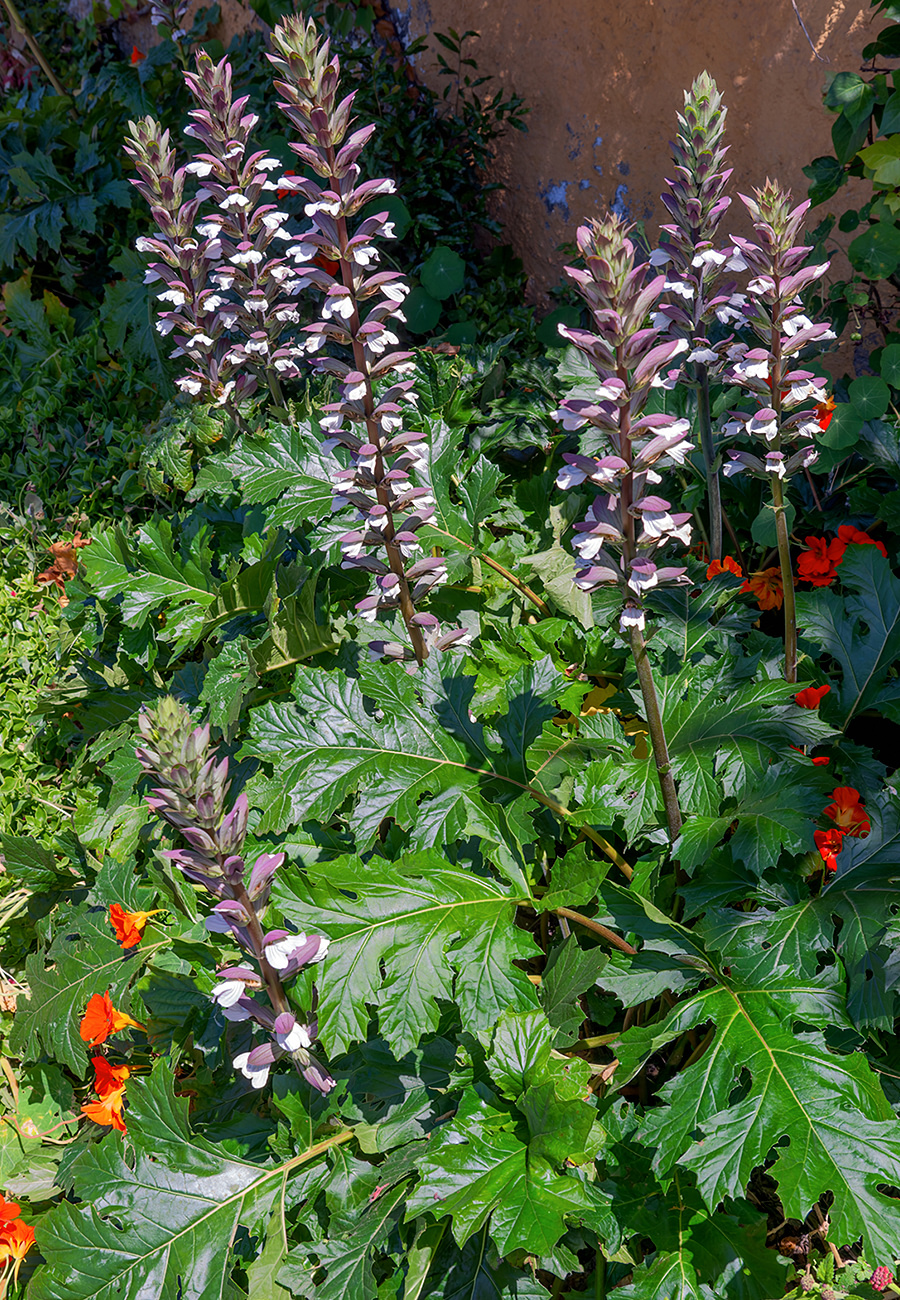
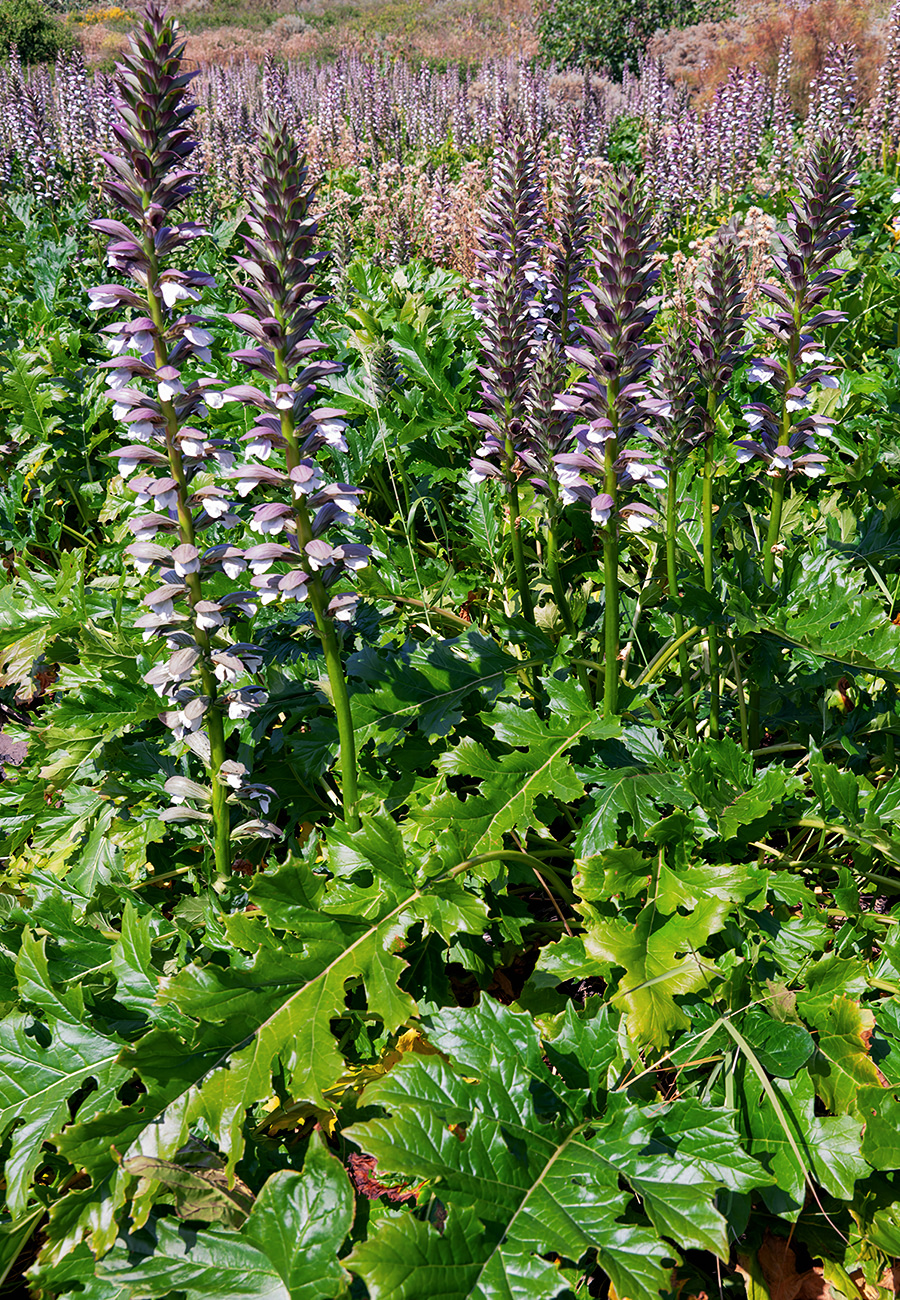
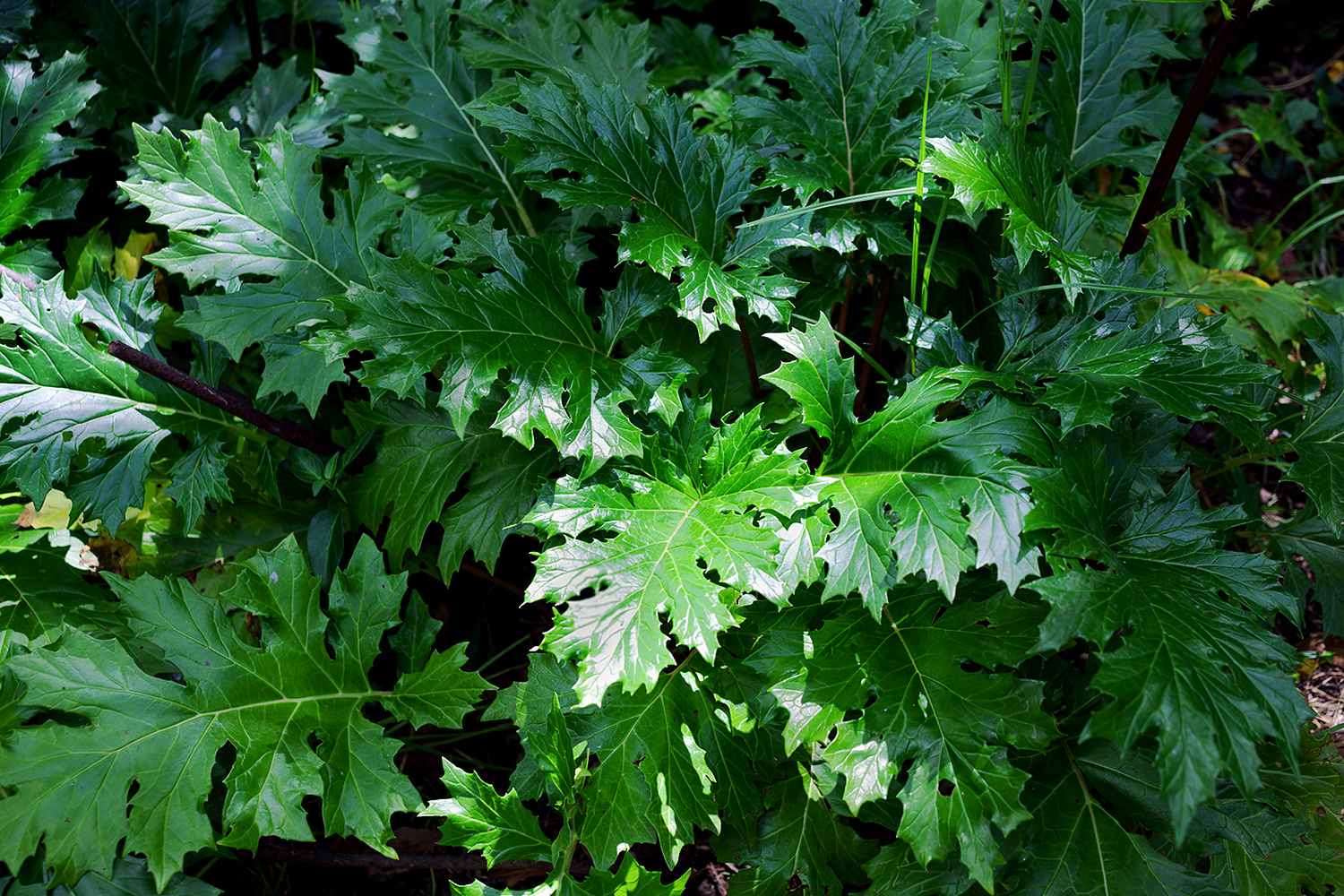
Its large, glossy, dark green leaves, which can grow to over 1 m in length, are clustered tightly around the base of the stem, forming an elegant basal rosette. They are simple, alternate, long-petiolate, smooth, and the leaf blade is divided into 6–7 large, deep, irregular and sharply toothed lobes, with the terminal lobe being larger than the others.
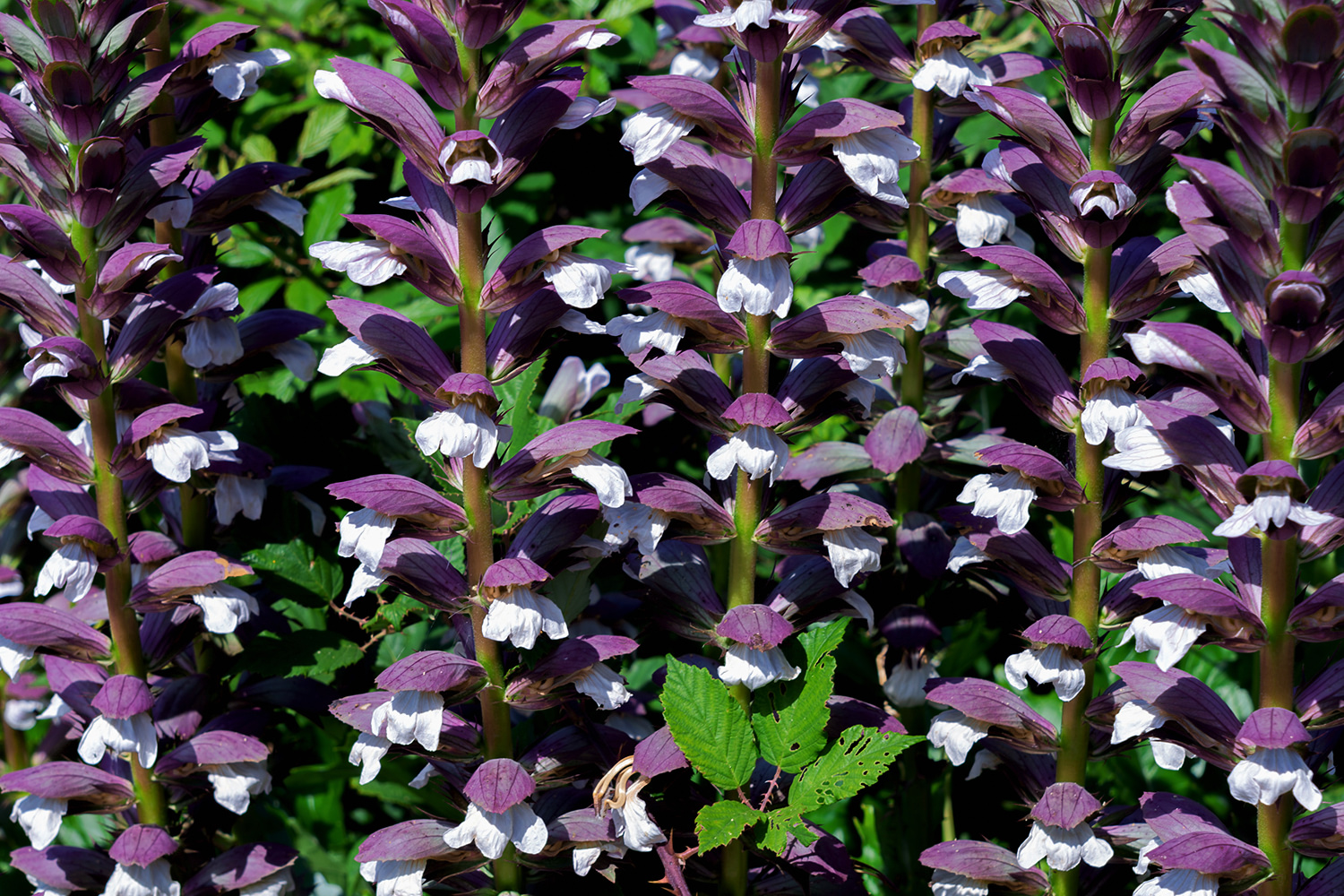
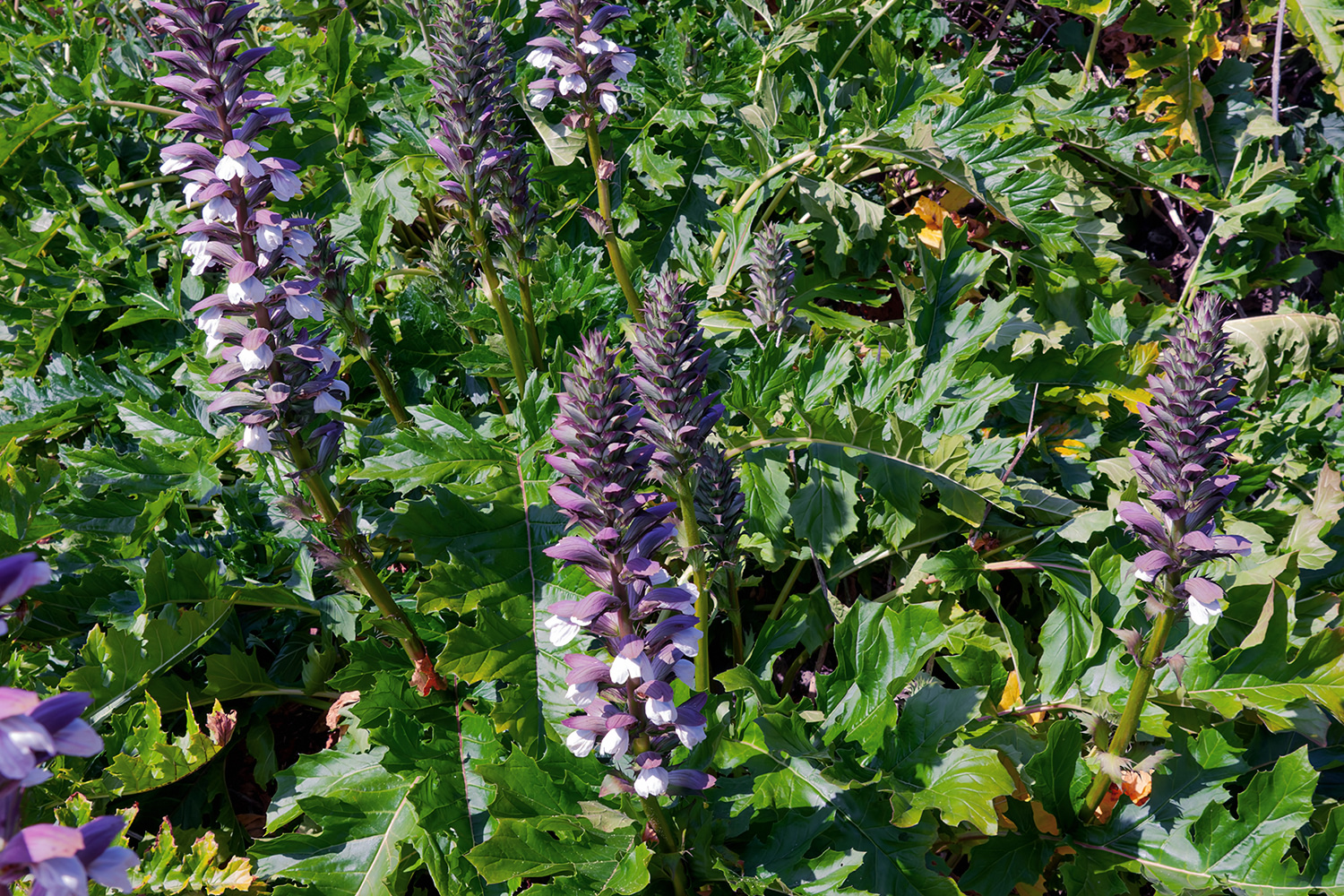
The flowers, which are a whitish-pinkish colour, are arranged in elegant, striking cylindrical spikes up to 60 cm high. The calyx is bilabiate, with the upper lip more oblong, arched over the corolla, and greenish or violet in colour. Its corolla consists of a single tubular section about 3–5 cm long, which extends at its base to form a long lip, ultimately divided into three rounded lobes, generally tinged with purple; resting on this lip are four thick stamens, somewhat twisted and with hairy anthers. Each flower is surrounded by a few reddish-green, oval bracts with spiny teeth.
The fruits consist of sturdy, oval capsules up to about 2–3 cm in length, each containing two to four smooth, black seeds, approximately 10–12 mm in length.
The whole plant gives off a rather unpleasant odour.
Its large, glossy, dark green leaves, which can grow to over 1 m in length, are clustered tightly around the base of the stem, forming an elegant basal rosette. They are simple, alternate, long-petiolate, smooth, and the leaf blade is divided into 6–7 large, deep, irregular and sharply toothed lobes, with the terminal lobe being larger than the others.
The flowers, which are a whitish-pinkish colour, are arranged in elegant, striking cylindrical spikes up to 60 cm high. The calyx is bilabiate, with the upper lip more oblong, arched over the corolla, and greenish or violet in colour. Its corolla consists of a single tubular section about 3–5 cm long, which extends at its base to form a long lip, ultimately divided into three rounded lobes, generally tinged with purple; resting on this lip are four thick stamens, somewhat twisted and with hairy anthers. Each flower is surrounded by a few reddish-green, oval bracts with spiny teeth.
The fruits consist of sturdy, oval capsules up to about 2–3 cm in length, each containing two to four smooth, black seeds, approximately 10–12 mm in length.
The whole plant gives off a rather unpleasant odour.
Habitat: A typically Mediterranean
plant. In the Canary Islands, it is common to find cultivated or
semi-wild specimens near old or abandoned houses, as it was a popular
ornamental species in the past, believed to have been introduced to the
Canary Islands during the 19th century.
In its natural state, it prefers humid and somewhat shady places in the lower and middle areas of the islands, choosing to settle on the edges of paths and roads, abandoned crops, rubbish dumps, stony slopes, etc.
The specimens dry out in summer, reviving with the arrival of the first autumn rains.
In its natural state, it prefers humid and somewhat shady places in the lower and middle areas of the islands, choosing to settle on the edges of paths and roads, abandoned crops, rubbish dumps, stony slopes, etc.
The specimens dry out in summer, reviving with the arrival of the first autumn rains.
Flowering: From late winter to early
summer.
Propagation: It is propagated by cuttings taken from its underground stems, planted in early spring, or by seed from April to May. When the fruits are ripe, the seeds fall of the spike by themselves and take root easily in the soil around the clump.
Uses: This plant has excellent ornamental qualities. It grows rapidly and can be cultivated in gardens or in large pots, requiring moderate watering, a semi-sunny position and drastic pruning back to ground level after flowering. It is very well suited to shady gardens and for covering large areas due to its root system.
Its spikes make attractive cut flowers; they are also recommended for making dried bouquets, which last a long time without wilting.
Propagation: It is propagated by cuttings taken from its underground stems, planted in early spring, or by seed from April to May. When the fruits are ripe, the seeds fall of the spike by themselves and take root easily in the soil around the clump.
Uses: This plant has excellent ornamental qualities. It grows rapidly and can be cultivated in gardens or in large pots, requiring moderate watering, a semi-sunny position and drastic pruning back to ground level after flowering. It is very well suited to shady gardens and for covering large areas due to its root system.
Its spikes make attractive cut flowers; they are also recommended for making dried bouquets, which last a long time without wilting.