Canary Flora > Wild species
Bituminaria bituminosa
Bituminaria bituminosa (L.) C. H. Stirt.
Familia
FABACEAE
Tedera, hierba cabruna, hierba betunera, trébol hediondo
Description: A woody shrub about 50–80 cm
tall, with a highly variable habit and profusely branched from the base,
arising from a woody stem up to 3–4 cm in diameter. The stems, more or less
sericeous, grow erect, ascending, inclined or prostrate; the older ones are
brittle and have greyish-brown bark, whilst the young twigs are green and
somewhat hairy.
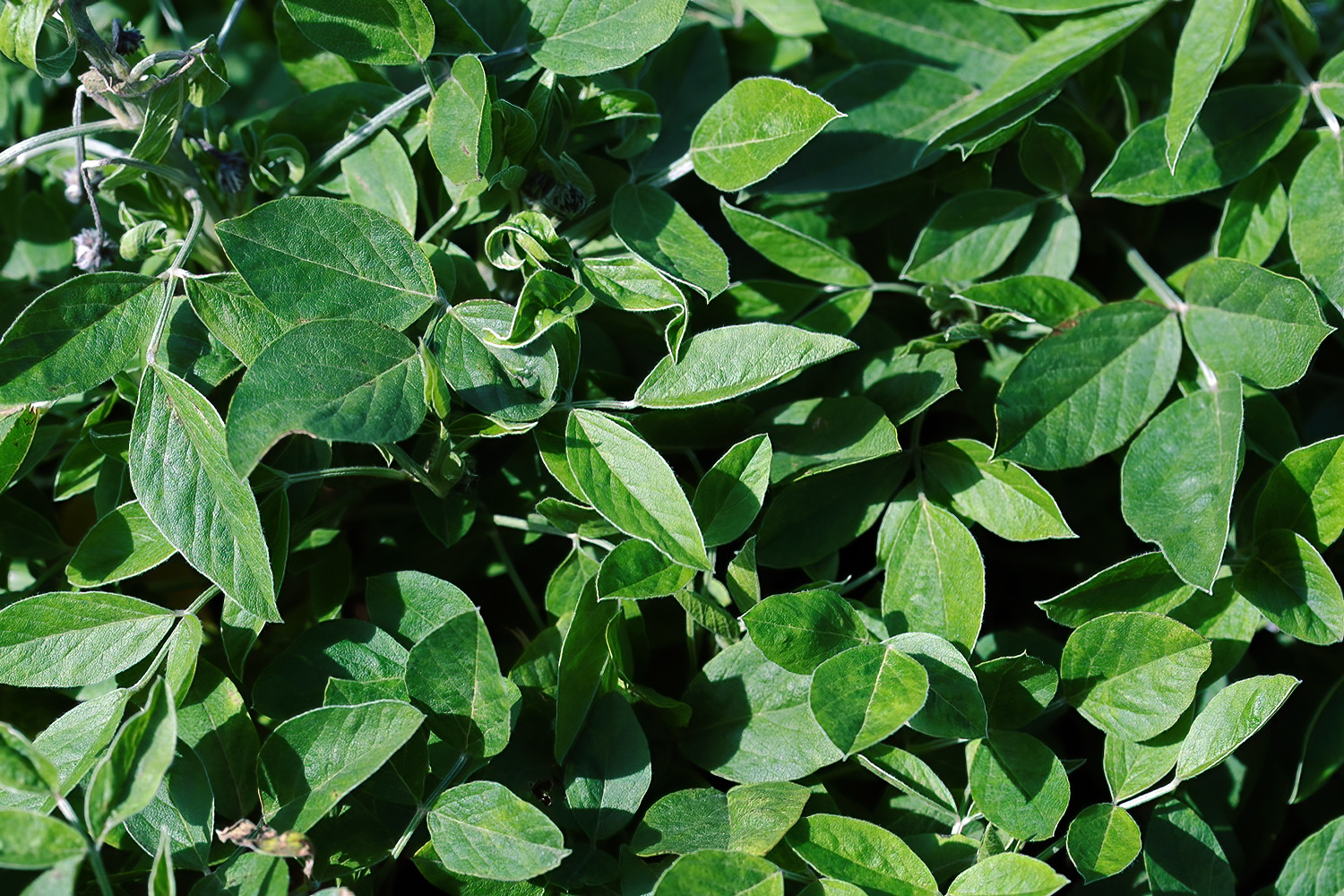
Its leaves, which are deep green and softly hairy, arise from the axils of the stems; they are few in number, alternate, widely spaced and bear a long, pubescent petiole that is finely grooved. They are trifoliate, with leaflets ranging from narrowly elliptical to ovate-lanceolate, up to 6 cm long, entire at the margin, mucronate at the apex, and with prominent venation on the underside.
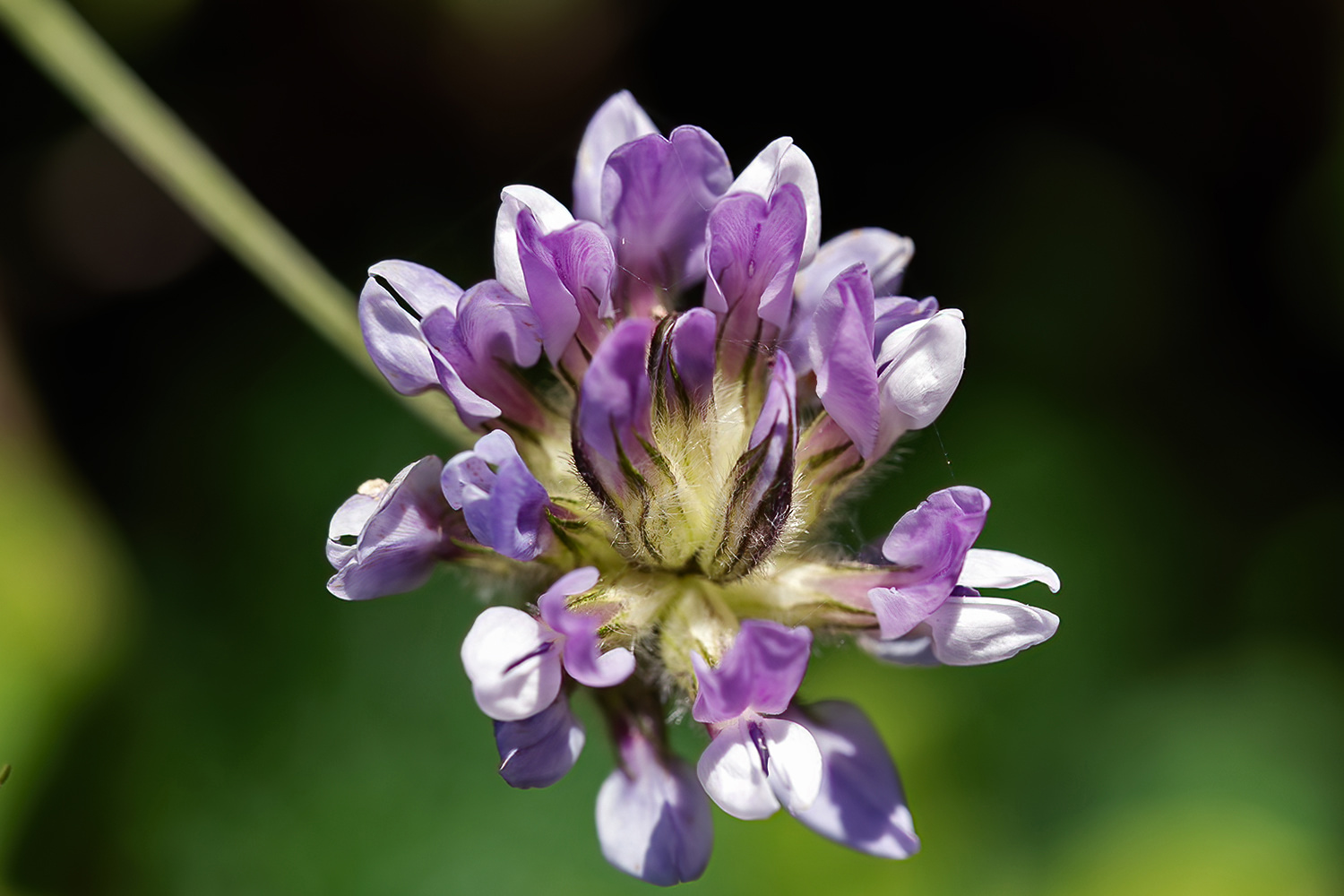
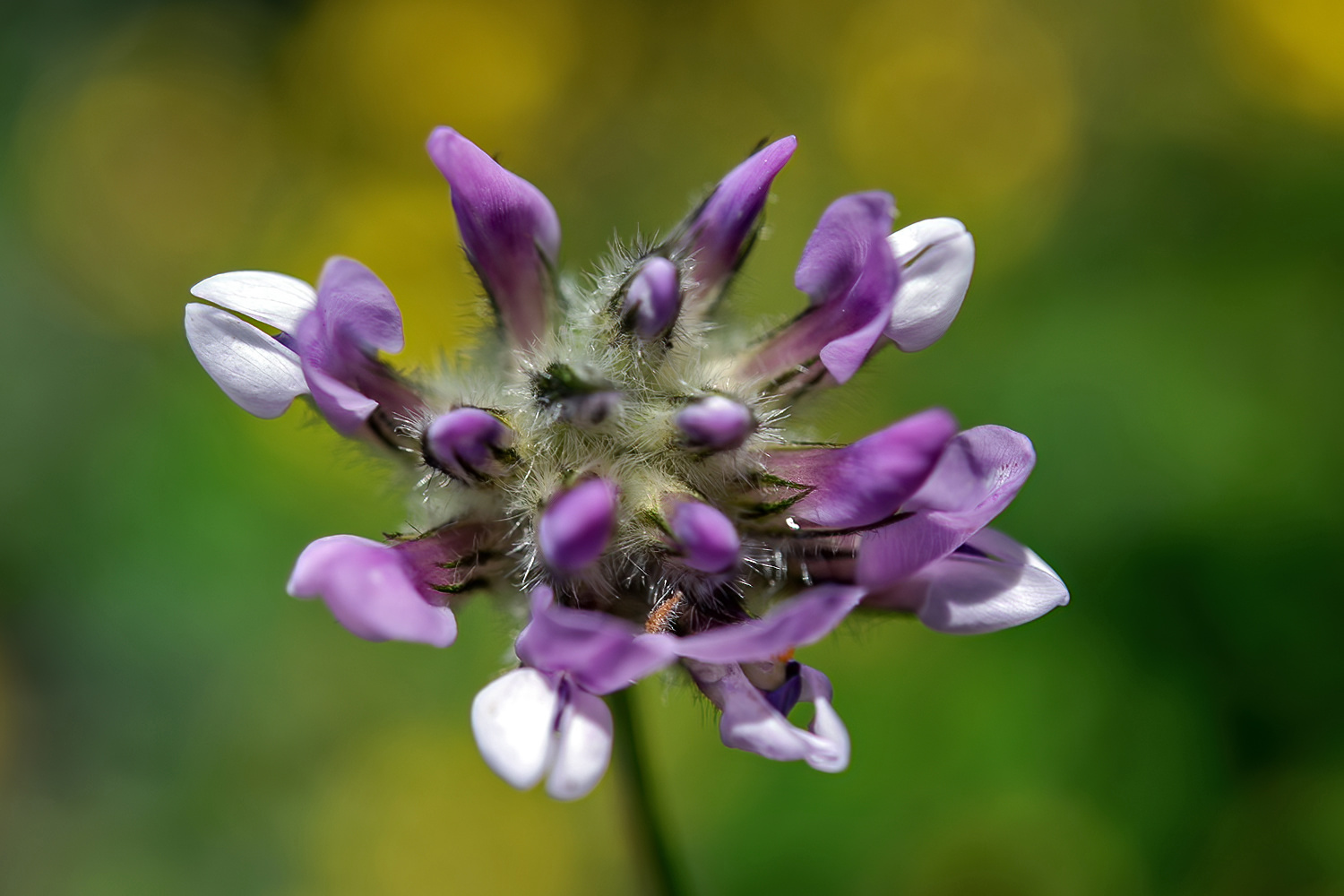
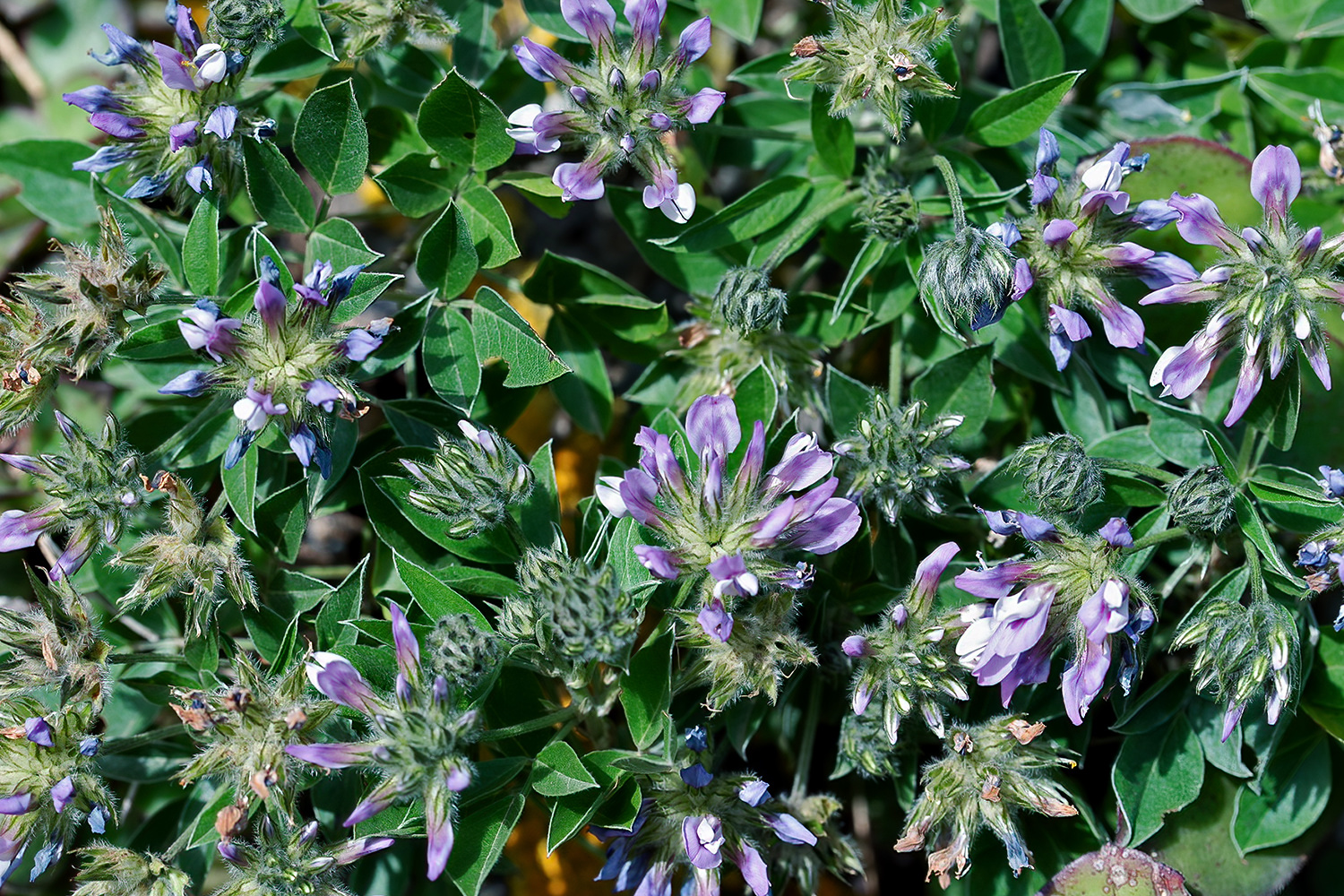
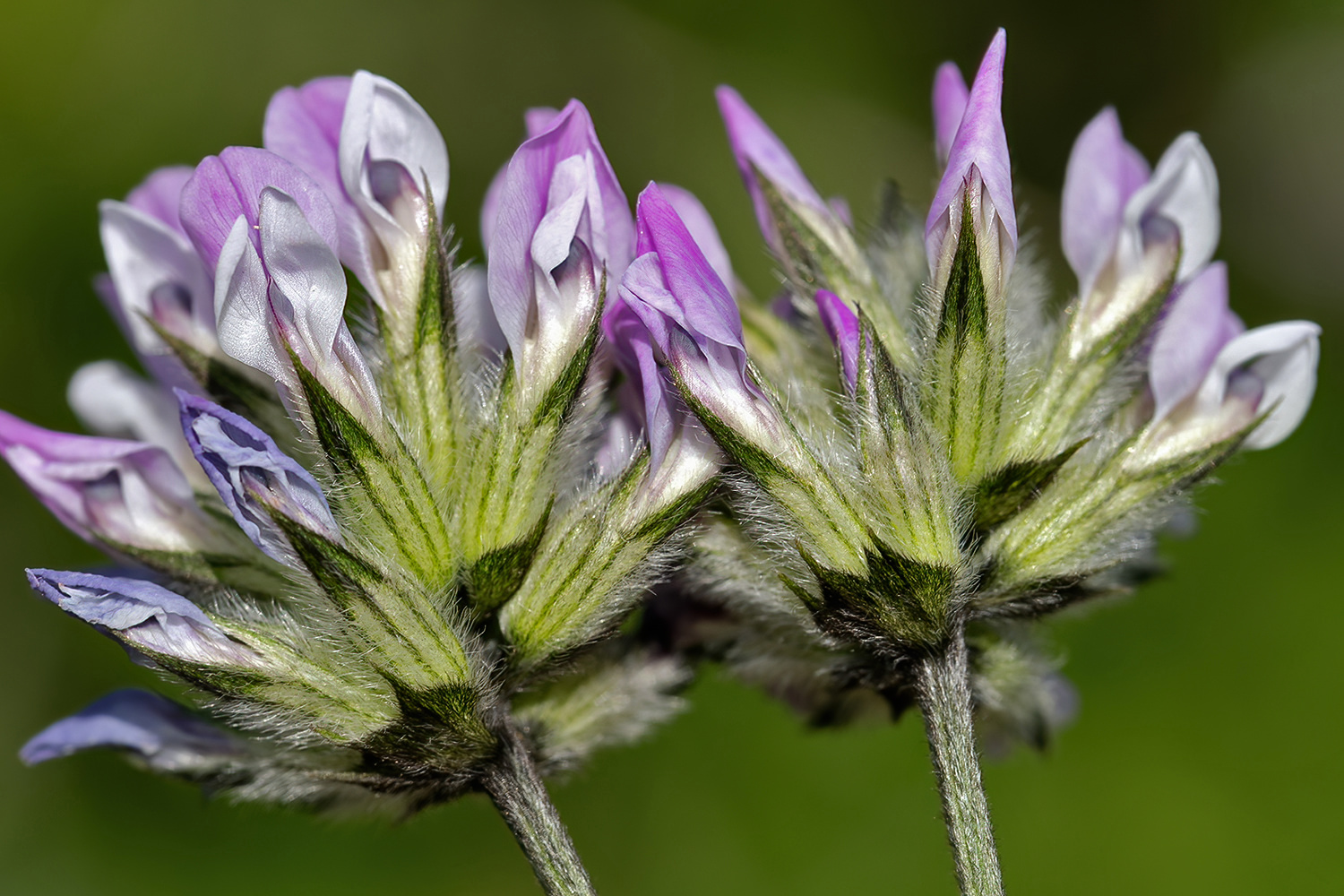
Its striking flowers, which are pale pink, blue or violet in colour, are arranged in dense, more or less globular flower heads 1.5–2 cm in diameter, each containing around 15–25 individual flowers, and situated at the tips of long, erect, axillary peduncles. Each flower has a narrowly tubular calyx about 12–18 mm long, hairy and topped by five narrowly triangular teeth, and a blue-violet corolla with the upper petal (standard) of a more or less intense lilac colour.
Its fruits consist of compressed, ovoid pods about 1 cm long, ending in a long, sharp, slightly curved beak, and covered with coarse hairs, containing a single seed about 2–4 mm long.
The whole plant gives off a strong, unpleasant odour reminiscent of bitumen or asphalt, particularly the inflorescences, which becomes markedly more pronounced once dry.
Its leaves, which are deep green and softly hairy, arise from the axils of the stems; they are few in number, alternate, widely spaced and bear a long, pubescent petiole that is finely grooved. They are trifoliate, with leaflets ranging from narrowly elliptical to ovate-lanceolate, up to 6 cm long, entire at the margin, mucronate at the apex, and with prominent venation on the underside.
Its striking flowers, which are pale pink, blue or violet in colour, are arranged in dense, more or less globular flower heads 1.5–2 cm in diameter, each containing around 15–25 individual flowers, and situated at the tips of long, erect, axillary peduncles. Each flower has a narrowly tubular calyx about 12–18 mm long, hairy and topped by five narrowly triangular teeth, and a blue-violet corolla with the upper petal (standard) of a more or less intense lilac colour.
Its fruits consist of compressed, ovoid pods about 1 cm long, ending in a long, sharp, slightly curved beak, and covered with coarse hairs, containing a single seed about 2–4 mm long.
The whole plant gives off a strong, unpleasant odour reminiscent of bitumen or asphalt, particularly the inflorescences, which becomes markedly more pronounced once dry.
Habitat: The common rock cress is
very abundant across all our islands, owing to its ability to adapt to a
wide variety of soil and climatic conditions; specimens can be found
from almost sea level up to altitudes of over 2,000 metres, although not
within large forests.
It grows on walls and stony ground as well as in dry meadows, wasteland or well-fertilised vegetable gardens; it is also common in ruderal areas, as well as along the edges of paths and roads.
It grows on walls and stony ground as well as in dry meadows, wasteland or well-fertilised vegetable gardens; it is also common in ruderal areas, as well as along the edges of paths and roads.
Flowering: Spring and summer.
Propagation: By seed, which roots very easily.
Uses: Its main use is as fodder for cows, goats and rabbits. Its nutritional value is equivalent to that of alfalfa, and it is particularly favoured by goats.
Until not so long ago, farmers would sow fields of tederas, which were mown when the plants were in full bloom, and then left to dry in the sun for several days. They were then baled for storage as winter fodder, which was valued for the large quantity of milk produced by the animals fed on it.
Propagation: By seed, which roots very easily.
Uses: Its main use is as fodder for cows, goats and rabbits. Its nutritional value is equivalent to that of alfalfa, and it is particularly favoured by goats.
Until not so long ago, farmers would sow fields of tederas, which were mown when the plants were in full bloom, and then left to dry in the sun for several days. They were then baled for storage as winter fodder, which was valued for the large quantity of milk produced by the animals fed on it.