Canary Flora > Wild species
Astydamia latifolia
Astydamia latifolia (L. f.) Baill.
Familia
APIACEAE
Lechuga de mar, acelga de mar, servilleta
Description: A biennial or perennial herb
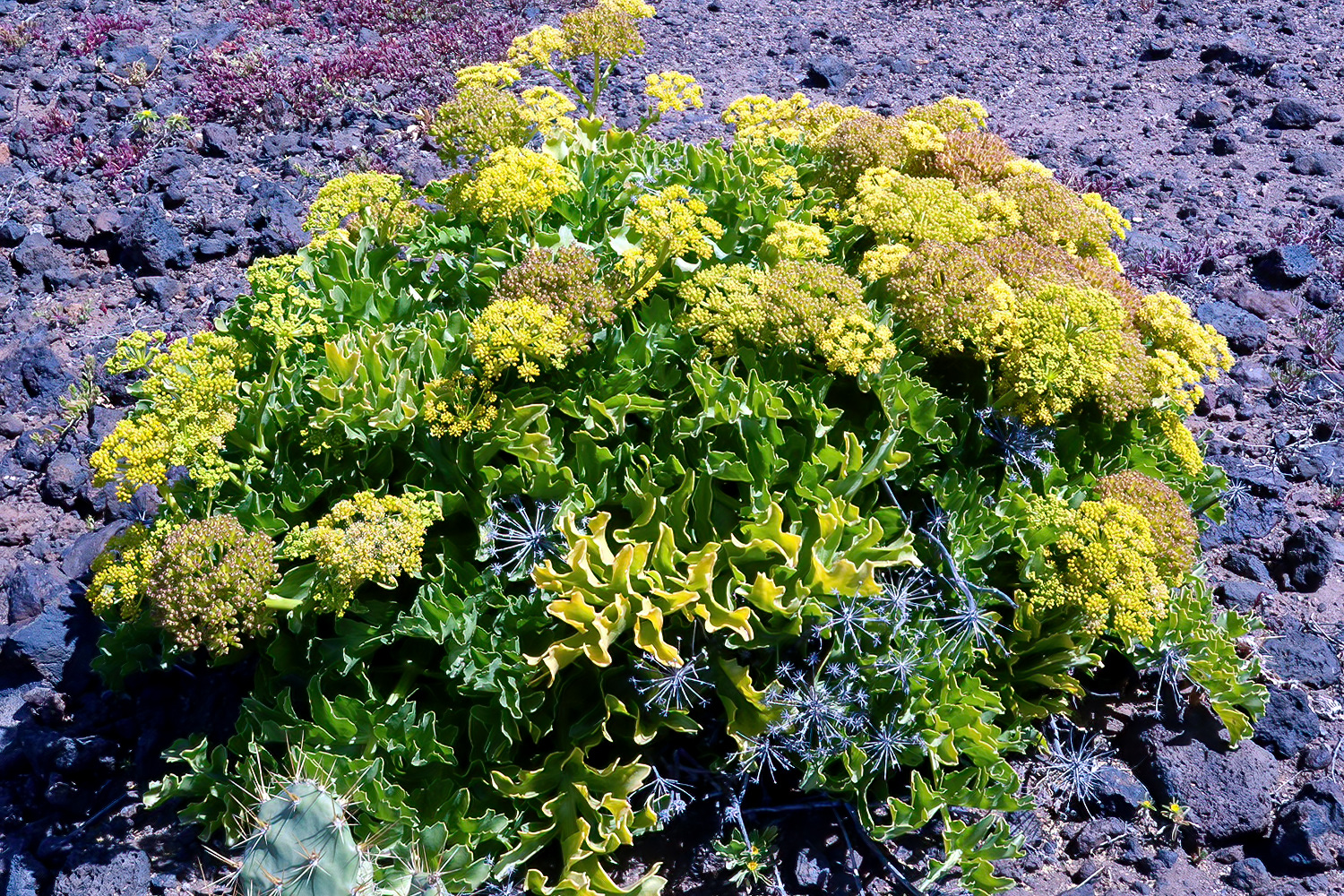
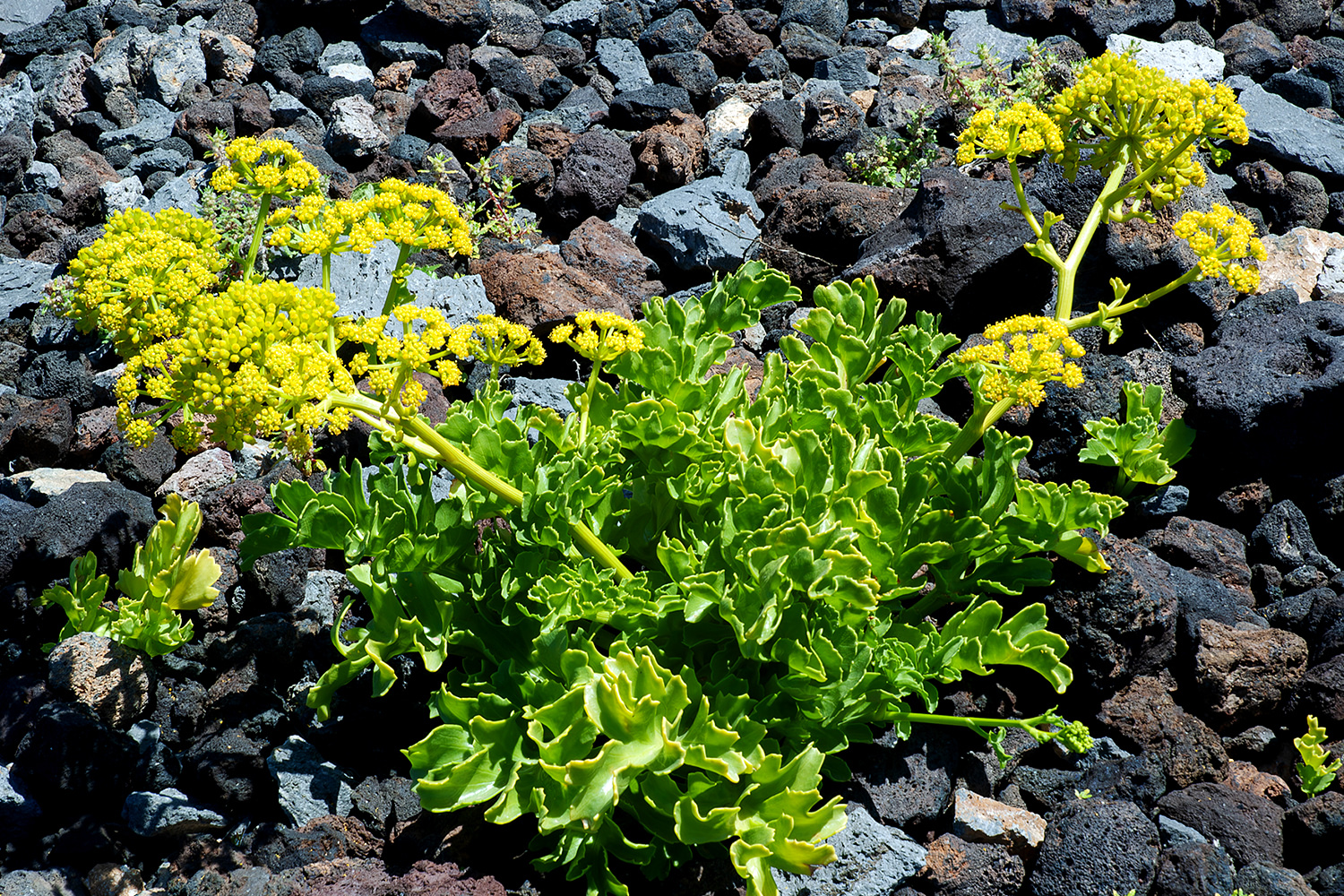
growing up to 50 cm tall, leafy, glabrous, highly branched from the base,
generally spreading or cushion-like in habit, with a very deep root and
short, cylindrical, very fleshy stems, longitudinally furrowed by fine
veins, which grow prostrate or slightly erect on the ground.
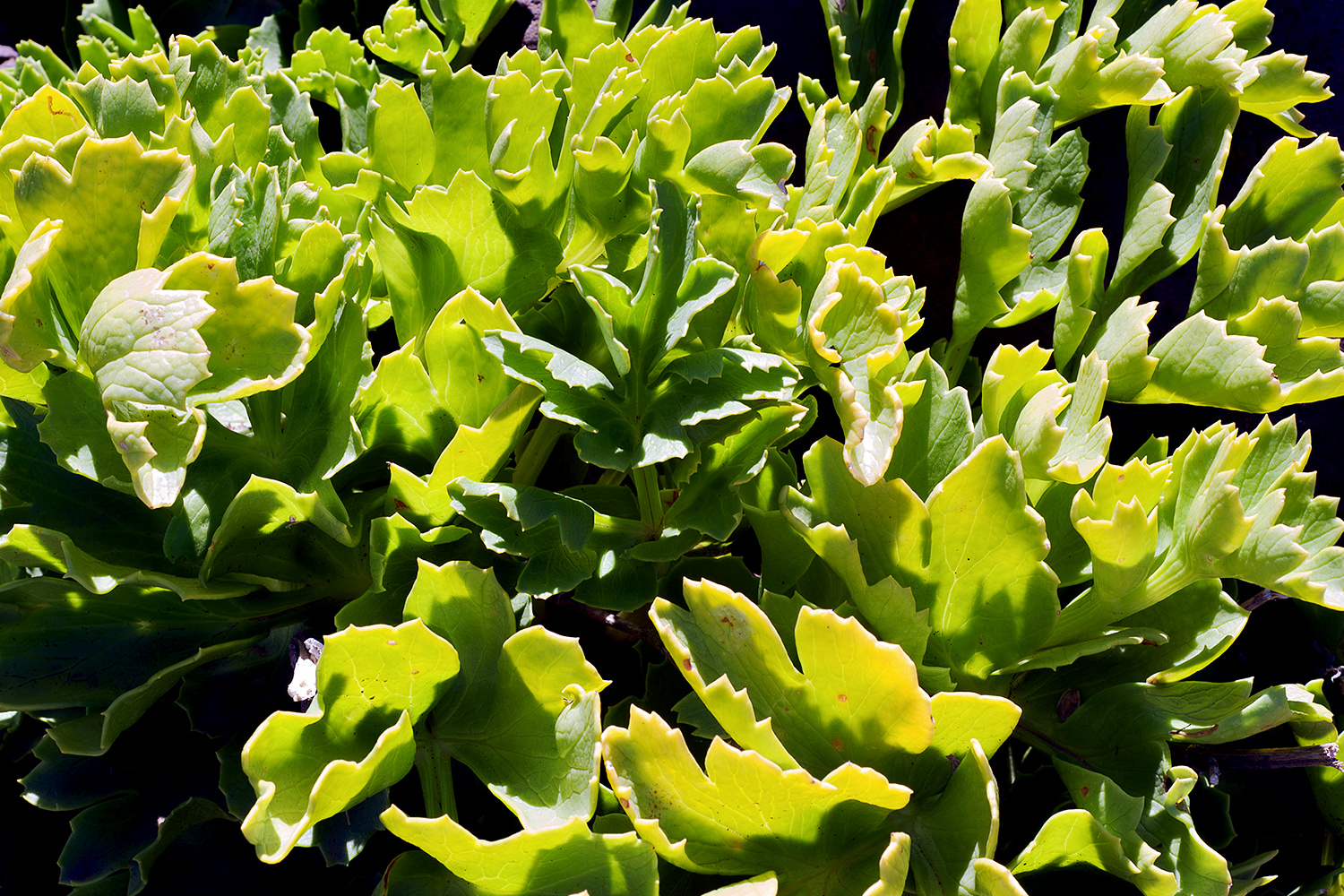
Its large, succulent leaves, which are very smooth, bright green and up to 30 cm long, are simple, alternate, long and thickly petiolate, deeply lobed and with broadly and irregularly toothed margins; the petiole widens at its base to partially encircle the stem (amplexicaul).
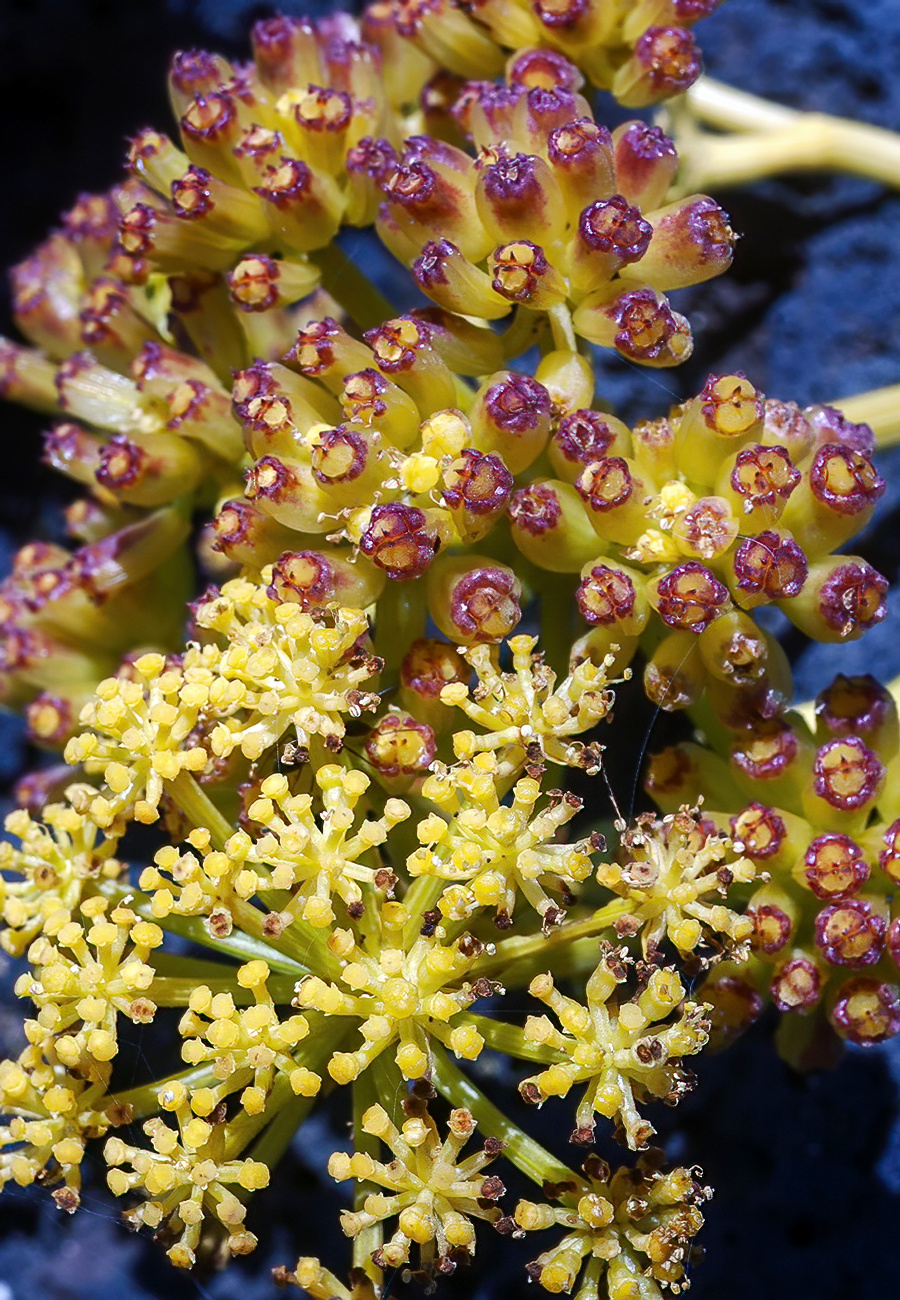
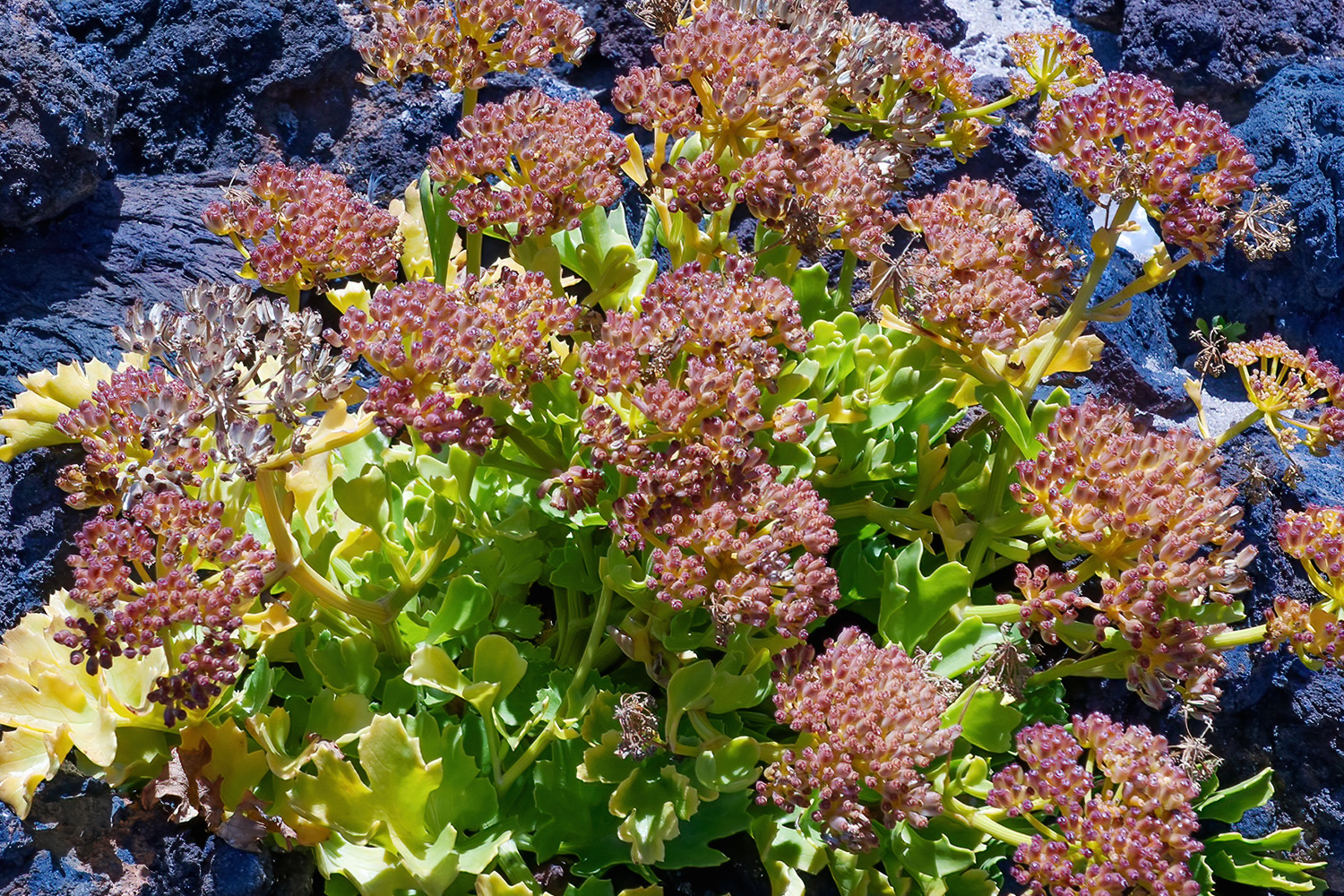
Its tiny, yellowish-green flowers are grouped in umbel-like inflorescences comprising up to fifteen rays and 12 cm in diameter. The fruits are semi-fleshy, oval capsules about 5–7 mm long, with short, thick petioles, laterally compressed, bearing three longitudinal veins and a slightly expanded margin. Corky in texture, their colour changes from yellowish-green to reddish-brown as they ripen; inside, they contain two small black seeds, which give off a strong aroma.
The leaves wither and die after fruiting, sprouting anew with the arrival of the first autumn rains.
Its large, succulent leaves, which are very smooth, bright green and up to 30 cm long, are simple, alternate, long and thickly petiolate, deeply lobed and with broadly and irregularly toothed margins; the petiole widens at its base to partially encircle the stem (amplexicaul).
Its tiny, yellowish-green flowers are grouped in umbel-like inflorescences comprising up to fifteen rays and 12 cm in diameter. The fruits are semi-fleshy, oval capsules about 5–7 mm long, with short, thick petioles, laterally compressed, bearing three longitudinal veins and a slightly expanded margin. Corky in texture, their colour changes from yellowish-green to reddish-brown as they ripen; inside, they contain two small black seeds, which give off a strong aroma.
The leaves wither and die after fruiting, sprouting anew with the arrival of the first autumn rains.
Habitat: A characteristic feature of
halophytic communities, it is one of the dominant plants of the Canary
Islands’ coastline and of great ecological importance to this strip of
vegetation. It is common and even abundant on walls, rocks and sandy
areas facing the ocean, sometimes in places so close to the sea that the
plants are periodically washed by the waves.
It is usually found in association with other marine-loving species such as sea parsley (Crithmum maritimum), sea everlasting (Limonium pectinatum), sea heather (Frankenia laevis), etc.
It is usually found in association with other marine-loving species such as sea parsley (Crithmum maritimum), sea everlasting (Limonium pectinatum), sea heather (Frankenia laevis), etc.
Flowering: Winter, spring and, in
very favourable areas, well into summer.
Reproduction: By seed, although most of the seeds are sterile. Their structure and lightness enable them to float on seawater for a long time, using these characteristics to extend their dispersal range along coastlines.
Uses: When tender, the stems and leaves can be eaten in salads; they are tasty and nutritious.
Reproduction: By seed, although most of the seeds are sterile. Their structure and lightness enable them to float on seawater for a long time, using these characteristics to extend their dispersal range along coastlines.
Uses: When tender, the stems and leaves can be eaten in salads; they are tasty and nutritious.