Canary flora > Exotic and ornamental
Plumbago auriculata

Plumbago auriculata Lam.
Belesa, Cape leadwort, Blue plumbago, Cape plumbago
Evergreen shrub, 2-4 m high, erect, creeping, hanging, or climbing if it
finds a place to hold on to, abundantly branched, with delicate,
flexible, striated stems that bend under the weight of the flowers.
The leaves, green with the underside covered with whitish scales, are simple, alternate, shortly petiolate, generally fasciculate, with a decurrent blade, with two rounded auricles at the base, and with an oblanceolate to slightly spatulate lamina, about 5-7 cm long by 2-3 cm wide, and an entire margin.
The leaves, green with the underside covered with whitish scales, are simple, alternate, shortly petiolate, generally fasciculate, with a decurrent blade, with two rounded auricles at the base, and with an oblanceolate to slightly spatulate lamina, about 5-7 cm long by 2-3 cm wide, and an entire margin.
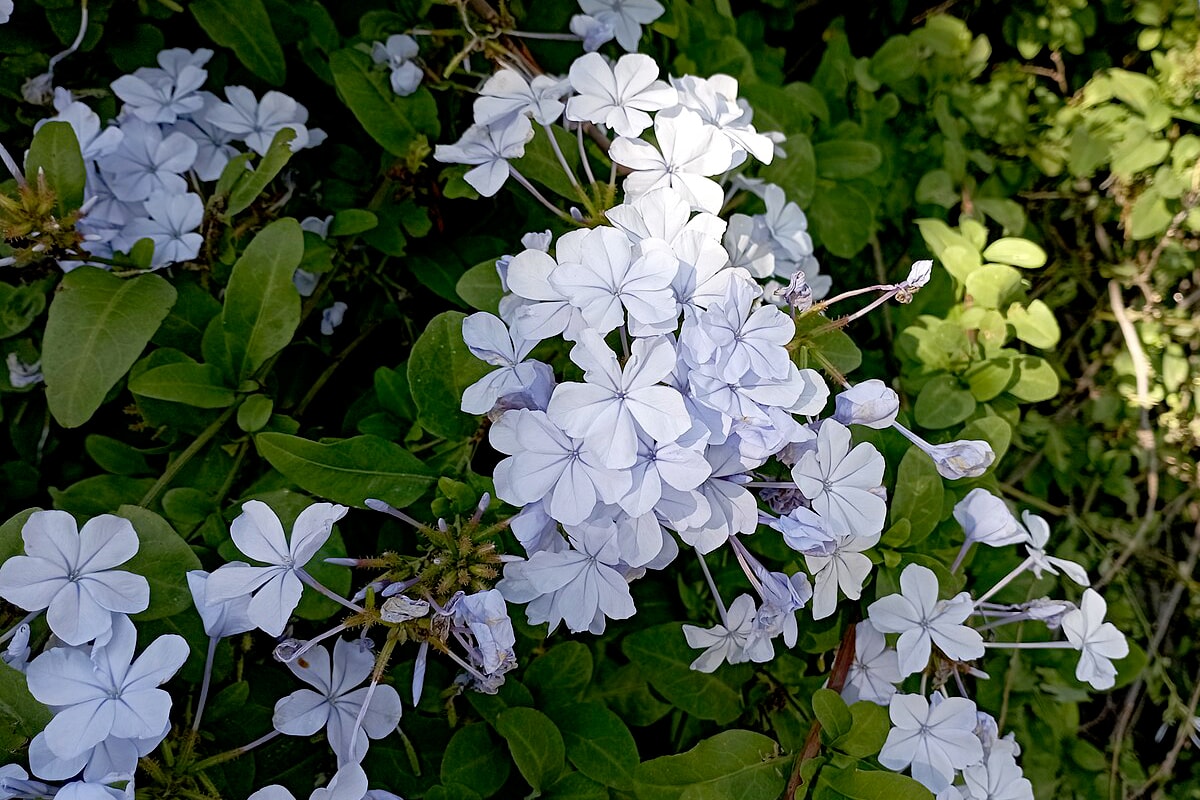
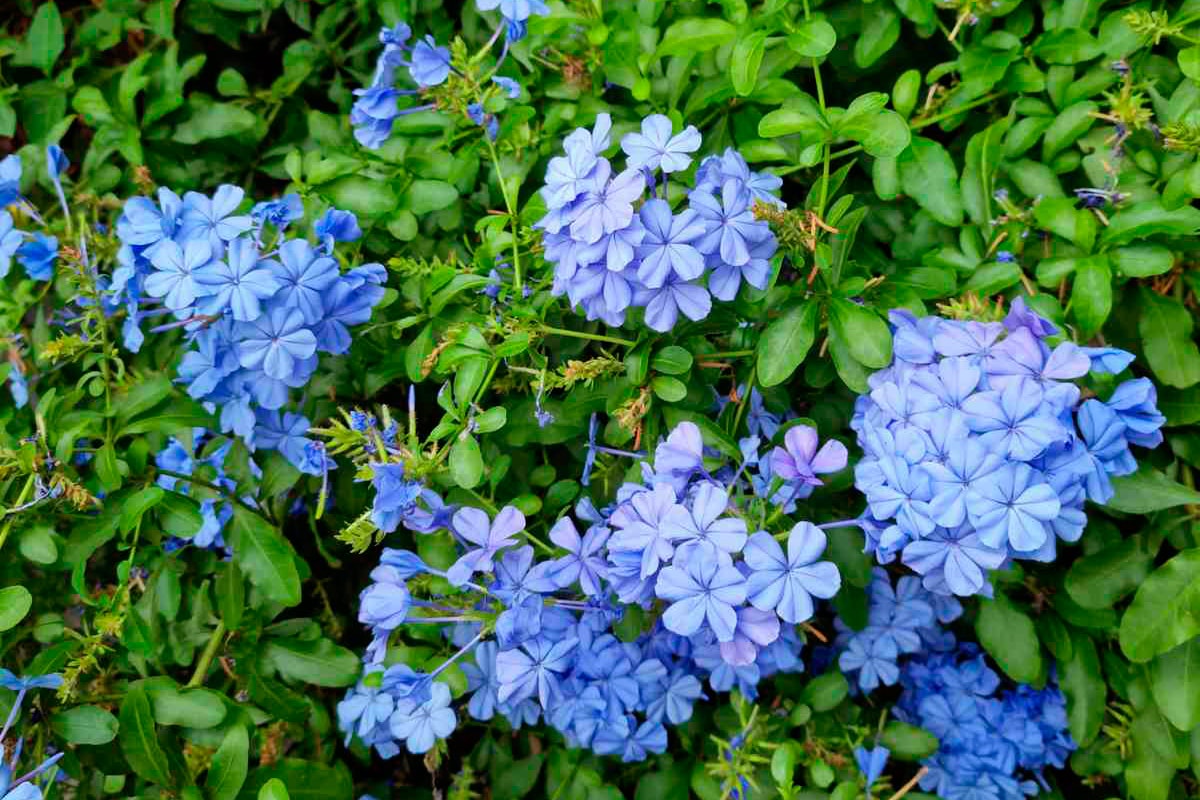
Its small, sky-blue flowers, with lighter colour gradations and a darker
central longitudinal line, measure about 2.5 cm in diameter, and are
grouped in dense terminal clusters of about 10-15 cm in diameter.
Each flower has a tubular calyx about 10-13 mm long, glandular in the upper half, and a bell-shaped or rounded corolla with five petals fused at the base.
The fruits are small capsules containing a single seed.
It normally flowers between April and November, but it is common to find specimens with flowers all year round.
Each flower has a tubular calyx about 10-13 mm long, glandular in the upper half, and a bell-shaped or rounded corolla with five petals fused at the base.
The fruits are small capsules containing a single seed.
It normally flowers between April and November, but it is common to find specimens with flowers all year round.
It can be reproduced by seed, cuttings, or by division of bushes.
This species is native to South Africa, but has long been cultivated in regions with a Mediterranean climate, both in public and private gardens. It is a plant much appreciated for its exuberant flowering and its ability to cover large areas with ease, making it ideal for decorating walls, pergolas and fences.
This species is native to South Africa, but has long been cultivated in regions with a Mediterranean climate, both in public and private gardens. It is a plant much appreciated for its exuberant flowering and its ability to cover large areas with ease, making it ideal for decorating walls, pergolas and fences.


