Canary flora > Exotic and ornamental
Dracaena marginata
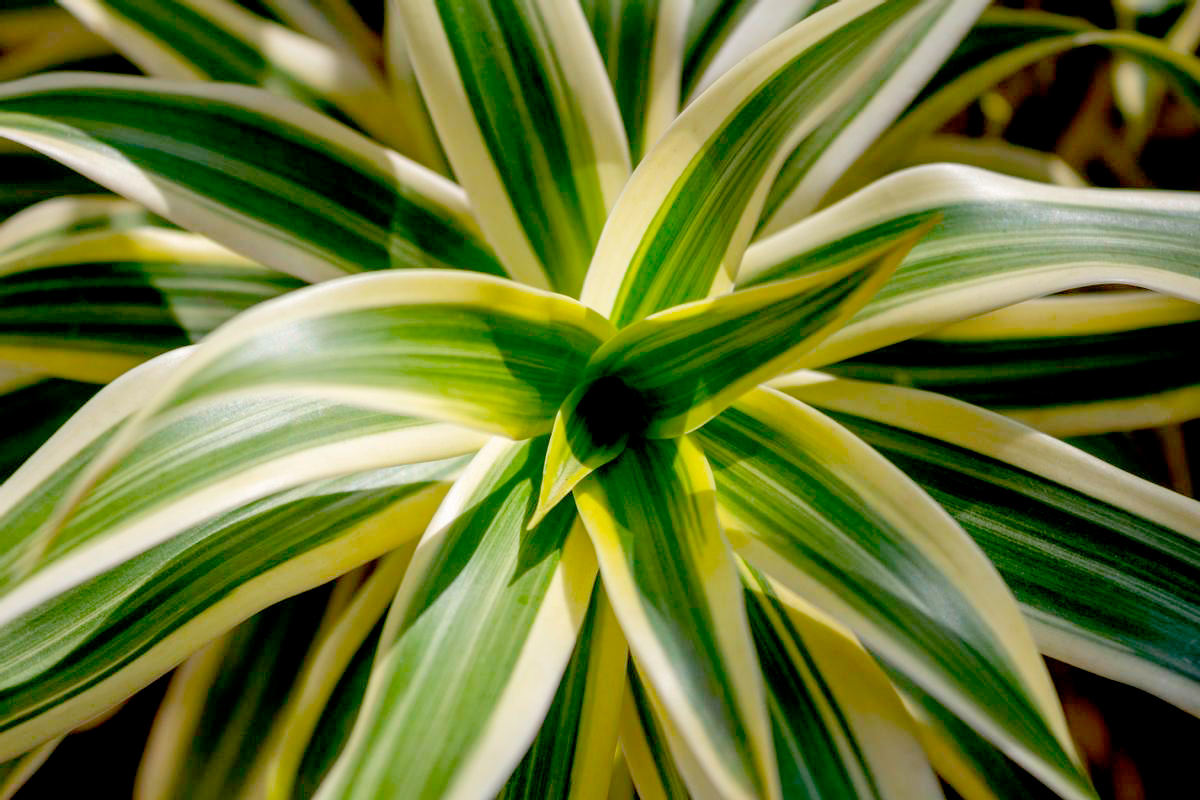
Dracaena marginata Baker
Dragon Tree, Madagascar Dragon Tree
Perennial shrub, very slow growing and erect, with one or several
trunks, generally 1-2 m high, but which in old and very developed
specimens can become a tree up to more than 5 m high, with very strong,
abundantly branched trunks and an imposing appearance.
Its light to deep green leaves, with a dark red margin, are large, between 30-90 cm long and 2-7 cm wide. Simple, rigid, broadly linear to lanceolate, entire at the margin, with parallel venation, and arranged in tight whorls at the end of the stems.
Its light to deep green leaves, with a dark red margin, are large, between 30-90 cm long and 2-7 cm wide. Simple, rigid, broadly linear to lanceolate, entire at the margin, with parallel venation, and arranged in tight whorls at the end of the stems.

Its small white flowers are very fragrant, and are grouped in more or
less erect branched inflorescences. The fruits are rounded,
orange-yellow berries.
Cultivated specimens usually develop as a shrub 1-2 m high, with an upright woody trunk and leaves clustered at the top. But in many cases the trunk forks at the end, or gives rise to a second trunk halfway up the first, making each plant distinct from the others, often forming a structure of clear trunks, crowned by showy rosettes of leaves.
Cultivated specimens usually develop as a shrub 1-2 m high, with an upright woody trunk and leaves clustered at the top. But in many cases the trunk forks at the end, or gives rise to a second trunk halfway up the first, making each plant distinct from the others, often forming a structure of clear trunks, crowned by showy rosettes of leaves.

Flowering occurs in spring and winter, but cultivated specimens rarely
flower or fruit.
It reproduces by seed, and more easily by terminal cuttings.
This species is native to Madagascar and Mauritius. In its natural environment it grows in bright areas, but in most parts of the world it is cultivated as a houseplant.
It reproduces by seed, and more easily by terminal cuttings.
This species is native to Madagascar and Mauritius. In its natural environment it grows in bright areas, but in most parts of the world it is cultivated as a houseplant.


