Canary Flora > Wild species
Pteridium aquilinum
Pteridium aquilinum (L.) Kuhn in Kerst.
Familia
HYPOLEPIDACEAE
Jelechera, helechera, helecho hembra, helecho común, helecho águila
Description:
A perennial fern, very robust, with a deep underground rhizome up to over 1
m in length, thick and covered in brown hairs, from which fronds up to over
2 m in height emerge, supported by a sturdy stipe, more or less quadrangular
in shape, grooved on the underside and irregularly covered with a yellowish
down, denser at the base.
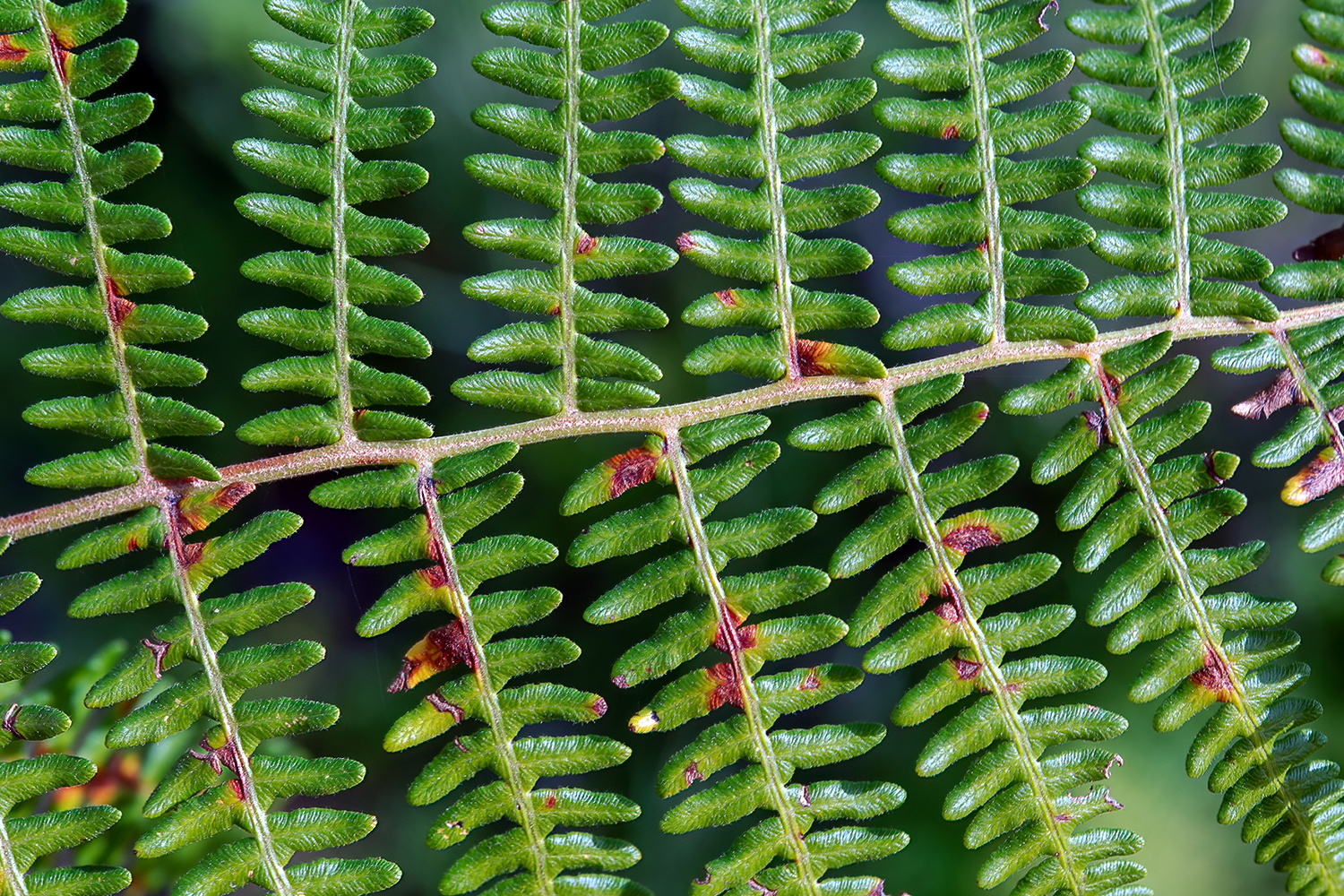
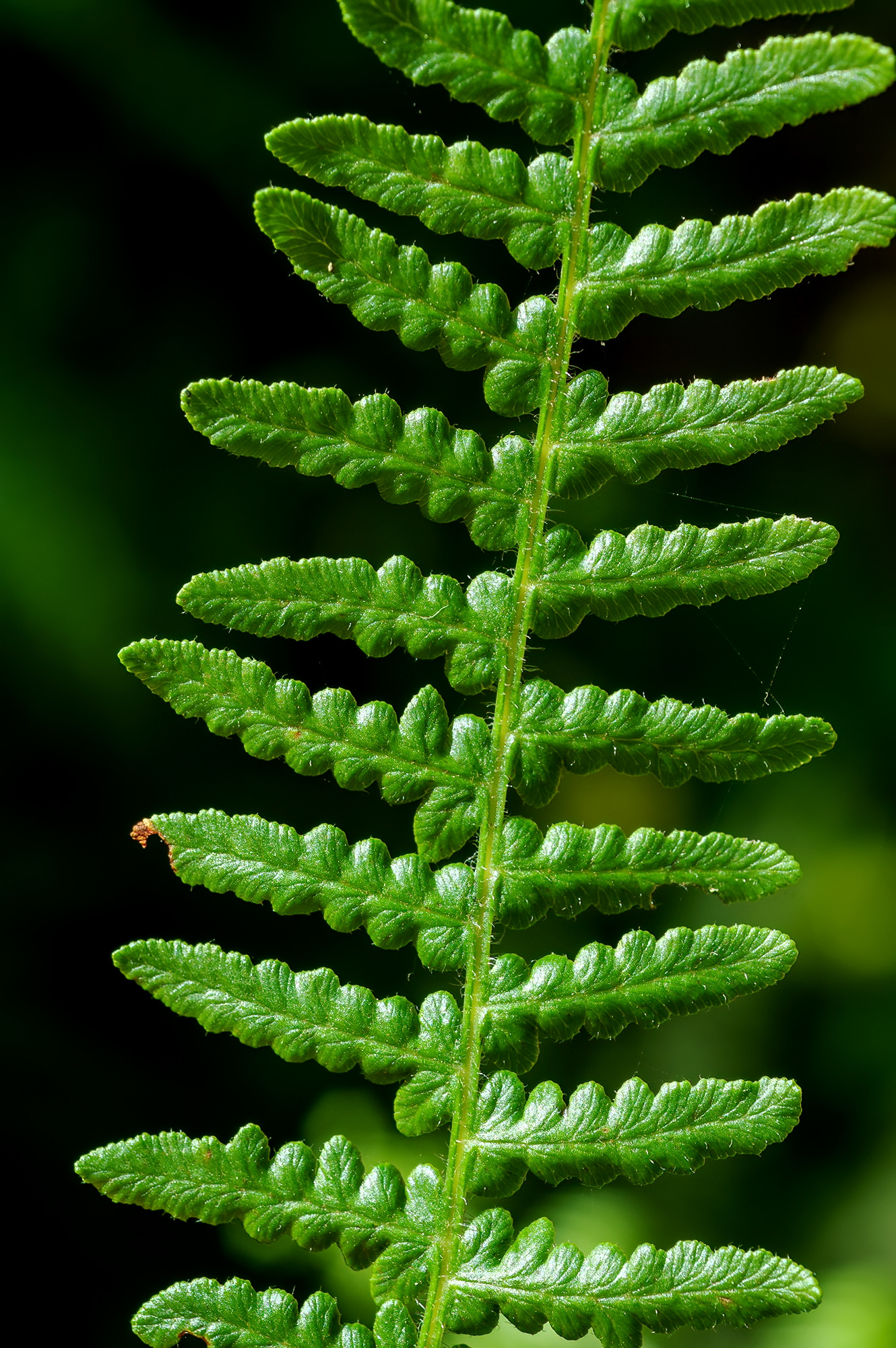
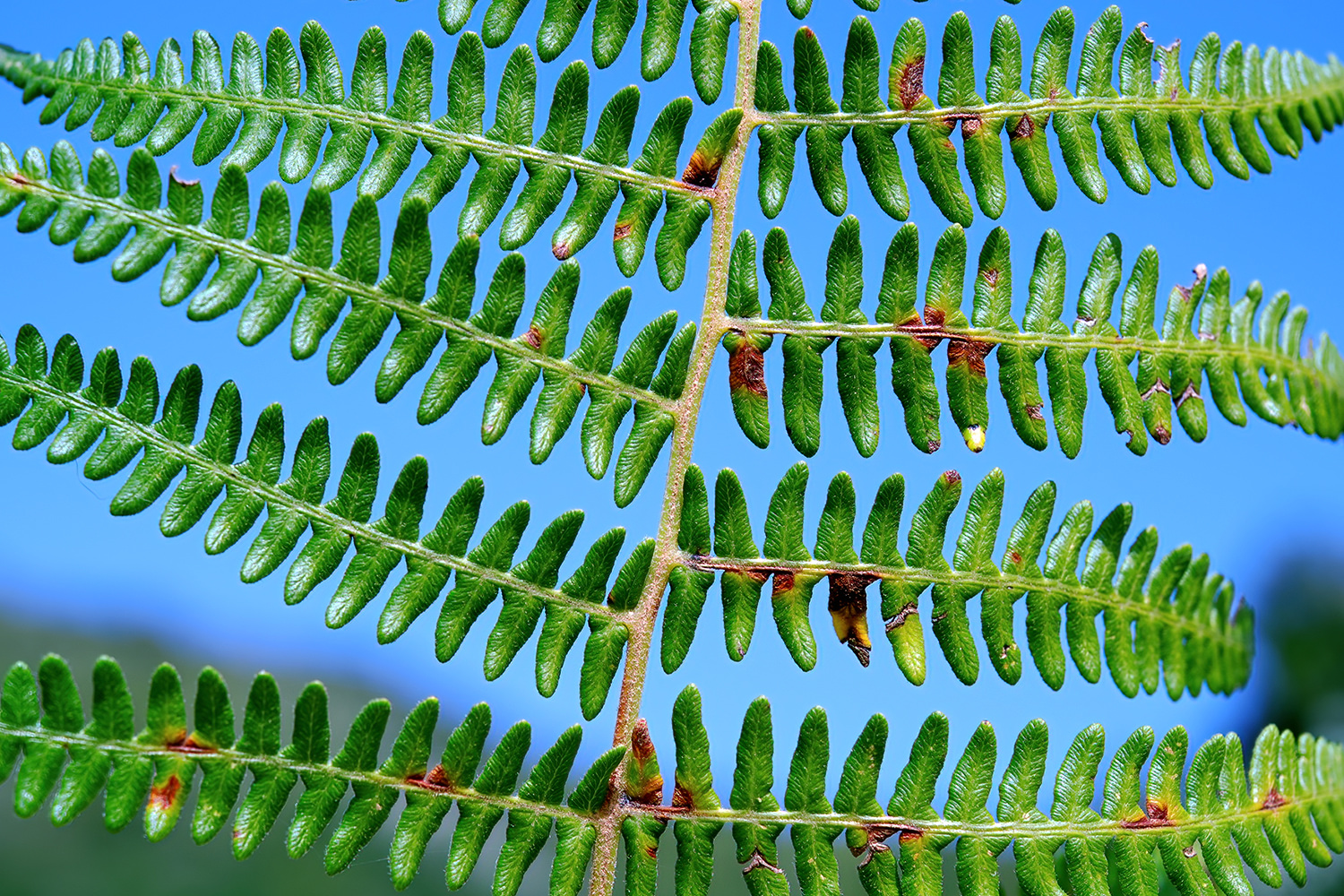
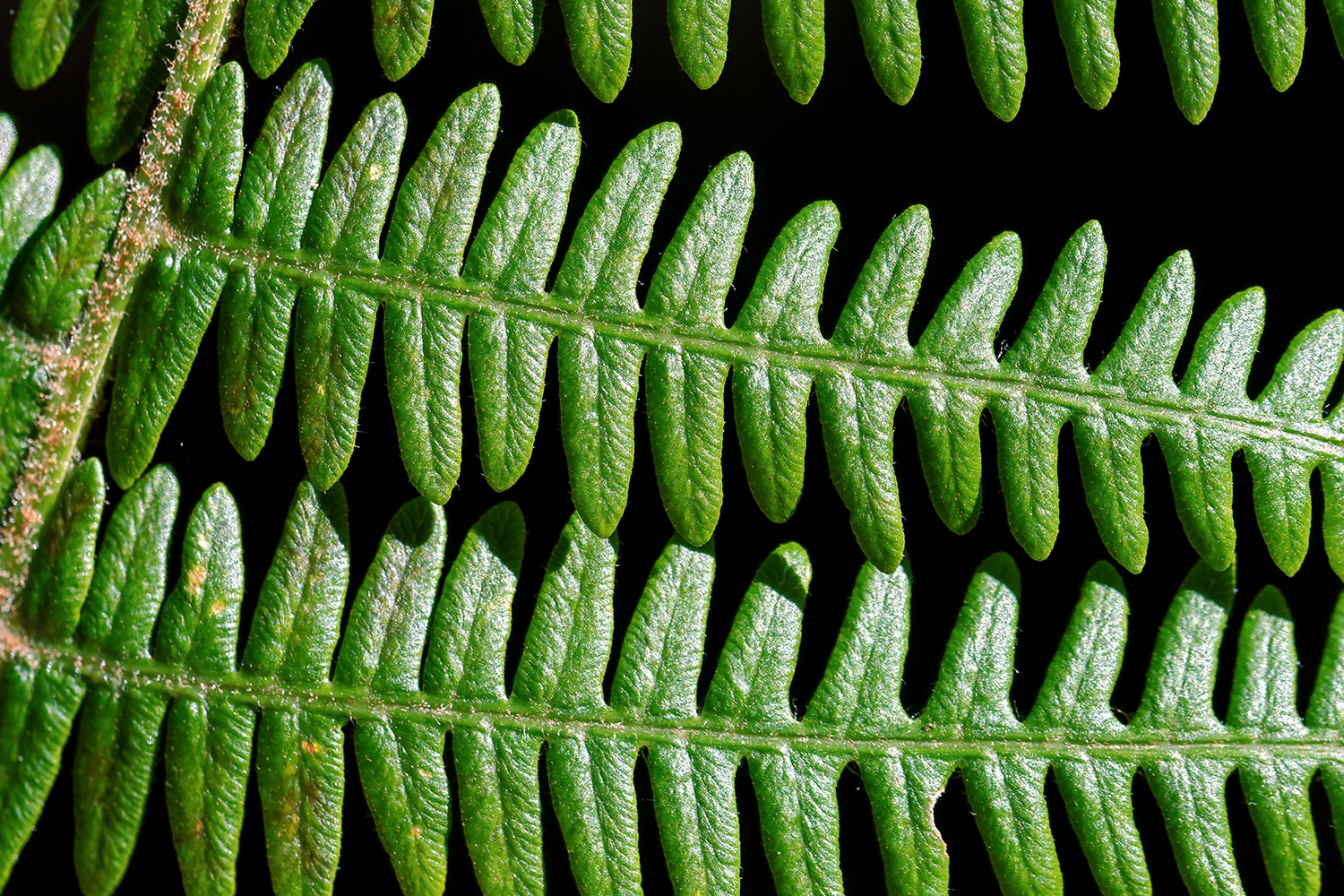
The leaf blade, leathery, broadly oblong to deltoid in shape and deep green in colour, is divided two to four times (bipinnate, tripinnate or tetrapinnate), with the pinnae arranged oppositely along the petiole. The leaflets of the lowest order (pinnules) are sessile, broadly linear, entire at the margins, obtuse or slightly acute at the apex, curved at the margin, smooth on the upper surface and with a soft down on the underside.
The sorus are situated on the margins of the pinnules and are protected by a double indusium: the outermost part consists of a false indusium, which is simply the margin of the leaflet rolled inwards, whilst the innermost part consists of a true, membranous indusium. The spores are chestnut brown in colour.
As the leaves wither, they take on a beautiful reddish-yellow colour, before turning brown and disintegrating rapidly in hot weather.
The whole plant gives off a distinctive scent, which becomes markedly stronger as it dries.
Habitat:
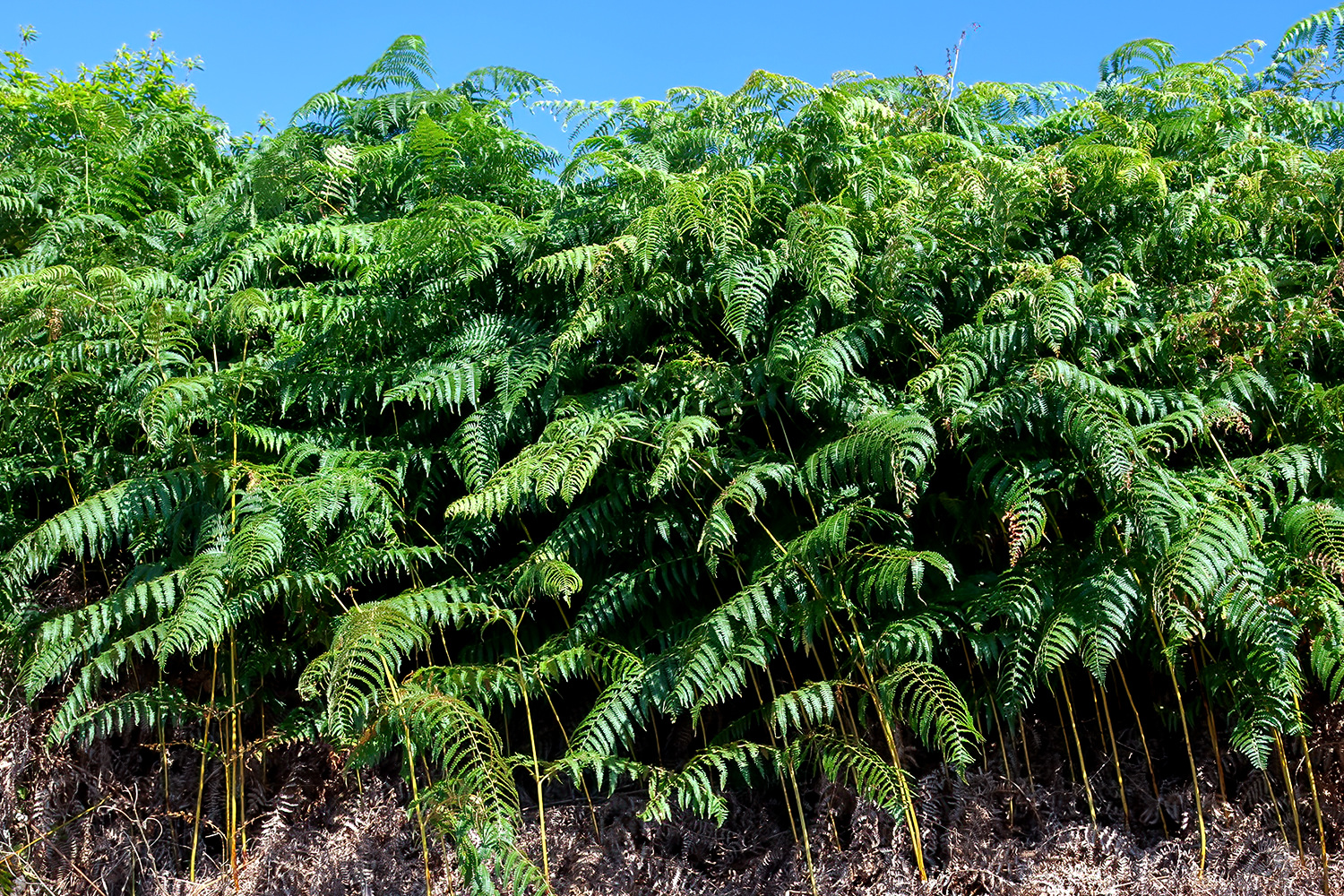
This fern is one of the most common weeds in the world, growing from
subarctic regions right down to the southernmost parts of Africa and the
Americas. It is frequently found, and even very abundant, on almost all
the Canary Islands, almost always forming dense stands, sometimes so
thick that it is difficult to make one’s way through them.
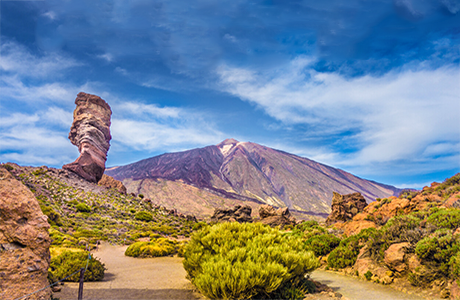
Although it occupies almost every type of ecosystem, it shows a preference for open, sunny locations in the mid-altitude zones, though it is also found in the more humid and shady areas of the montane forest and pine woodland. It rapidly colonises the edges of paths and roads, areas ravaged by fire, abandoned farmland, etc. In the most exposed areas, the fronds dry out over the summer, only to sprout again in mid-autumn.
The success of its remarkable spread is due to several factors: its unpleasant taste, which protects it from predators such as cows, goats and rabbits; its gregarious growth, which is sometimes so dense that it is impossible to pass between the plants; the extent of cover provided by its fronds, which almost completely eliminates its direct competitors; the great resilience of its rhizome to fire and adverse weather conditions; and its ability to reproduce in areas affected by fire.
Sporulation:
The sorus mature throughout the spring and summer months.
Propagation: Via microscopic spores, which form a dense yellowish layer beneath the adult specimens.
Uses: This plant is widely known for its use during periods of severe famine in the Canary Islands, as it was used to make the famous ‘bollos de jelecho’ – rudimentary cakes that formed the staple food of the poorest sections of the population. To make these, the rhizomes were used; these had to be dug up with great effort, given their depth and toughness; they were then transported in baskets and left to dry in the sun; subsequently, they were roasted, ground and sifted, yielding a very coarse flour, which was mixed with water and then passed through a toaster. Similar practices were employed by the Normans in the 18th century, the Indigenous peoples of British Columbia and the Māori of New Zealand.
Until a few decades ago, the fronds of this fern were used as bedding for cattle in their stables, mixed with branches of heather and faya, producing high-quality manure that was widely used on the island’s farms before the introduction of artificial fertilisers.
It was also customary amongst farmers to line the fruit baskets they took to market with tender fronds of this fern, both to protect the fruit from the sun and to indicate its freshness and vitality.
This widespread fern had many other uses on our islands, such as serving as filling for mattresses and pillows, and for horse packsaddles. In charcoal kilns, a layer of bright green fern fronds was placed around the piled firewood so that, when covered with earth, the soil would not fall into the pile.
In some parts of the Iberian Peninsula, its fronds and rhizomes were used to feed cows and pigs, usually after boiling them and mixing them with herbs and cooked potatoes.
In some northern European countries, this species is associated with rituals of protection, healing and fertility, such as the custom of sprinkling oneself with its pollen to bring good luck.