Flora canaria > Especies silvestres
Amaranthus polygonoides
Amaranthus lividus L. ssp. polygonoides (Moq.) Probst.
Familia
AMARANTHACEAE
Bledo
Amaranthus lividus subsp. polygonoides (also taxonomically classified under the accepted name Amaranthus blitum subsp. emarginatus) is a subspecies of herbaceous annual plant belonging to the Amaranthaceae family. It is commonly known in various Spanish-speaking regions by the generic name ‘bledo’.
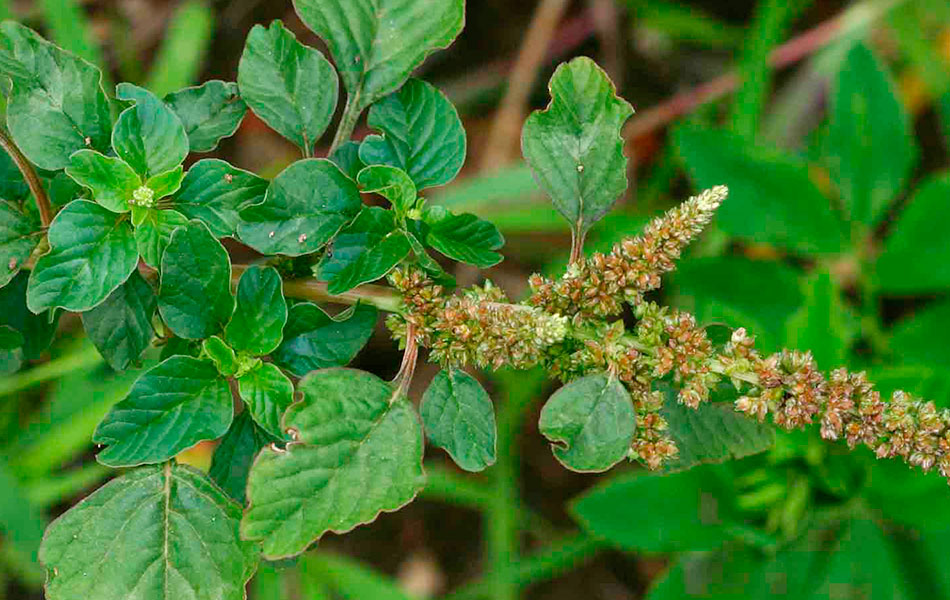
It is a plant that generally grows prostrate or ascending, with stems that usually branch from the base, forming a carpet-like growth habit.
Its leaves are alternate, petiolate and ovate to obovate in shape, frequently characterised by a distinctly notched (emarginate) apex.
It produces unisexual flowers grouped in axillary glomerules or in slender terminal spikes that are green or slightly purplish in colour.
This variety is markedly nitrophilic. It grows wild as a weed on anthropised and disturbed land, in agricultural crops, damp vegetable gardens and irrigated areas.
Although it is native to warm regions and the Mediterranean basin, it is widely naturalised worldwide. On the Iberian Peninsula and the Canary Islands, it has localised and stable populations in agricultural and peri-urban areas.
Like other subspecies of Amaranthus blitum or Amaranthus lividus, its tender leaves have historically been harvested for culinary use as a leafy vegetable (similar to spinach), and are eaten both cooked and in salads due to their nutritional value.
El Hierro, Tenerife, Gran Canaria, Lanzarote