Flora canaria > Especies silvestres
Amaranthus albus
Amaranthus albus L.
Familia
AMARANTHACEAE
Bledo blanco, Amaranto blanco, Mastrancillo
Amaranthus albus, commonly known as white amaranth, white bledo or taramago, is an annual herbaceous plant belonging to the Amaranthaceae family. Native to the Americas, it has become naturalised worldwide and is notable for acting as a tumbleweed when it dries out.
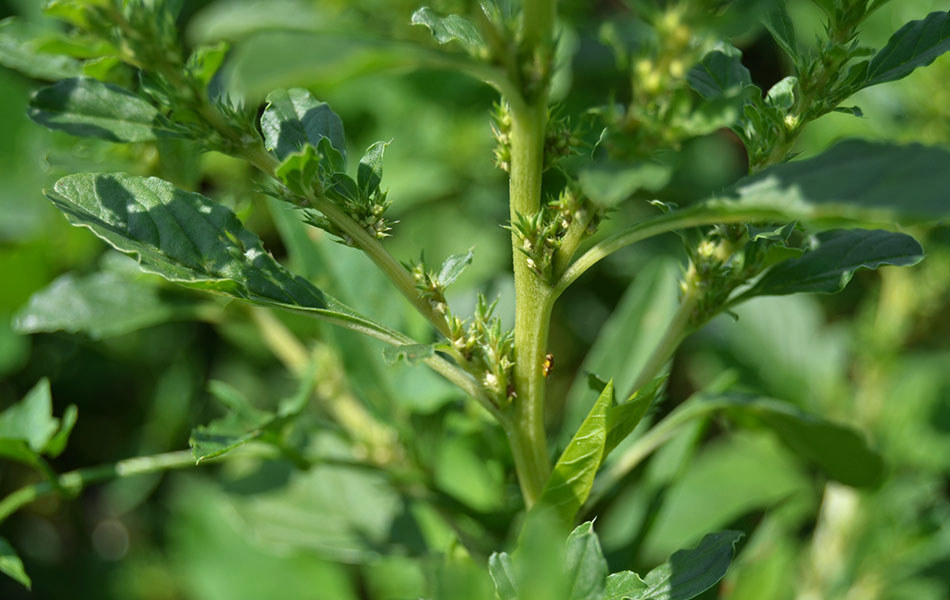
It is a plant 10 to 70 cm tall, yellowish-green to reddish in colour, highly branched and with a dense or bushy appearance. Its mature stems take on a characteristic whitish hue.
The leaves are alternate, elliptical to spatulate in shape, small (5 to 50 mm) and usually have slightly wavy margins.
It is a monoecious species. Its flowers are tiny, greenish and clustered in dense axils along the stem. It flowers mainly from May to December.
When the plant matures and dies at the end of the season, the stem breaks off at the base of the root. The wind causes it to roll across the ground, dispersing vast numbers of tiny, shiny black seeds.
It is a nitrophilic and pioneer species, extremely resistant to drought and high temperatures. It grows wild as a weed on land disturbed by human activity: cultivated fields and irrigated land, verges and roadsides, ruderal areas, derelict plots and wasteland.
Although it is commonly removed as it is regarded as a weed in agriculture, it has considerable nutritional and ethnobotanical value:
Its young, tender leaves can be eaten cooked or in salads (with a flavour similar to spinach). They are rich in protein, vitamins A and C, iron, calcium and magnesium.
La Palma, Gran Canaria