Flora canaria > Especies silvestres
Todaroa montana
Todaroa montana (Webb ex Christ) A. Hans. et Kunk.
Familia
APIACAE
Hirrina, Zanahoria de cumbre
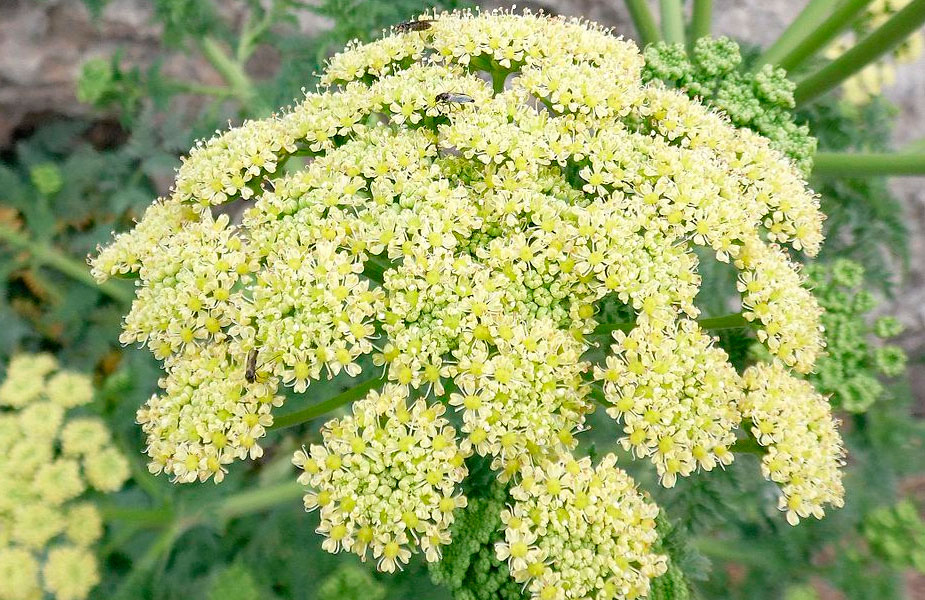
Todaroa montana, commonly known as ‘cañaheja blanca’ or ‘zanahoria de cumbre’, is a large, perennial herbaceous plant belonging to the Apiaceae family, endemic to the Canary Islands archipelago.
It is a robust and imposing species that sprouts each year from a fleshy root. Its stems are branched and erect, easily reaching heights of between 1.5 and 2 metres.
They are notable for being highly decorative, large, feathery and a light or fresh green colour. Structurally, the leaves are 2 to 5 times pinnate with small, lanceolate segments, and have a densely pubescent-tomentose texture (covered in fine, soft hairs).
They are grouped in large, striking umbel-shaped inflorescences. Their tiny flowers are yellowish-green or white in colour.
Their main flowering period occurs in spring, specifically between April and June. After this cycle, the above-ground parts of the plant tend to dry out completely during the summer.
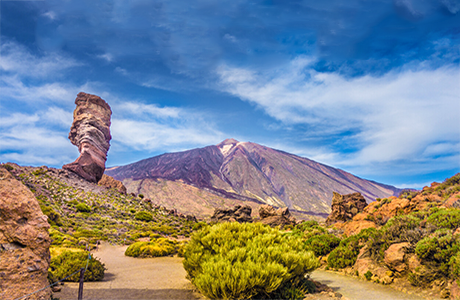
As its specific name (montana) suggests, it is native to mountainous areas. It grows mainly in sunny or semi-shaded environments on the edges and in clearings of forests and in open areas on mountain summits.
El Hierro, La Palma, La Gomera, Tenerife, Gran Canaria