Flora canaria > Especies silvestres
Amaranthus standleyanus
Amaranthus standleyanus Parodi ex Covas
Familia
AMARANTHACEAE
Bledo
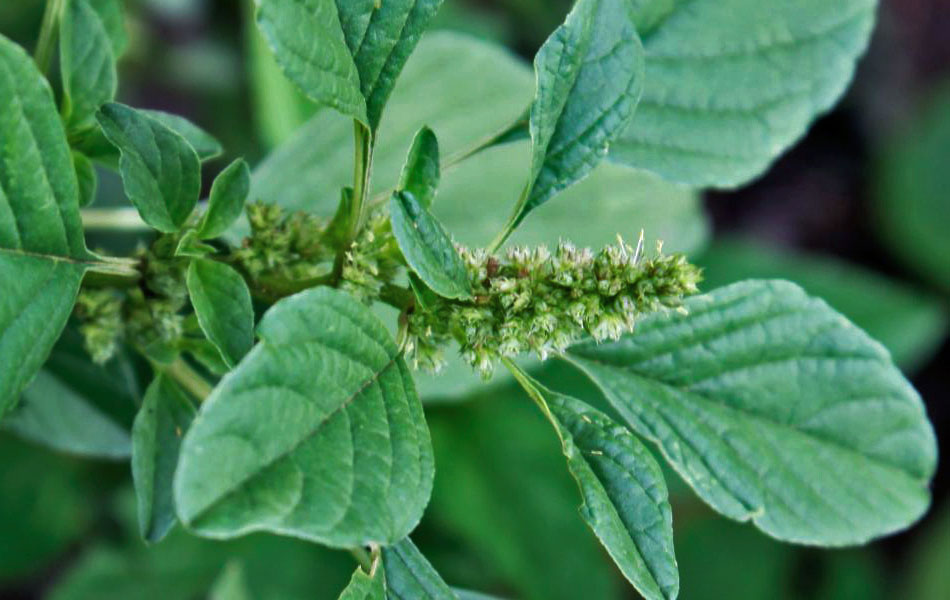
Amaranthus standleyanus is an annual herbaceous plant belonging to the Amaranthaceae family. This species is notable for its great adaptability and resilience on land that has been altered by humans.
It grows in an erect to decumbent manner (with stems that are initially inclined or prostrate but later rise), reaching heights of between 30 and 70 centimetres. Its stems are usually glabrous (smooth) at the base and slightly hairy towards the upper end.
The leaves are lanceolate, ovate or rhombic, arranged alternately, with margins that are sometimes wavy and a small mucron (stiff tip) at the apex.
It develops dense, greenish spikes, both terminal and axillary. It is an anemophilous plant, meaning that it releases dense clouds of pollen so that the wind can carry out pollination.
As a fast-growing pioneer plant, it completes its entire life cycle between late spring and autumn, before dying with the first frosts.
It is native to the temperate and arid regions of South America, occurring naturally throughout Argentina, Bolivia, Paraguay and Uruguay.
It has successfully naturalised in numerous regions of the world as a neophyte or opportunistic species. It is present across much of Europe (including Spain and, notably, the Canary Islands), as well as in parts of Africa and Asia.
It rapidly colonises disturbed soils, roadside verges, abandoned farmland, river terraces and sunny gravel beds.
Its leaves and seeds are suitable for local consumption. However, like other members of the genus Amaranthus, the leaves can accumulate high levels of nitrates if grown in over-fertilised soils.
El Hierro