Flora canaria > Especies silvestres
Scandix pecten-veneris
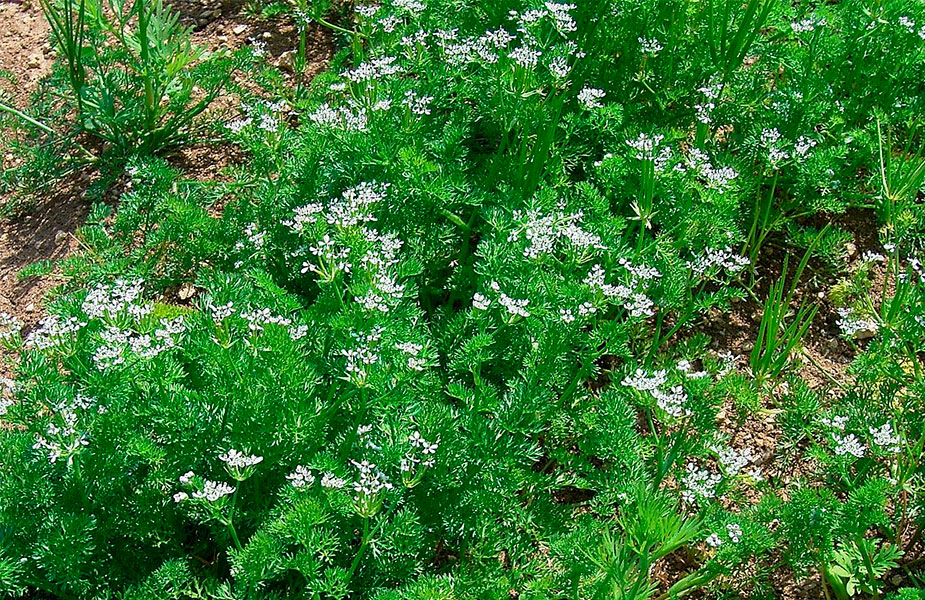
Scandix pecten-veneris L. ssp. pecten-veneris
Familia
APIACEAE
Aguja de pastor, Peine de Venus, Cominillo
Scandix pecten-veneris, commonly known as Venus’s comb, shepherd’s needle or little comb, is an annual herbaceous plant belonging to the Apiaceae family. It is native to Europe, North Africa and Western Asia, and is notable chiefly for the distinctive shape of its elongated fruits.
It is a slender, branched plant that usually grows to between 10 and 40 cm in height (occasionally up to 50 cm). Its stems are pubescent and its leaves are finely divided (bi- or tripinnatisect), giving it a very delicate, feathery appearance.
They are pure white in colour and are grouped in small, umbel-shaped inflorescences. The outer petals are noticeably larger than the inner ones, giving the umbel a striking star-like shape.
Its most distinctive feature is its fruit (mericarp), which extends into a vertical spike or needle measuring between 1.5 and 8 cm in length. When several fruits grow together and stand upright, they resemble the structure of the teeth on a comb, which is why it bears its scientific and common names.
It is considered a weed and a ruderal plant that grows wild in cultivated fields (particularly cereal fields), fallow land, embankments and roadsides. Its flowering period is mainly in spring, from late February until summer.
Historically, it has been valued as an edible plant; its tender shoots and young leaves have an aromatic smell and flavour reminiscent of chervil or carrot leaves. Traditionally, they were eaten raw in salads or cooked in stews and casseroles in various parts of the Mediterranean basin. Furthermore, in folk medicine, it has been credited with diuretic, digestive and anti-inflammatory properties.
Due to the intensive use of herbicides in modern agriculture, its populations in cereal fields have declined significantly in some European regions.
El Hierro, La Palma, La Gomera, Tenerife, Gran Canaria, Fuerteventura, Lanzarote