Flora canaria > Especies silvestres
Apium graveolens
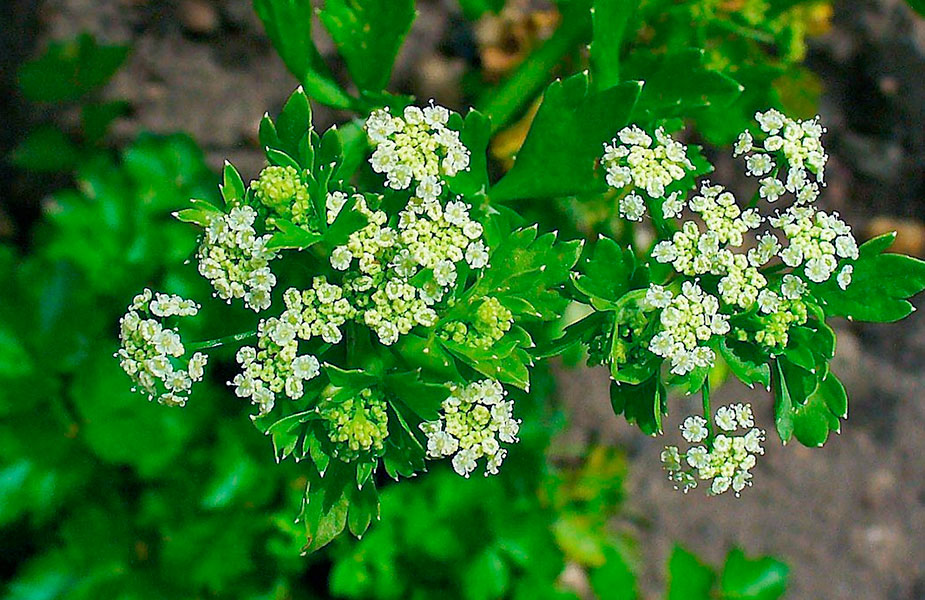
Apium graveolens L.
Familia
APIACEAE
Apio
Celery (Apium graveolens) is a species belonging to the Apiaceae family, with a cosmopolitan distribution. Celery has a long, fibrous stem that tapers into leaves. Depending on the location and cultivar, its stems, leaves or hypocotyl are eaten and used in cooking. Celery seed powder is used as a spice.
A biennial, glabrous herb with a strong, characteristic odour, featuring an axonomorphic root and stems up to 100 cm tall, erect, deeply grooved and solid.
Lower leaves once pinnately dissected, with 3–7 segments 1–5 cm long, coarsely toothed or sometimes almost pinnatifid, with a delta- or rhomboid-shaped outline; petioles slender, sheathing for most of their length; upper leaves mostly deeply trilobed or trisected, with petioles sheathing for almost their entire length.
Depending on the part of the plant that is used, they are classified into three main commercial varieties:
Apium graveolens var. dulce: This is the most common; its fleshy, crisp and juicy petioles or stems (stalks) are eaten.
Apium graveolens var. rapaceum: This is grown for its globular, thickened root, which is very popular in the cuisines of central and northern Europe.
Apium graveolens var. secalinum: Similar to parsley, it is mainly used as an aromatic herb due to the intensity of its leaves.
El Hierro, La Palma, La Gomera, Tenerife, Gran Canaria, Fuerteventura, Lanzarote