Flora canaria > Especies silvestres
Anethum graveolens
Anethum graveolens L.
Familia
APIACEAE
Eneldo, Diendro, Abesón
Anethum graveolens is the scientific name for dill, an annual herbaceous plant belonging to the Apiaceae family. It is native to the Mediterranean region, North Africa and Western Asia, and is extremely popular in global cuisine for its aromatic and culinary properties.
It has erect, hollow stems from which finely divided, feathery, bluish-green leaves emerge.
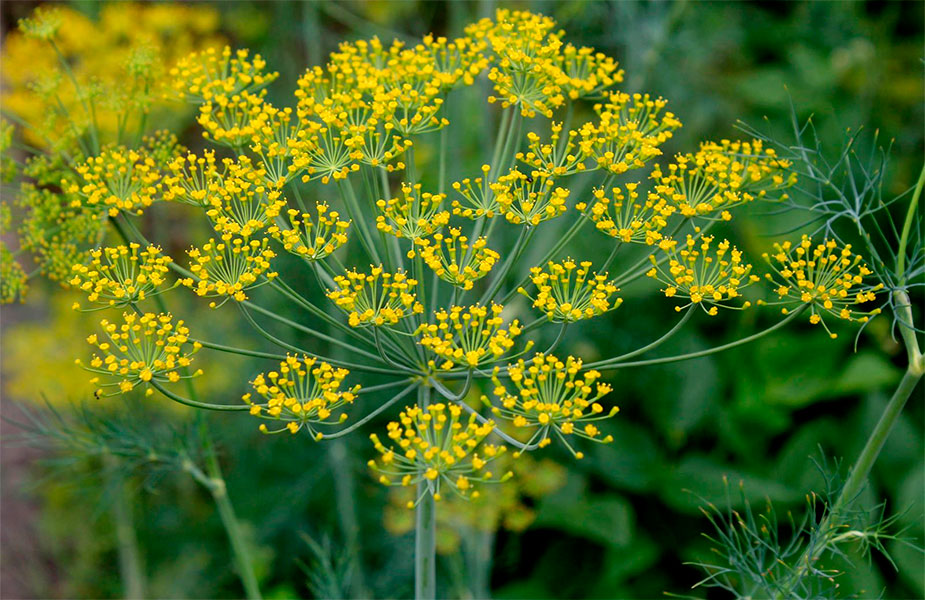
It produces umbrella-shaped inflorescences (umbels) composed of small yellow flowers that appear in mid-summer.
The whole plant gives off a distinctive, very fragrant aroma, combining notes of aniseed, citrus and a hint of sweetness.
Both its fresh and dried leaves (known as ‘dill’) and its seeds are used in cooking. It is the iconic ingredient in pickled gherkins, yoghurt sauces, stews, soups and fish marinades (especially for salmon).
It is traditionally used in herbal teas for its carminative and digestive properties, helping to relieve heartburn, flatulence and mild stomach ache.
It requires direct exposure to full sun (at least 6 to 8 hours a day).
It requires loose, well-drained soil. Watering should be regular but moderate, avoiding waterlogging which can cause the roots to rot.
As it has a long, delicate taproot, it is recommended to plant it directly in its permanent location (whether in the garden or in deep pots), as it does not tolerate transplanting well.
Tenerife