Flora canaria > Especies silvestres
Ammi majus
Ammi majus L.
Familia
APIACEAE
Espuma del mar, Ameo bastardo
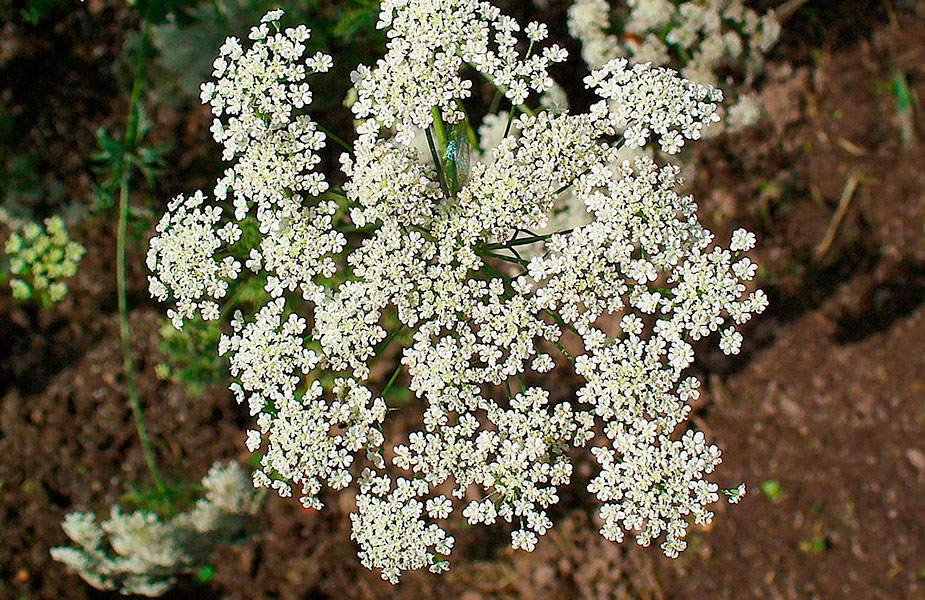
Ammi majus, commonly known as sea foam, lace or greater ammi, is an annual herbaceous plant of the Apiaceae family. Native to the Mediterranean region and the Middle East, it is characterised by its delicate white, umbrella-shaped inflorescences (umbels) that resemble fine lace, bearing a strong visual resemblance to the wild carrot.
It grows to heights of between 20 and 100 cm (occasionally up to 1.5 metres), with erect, branched stems and bright green, divided leaves.
It flowers from mid-spring to late summer (May to September), attracting pollinators such as bees and butterflies in abundance.
It grows wild as a ruderal plant in cultivated fields, along roadsides and on disturbed land (acting as a weed in some regions).
It is a favourite filler plant for florists and landscape designers. Its umbels lend a rustic air to arrangements, and its cut flowers can last up to two weeks in a vase.
Its extracts contain substances called psoralens (such as xanthotoxin), which have historically been used in medical treatments for vitiligo, helping to resynthesise epidermal melanin through controlled exposure to sunlight.
The plant’s sap contains furocoumarins. If it comes into contact with the skin and the skin is then exposed to sunlight, it can cause severe dermatitis and burns. It is recommended that gloves are always worn when handling the plant.
El Hierro, La Palma, La Gomera, Tenerife, Gran Canaria, Fuerteventura, Lanzarote