Flora canaria > Especies silvestres
Alstroemeria pulchella
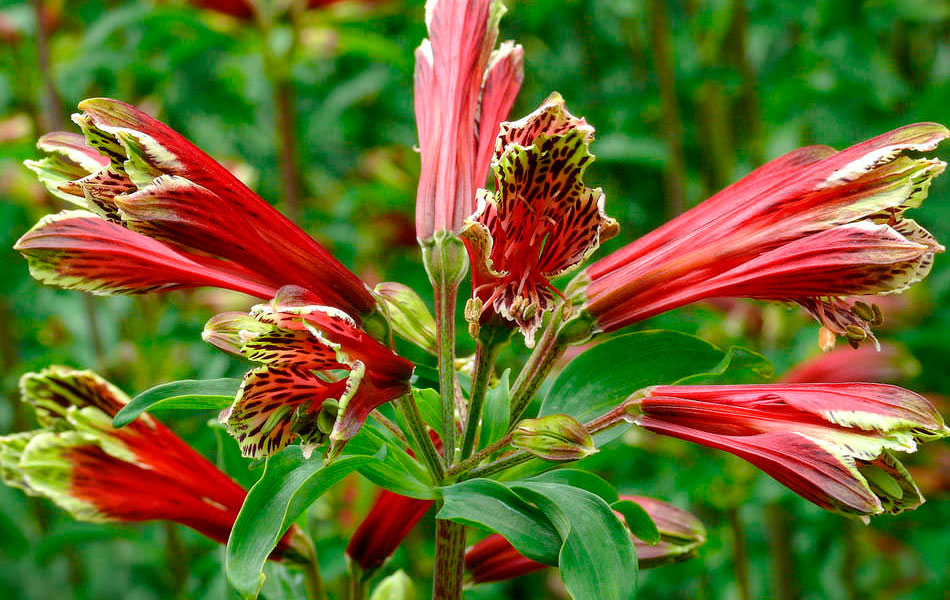
Alstroemeria pulchella L. f.
Familia
ALSTROEMERIACEAE
Azucena del Perú
Alstroemeria pulchella (also known by its synonym Alstroemeria psittacina) is a herbaceous, perennial plant belonging to the Alstroemeriaceae family, commonly known as the parrot lily, Inca lily or parrot astromelia. It is native to the Cerrado and Pantanal regions of Brazil, but has become popular worldwide in gardening due to the exotic colour combination of its flowers.
The flowers are tubular or funnel-shaped, with tepals that are dark red or crimson over the lower two-thirds and light green at the tips, speckled with dark brown spots or streaks.
Its leaves are a bright emerald green, lanceolate in shape and resupinate (twisted from the base so that the underside faces upwards).
It is a geophyte that grows from tuberous roots or underground rhizomes. It can reach a height of between 60 and 90 centimetres.
It prefers semi-shaded conditions or filtered sunlight, particularly in hot climates where direct midday sun can damage its flowers.
It requires moderate, regular watering to keep the growing medium moist, but it is essential to ensure the soil provides excellent drainage to prevent its fleshy roots from rotting.
Due to its rapid growth and its ability to spread both by seed and by the division of its rhizomes, it can become invasive if it finds optimal conditions. Cutting off the heads of wilted flowers helps to control its unwanted spread.
Tenerife